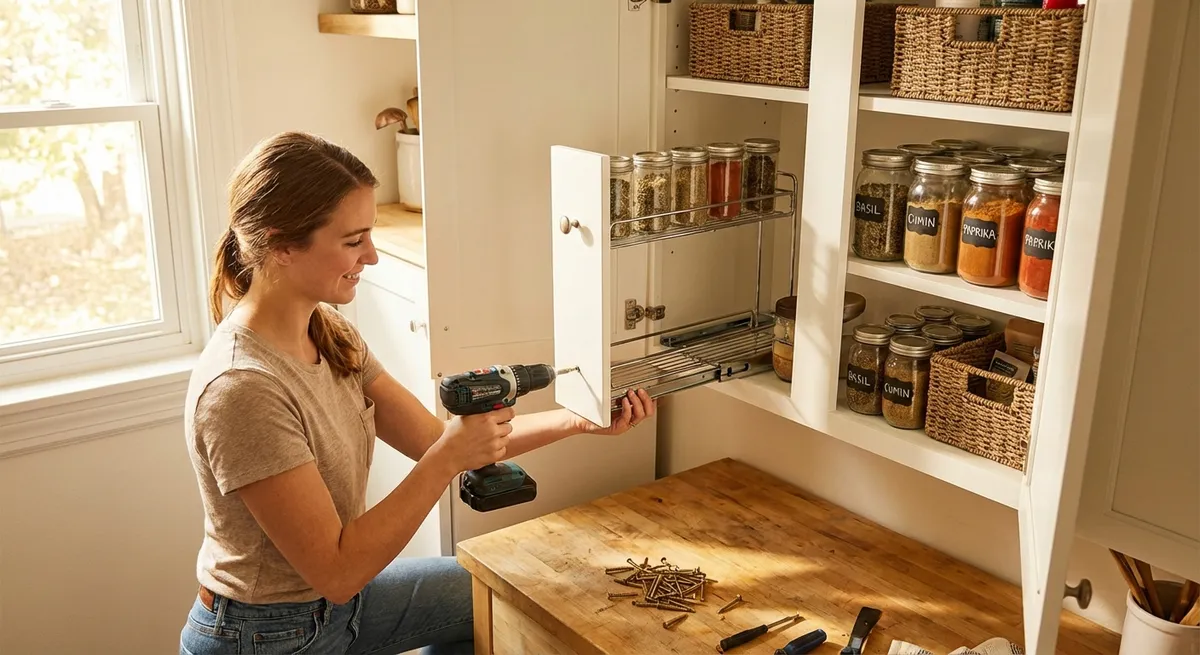
A lot of DIY projects promise big transformations—but what most people really need are small, solid fixes that make daily life easier. The kind of projects you can knock out in a weekend, that actually solve problems: better light, more storage, safer spaces, and less everyday frustration.
This guide walks you through five practical, step‑by‑step DIY projects you can do with basic tools. Each one focuses on function first, looks second—so your home feels easier to live in, not just prettier in photos.
Project 1: Upgrade a Dark Corner With a Plug-In Wall Sconce
If you have a dim hallway, reading corner, or gloomy entry, a plug-in wall sconce is an easy fix that doesn’t require opening walls or hiring an electrician.
Step 1: Choose the right fixture and spot
Pick a plug‑in sconce (not hardwired) with a cord that reaches your outlet without an extension. Look for a style that directs light where you need it—adjustable/ swing‑arm for reading, shaded for softer general light.
Stand in the space at night and hold up your phone flashlight where you think the sconce should go. Adjust height until it feels right: generally 60–66 inches from the floor for most wall lights, a bit lower for reading nooks.
Step 2: Mark and measure
Use a tape measure and pencil to mark the center point for the fixture. If the sconce has a mounting plate, hold it to the wall and mark the screw holes.
Use a level to ensure your marks are straight. It’s worth taking a minute to double‑check—crooked lighting is one of the first things people notice.
Step 3: Anchor the screws securely
If your screw locations don’t hit a stud, use appropriate wall anchors. For drywall, standard plastic expansion anchors work for light fixtures; use heavier‑duty anchors for heavy sconces.
Drill pilot holes slightly smaller than the anchor diameter. Gently tap the anchor in with a hammer until it’s flush with the wall.
Step 4: Mount the sconce and manage the cord
Screw the mounting plate into the anchors or stud, then attach the fixture to the plate per the manufacturer’s instructions.
Use adhesive cord clips or a cord cover channel to keep the wire neat and tight to the wall. If you want a cleaner look, paint the cord cover the same color as your wall.
Step 5: Use the right bulb and test
Install an LED bulb with the right brightness and color temperature. Around 2700K–3000K gives a warm, cozy feel; 4000K–5000K is brighter and more neutral for work areas.
Turn the light on, walk the space, and adjust shades or angle if needed. If you’ll use the light often, consider adding a plug‑in smart bulb or smart plug so you can control it via app or voice.
Project 2: Add Simple Under‑Cabinet Lighting for Better Kitchen Prep
Overhead lights often create shadows right where you’re chopping or reading recipes. Under‑cabinet lighting brightens counters and makes cooking safer and easier.
Step 1: Plan the layout
Decide where you need light most: beside the stove, near the sink, or by your main prep area. Measure the underside of the cabinets to know how many light bars or strips you’ll need.
Choose a plug‑in LED strip/light bar kit if you want minimal wiring. Battery‑powered lights work for rental spaces but will need periodic battery replacements.
Step 2: Prep the surface
Clean the underside of the cabinets with a degreaser or mild soap and water. Grease and dust will weaken adhesive and cause strips to fall later.
Let the surface dry completely before installing anything.
Step 3: Mount the lights
If using adhesive‑backed LED strips, peel a small section of backing, stick the first part in place, then work along the cabinet slowly—don’t peel the entire backing at once, or you’ll end up with tangles and uneven lines.
For bar lights with clips or screws, use the included mounting hardware. Position them toward the front of the cabinet underside to avoid glare on backsplash tiles and to spread light evenly on the counter.
Step 4: Route and hide the cords
Run cords along cabinet undersides and down a corner or along a wall toward an outlet. Use adhesive cable clips or channels to keep everything tight and tidy.
Avoid running cords near stove burners or where heat and steam are high. If needed, use an outlet with a built‑in GFCI near sinks for added safety.
Step 5: Test and adjust brightness
Turn on the lights at night and check for dark spots or harsh glare. Many LED kits have dimmers—use them. Brighter isn’t always better; you want comfortable, even light, not a spotlight in your eyes.
If the light color looks too blue and harsh, swap to a warmer (2700–3000K) LED strip next time—color temperature has a big impact on how a kitchen feels.
Project 3: Create a Safer Entry With a Solid Wall‑Mounted Coat & Shoe Zone
Piles of shoes and random hooks on tiny screws aren’t just annoying—they’re a trip hazard and hard on your walls. A simple, wall‑mounted entry setup makes coming and going smoother.
Step 1: Choose a backing board
Buy or cut a board that will act as a mounting base for hooks (a 1x6 or 1x8 works for most spaces). Using a board spreads the weight across multiple studs and anchors, making it sturdier.
Sand any rough edges and pre‑paint or stain the board before mounting so you don’t have to work around hooks later.
Step 2: Find and mark studs
Use a stud finder to locate studs in the entry area. Mark them lightly with pencil at the height where your board will sit.
Standard hook height is about 60–66 inches from the floor, but adjust slightly based on who lives in the home (lower for kids, maybe a second row of hooks at child height).
Step 3: Mount the board
Hold the board in place (use a helper or temporary support like stacked boxes). Use a level to ensure it’s straight.
Drill pilot holes through the board into at least two studs. Secure the board with wood screws at stud locations, then add wall anchors and screws between studs if needed for extra support.
Step 4: Install hooks and shoe storage
Lay out hooks evenly along the board before you drill. Start with one at each end, then center one in the middle, then fill in between. Pre‑drill small pilot holes for each hook screw to avoid splitting the wood.
For shoes, add a low shelf, shallow rack, or simple boot tray below the hooks. Measure to leave enough space between hooks and the shoe area so hanging coats don’t drag on the floor.
Step 5: Test with real weight
Load the hooks with a few heavy coats and bags, then tug down gently to check stability. If anything flexes or feels loose, add longer screws into studs or upgrade your anchors.
Adjust how many hooks each person gets and label if needed, especially for families. A simple, predictable spot to drop stuff translates into far less clutter over time.
Project 4: Quiet a Squeaky Interior Door the Right Way
Squeaky doors are one of those small annoyances that slowly drive you crazy. Fixing them the right way takes a few extra minutes but keeps the noise from coming back.
Step 1: Identify the source of the squeak
Open and close the door slowly and listen. Most squeaks come from hinges, but sometimes they’re from the latch rubbing the strike plate or the door rubbing the jamb.
If the noise happens only at a certain point in the swing, note which hinge is moving most at that moment.
Step 2: Tighten hinge screws
With the door closed, use a screwdriver to snug up all the hinge screws on both the door and the jamb. Loose screws let the hinge move and grind.
If a screw just spins and won’t tighten, the hole may be stripped. Remove that screw, insert a wooden toothpick or small piece of dowel with wood glue into the hole, let it set, then reinstall the screw.
Step 3: Lubricate the hinge pins
Support the door slightly with a wedge or folded cardboard under the open door. Starting with the top hinge, tap the hinge pin upward using a nail and hammer until you can pull it out.
Wipe the pin with a rag, then apply a small amount of lubricant—silicone spray, white lithium grease, or even petroleum jelly. Avoid cooking oils; they gum up over time. Reinsert the pin and tap it down gently.
Repeat for the remaining hinges, testing the door after each to see if the squeak is gone.
Step 4: Fix rubbing or sticking points
If the door rubs at the top or side, lightly sand the rubbing area with medium‑grit sandpaper. Check as you go—removing too much will create a gap.
For latch noise, check if the latch is hitting the strike plate off‑center. You can adjust the strike plate slightly by loosening screws and nudging it, or by filing the opening a bit wider.
Step 5: Check alignment and finish
Open and close the door several times. It should move smoothly with no squeaks and latch easily.
If the door still shifts or binds, you may need to slightly adjust hinge positions or add a thin cardboard shim behind one hinge leaf to square the door in the frame. Once you’re satisfied, touch up any scratched paint or finish.
Project 5: Install a Simple, Sturdy Floating Shelf That Doesn’t Sag
Floating shelves are everywhere, but many people mount them with weak anchors or poor hardware, then wonder why they sag. Done correctly, they’re strong and clean looking.
Step 1: Choose the right shelf and hardware
Decide what you’ll store: décor only, or heavier items like books and dishes? For heavier loads, choose solid wood or a shelf designed for weight, not just hollow décor shelves.
Use a floating shelf bracket or hardware rated for your expected load. Check the manufacturer’s weight rating and plan conservatively—better to overbuild than risk a failure.
Step 2: Locate studs and plan the height
Use a stud finder to mark studs along the wall where the shelf will go. If you can hit at least two studs with your bracket, you’ll get a much stronger install.
Mark the shelf height with a level line. Typical heights: 18–24 inches above a desk, 10–15 inches between stacked shelves, or eye level for a single display shelf.
Step 3: Mount the bracket securely
Hold the bracket on the level line and mark the screw holes. Pre‑drill pilot holes into studs and insert wood screws. Where you can’t hit a stud, use heavy‑duty wall anchors that match your wall type (drywall vs plaster).
Check that the bracket is perfectly level before tightening all screws fully. This is your foundation—if it’s off, the shelf will never look right.
Step 4: Attach the shelf
Slide the shelf onto the bracket according to the manufacturer’s instructions. Some use set screws from underneath; others rely on a tight friction fit.
If you built your own shelf with drilled holes for metal rods, slide it on carefully, making sure it seats fully against the wall.
Step 5: Load gradually and monitor
Start by placing lighter items on the shelf and watch for any movement or sagging. If everything feels solid, gradually add heavier pieces.
Check after a few days and again after a few weeks. If you see any sag or notice the shelf pulling away from the wall, unload it and reinforce your anchors or add additional support before re‑loading.
Conclusion
You don’t need a full renovation—or a truckload of tools—to make your home work better. Thoughtful, small projects like better lighting, an organized entry, a quiet door, and sturdy shelves change how a space feels and functions every single day.
Pick one project you can finish this weekend, follow the steps slowly, and don’t rush the details like anchors, leveling, and measurements. Once you see how much impact a well‑done “small” fix has, you’ll start spotting other places in your home where a few tools and an afternoon can make life easier.
Sources
- Energy.gov – LED Lighting Basics – Explains LED brightness, color temperature, and efficiency, useful when choosing bulbs and under‑cabinet lighting.
- U.S. Consumer Product Safety Commission – Anchor It! – Government guidance on safely anchoring furniture and wall‑mounted items to prevent tip‑overs.
- Family Handyman – How to Install Under Cabinet Lighting – Practical reference on methods and hardware options for under‑cabinet lights.
- Lowe’s – How to Install Wall-Mounted Shelves – Step‑by‑step overview of shelf mounting, anchors, and weight considerations.
- This Old House – Fix a Squeaky Door – Demonstrates hinge lubrication and alignment techniques for curing squeaky doors.
Key Takeaway
The most important thing to remember from this article is that this information can change how you think about DIY Projects.