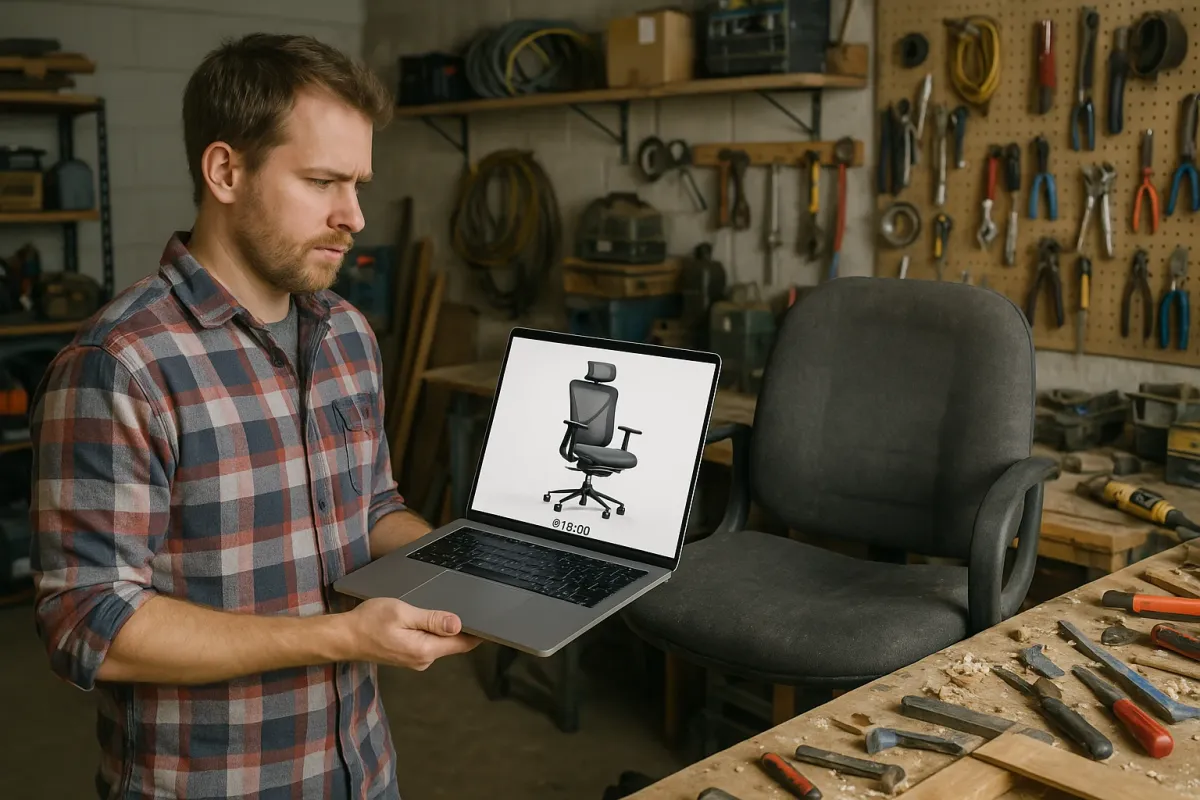
When a story about a guy getting a coworker arrested for repeatedly stealing his $1,800 Herman Miller Aeron chair started circulating online, most people focused on the office drama. But if you’re into DIY or home projects, there’s a bigger takeaway hiding in that headline: tools and equipment that look “extra” or “overkill” to everyone else can actually be the smartest, most cost‑effective investments you make.
That viral chair story (yes, the one about the newbie’s $1.8K chair getting “borrowed” until HR and police got involved) is really about respect for equipment—and understanding why some people are willing to spend big on gear they use every day. The same logic applies to your drill, your ladder, your workbench, or even your shop stool. If you’re sitting on a $20 wobbly special while binge‑watching tool reviews, this one’s for you.
Below is a practical, step‑by‑step way to apply the “$1,800 chair lesson” to your tools and equipment at home—without wasting money or buying hype.
Step 1: Decide What Deserves “Herman Miller” Money (And What Doesn’t)
Before you upgrade anything, figure out which tools are actually worth splurging on—just like that office worker decided his chair was worth $1,800 because he sits in it 8+ hours a day.
Use this rule: If you use it every week, consider buying once and buying well. That includes things like:
- Cordless drill/driver
- Impact driver (if you build or repair often)
- Shop vac
- Workbench / vise
- Ergonomic chair or shop stool for your workspace
- Main ladder
- Primary lighting for your shop or garage
- Rented (floor sanders, tile saws, demolition hammers)
- Borrowed from a tool library / neighbor
- Bought cheap, then upgraded only if you outgrow them
- List the tools and equipment you touch at least weekly.
- Put a star next to anything that affects your safety or your body (ladders, PPE, chairs, kneepads, hearing protection).
- Those starred items are your “Aeron chair equivalents”—the ones worth serious research and a bigger budget.
On the flip side, one‑off or rare‑use tools can usually be:
Action items:
Step 2: Use the “Cost Per Hour” Test Before You Buy
The Aeron chair didn’t go viral just because it’s pricey. It’s known for durability and long‑term comfort, especially for people who work at a desk full‑time. That’s where cost‑per‑hour thinking comes in—and it’s exactly how pros justify high‑end tools.
Here’s how to apply it:
- Estimate usage.
Example: A $350 cordless drill used:
- 2 hours a week
- For 5 years
= 2 × 52 × 5 = 520 hours.
- Do the math.
$350 ÷ 520 hours ≈ $0.67 per hour.
- Compare to “cheap.”
A $90 drill that burns out or annoys you in 1 year:
- Same 2 hours a week
- For 1 year
= 104 hours.
$90 ÷ 104 ≈ $0.86 per hour—and that’s assuming no downtime, no stripped screws, no frustration.
Now think about:
- Your main ladder vs. a sketchy, flexy budget one.
- Your shop lighting vs. “one bare bulb in the middle of the garage.”
- Your work chair / stool vs. that free cracked office chair you got from a closing company.
- For any big upgrade, run a quick cost‑per‑hour estimate.
- If the “expensive” option is cheaper per hour and safer or more comfortable, it’s usually the smarter call.
- Set a “walk away” price. If the numbers don’t make sense per hour, keep looking.
Action items:
Step 3: Build a “Respect the Gear” Setup at Home (So Your Stuff Lasts)
The $1,800 chair got “borrowed” in that office partly because it wasn’t clearly off‑limits. At home, your tools can disappear into “family inventory” just as fast: your good tape measure ends up in the junk drawer, your sharp chisels become paint can openers, your impact driver goes to a friend who “forgets” to return it.
Treat your core tools like that worker treated his Aeron: clearly yours, clearly valuable, and clearly cared for.
Here’s how to do that:
- Create a defined zone.
- Wall rack for your drill/driver set, batteries, and bits.
- Pegboard or French cleat wall for hand tools.
- A simple rolling cart or tool chest that’s clearly “your” station.
- Label ownership.
- Use a paint pen, label maker, or colored electrical tape on handles.
- Mark batteries and chargers too (these tend to walk away).
- Set basic “house rules.”
- Certain tools are “ask before you use.”
- No outside loans except to trusted people.
- Dirty tools get wiped down and put back the same day.
- Maintain like it matters.
- Blow dust out of tools with compressed air or a shop vac.
- Lightly oil metal blades and bits.
- Store batteries in a moderate‑temperature spot, not a hot attic or freezing shed.
Action items:
Step 4: Upgrade Ergonomics First, Not Just Raw Power
The Aeron chair went viral again because it highlighted something people forget: ergonomics IS performance. The guy didn’t buy the fanciest gaming throne; he bought a chair designed to reduce fatigue and pain. DIY tools are the same. Comfort, balance, weight, and vibration level matter more than an extra 50 RPM on the box.
When you look at upgrades, prioritize:
- Weight and balance.
- A slightly less powerful but better‑balanced drill will leave you less fatigued.
- Try to hold tools in “working position” (arm extended, above shoulder height if possible) before buying.
- Handles and grips.
- Look for rubberized grips with enough thickness for a secure hold.
- See if the controls (triggers, switches) are reachable without awkward finger stretching.
- Vibration and noise.
- Random orbital sanders, grinders, and demolition tools can wear you down fast.
- Mid‑range pro brands often have noticeably better vibration control than bargain tools.
- Adjustability.
- Saw horses that adjust to your height.
- Benches with adjustable feet or height.
- Task lighting with articulated arms you can position instead of bending your neck.
Action items:
Step 5: Make a Simple 12‑Month Upgrade Plan (Instead of Impulse Buying)
The person in the headline didn’t wake up one day and panic‑buy an $1,800 chair because TikTok said so. High‑end purchases usually come after research, saving, and clear priorities. Apply the same discipline to your tools and equipment.
Here’s a straightforward plan:
- Audit what you have now.
Create three short lists:
- “Love it” – reliable, comfortable tools you’d buy again.
- “Good enough” – works, but not ideal.
- “Hate it / avoid it” – the tools you only use when you have no choice.
- Pick your top 3 upgrades.
- Will it make my work safer? (ladder, PPE, dust collection)
- Will it reduce pain or fatigue? (chair, mat, ergonomic grips)
- Will it noticeably speed up or improve my results? (better drill, better blades, better lighting)
- Assign rough months.
- Month 1–3: Safety upgrade (ladder, respirator, hearing protection).
- Month 4–6: Comfort / ergonomics (chair, mat, lighting).
- Month 7–12: Performance tool (saw, drill, sander, etc.).
- Set a budget and stick to it.
- Decide a monthly “tool fund” number, even if it’s modest.
- Watch seasonal sales (especially around major holidays and tool brand promos similar to Black Friday / Cyber Monday weekends).
- Sell or donate the “hate it” tools.
- Use local marketplaces or community groups.
- Turn that clutter into part of your upgrade budget.
- This weekend, actually write those three lists (love / good enough / hate).
- Choose one “hate it” item to replace within the next 60 days and budget accordingly.
Use these filters:
Action items:
Conclusion
The story about the $1,800 chair and the arrested coworker isn’t just internet drama—it’s a reminder that serious gear deserves serious respect. For DIYers, that means:
- Being intentional about what you buy.
- Protecting and organizing the tools you rely on.
- Prioritizing ergonomics and safety, not just specs and brand hype.
- Thinking in terms of cost per hour, not just sticker shock.
You don’t need a designer office chair in your garage. But you do need tools and equipment that treat your time, your body, and your projects with the same level of respect that worker had for his Aeron. Start with one upgrade, one rule, or one small organization change—and let your setup quietly level up, project after project.
Key Takeaway
The most important thing to remember from this article is that this information can change how you think about Tools & Equipment.