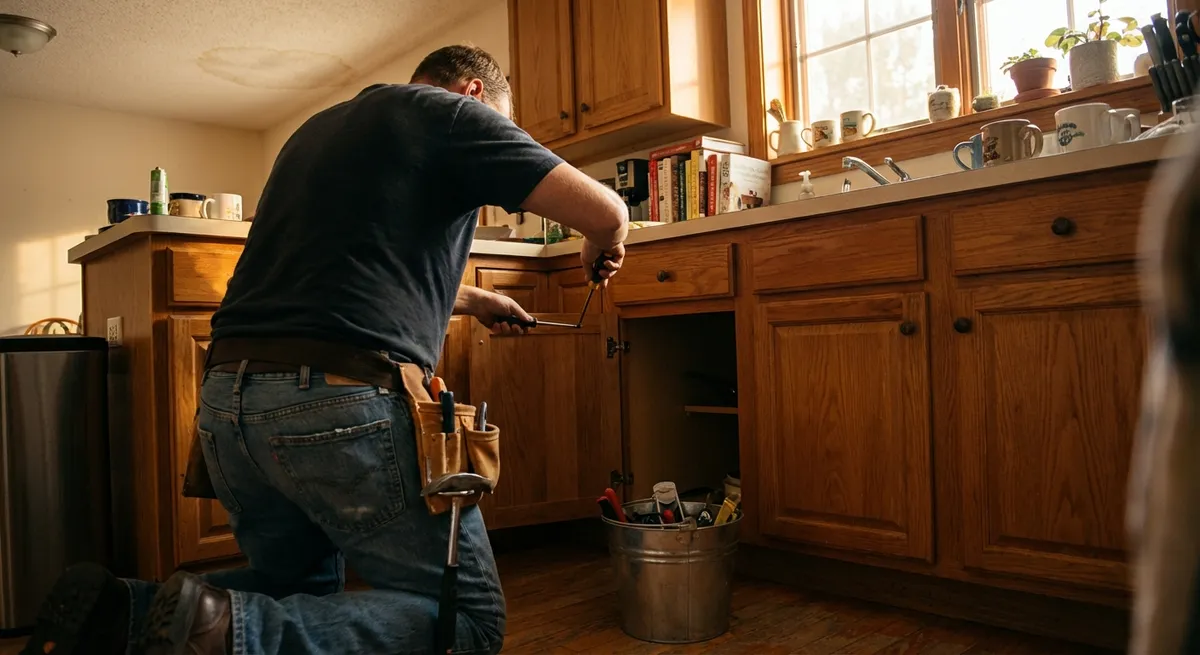
If you keep waiting for the “perfect weekend” to tackle home repairs, small issues can quietly turn into expensive headaches. The good news: a lot of the most important fixes aren’t flashy, don’t need special skills, and can be done in under a day. This guide walks through five practical, step‑by‑step repairs that protect your home, save money, and build your DIY confidence—without tearing your house apart.
Step 1: Stop a Leaky Faucet Before It Wastes Money
A dripping faucet is more than an annoyance—it can waste gallons of water and raise your bill. Most basic sink leaks come from worn-out washers or cartridges, and you can fix them with a few tools and some patience.
- Shut off the water and plug the drain.
Find the shutoff valves under the sink and turn them clockwise. Turn the faucet on to release pressure. Put a sink plug or rag in the drain so you don’t lose small parts.
- Remove the handle and trim.
Look for a screw on top, under a cap, or behind the handle. Use a screwdriver or Allen key to remove it. Lift off the handle and any decorative trim to expose the valve or cartridge.
- Identify and remove the cartridge or stem.
Most modern faucets use a cartridge held in place with a nut or clip. Use an adjustable wrench or pliers to loosen it and pull the cartridge or stem straight up. Take a picture before removing anything so you know how it goes back together.
- Match and replace worn parts.
Take the old cartridge, washer, and O‑rings to a hardware store and match them exactly. Don’t guess on size—small differences can still leak. Replace the parts in the same order and orientation you removed them.
- Reassemble, then test slowly.
Reinstall the cartridge or stem, tighten the retaining nut (snug, not over-tight), and put the handle and trim back on. Turn the shutoff valves back on slowly and test the faucet. If it still drips, double-check the seating of the cartridge and O‑rings.
Pro tip: If you’re unsure of your faucet brand or model, look under the sink or on the faucet base for labels or markings and search the manufacturer’s site for an exploded parts diagram.
Step 2: Fix a Running Toilet Instead of Replacing It
A toilet that runs for minutes after flushing or randomly refills on its own is usually wasting water through worn tank parts. You rarely need a plumber—most fixes are simple swaps you can do in under an hour.
- Take the lid off and diagnose the problem.
Flush the toilet with the tank lid off. Watch what happens:
- Water spilling into the overflow tube? Float set too high or fill valve issue.
- Flapper not sealing? Worn or misaligned flapper.
- Chain too tight or tangled? Handle/chain adjustment.
- Shut off water and drain the tank.
Turn the shutoff valve behind the toilet clockwise. Flush once and hold the handle down to empty the tank. Use a sponge or towel to soak up remaining water if necessary.
- Replace the flapper if it’s worn or warped.
Unhook the chain and side tabs holding the flapper to the overflow tube. Take it to the store for an exact match or a universal model compatible with your toilet. Clip the new one on, adjust the chain so it has a little slack (not tight, not dragging).
- Adjust or replace the fill valve if water level is too high.
Most modern fill valves have a float that slides on a rod or a cup around the valve. Adjust the float so the water line sits about 1 inch below the top of the overflow tube. If the valve is old, corroded, or noisy, replace it with a universal fill valve following the package instructions.
- Turn water back on and fine-tune.
Slowly open the shutoff valve and let the tank refill. Watch one full flush cycle. Confirm:
- No water flowing into overflow tube when tank is full
- Flapper seals fully after each flush
- No continuous hissing or trickling sounds
Pro tip: Drop a few drops of food coloring into the tank and wait 15–20 minutes without flushing. If the bowl water changes color, the flapper is still leaking.
Step 3: Secure a Loose Handrail or Towel Bar Before It Fails
Loose grab points—like stair handrails, banisters, and towel bars—are both annoying and unsafe. Tightening them properly now prevents damage to the wall and reduces the risk of someone falling or pulling hardware out of the drywall.
- Check what the hardware is actually attached to.
Gently move the rail or bar and look closely at the brackets. Is the bracket pulling out of drywall? Are screws stripping out of wood? Identify if you’re dealing with drywall-only anchors, studs, or solid wood.
- Remove the hardware and inspect the holes.
Unscrew the bracket from the wall. If the holes in drywall are enlarged or crumbling, the old anchors won’t hold. If the screws were in a stud or solid wood but are loose, they may be too short or stripped.
- Plan for solid anchoring—studs first, anchors second.
Use a stud finder to see if you can shift the bracket slightly to hit a stud. If yes, mark new holes and plan to screw directly into the stud. If no stud is available, choose heavy-duty anchors rated for the weight and use (for handrails or grab bars, choose anchors specifically designed for that purpose).
- Repair or reinforce the mounting points.
- For drywall: Fill old holes with setting-type joint compound or wood filler and let dry. Drill new holes for proper anchors. Tap anchors in gently and snugly.
- For wood: If screw holes are stripped, fill with wood glue and toothpicks or dowel, let dry, then drill a fresh pilot hole and use a slightly longer screw.
- Reinstall and test with your weight.
Mount the bracket with the right screws (typically wood screws for studs, machine screws for anchors). Tighten firmly but don’t overtighten. Once installed, pull firmly as if you’re using it for real. If it moves, reassess your anchor choice and screw length.
Pro tip: For anything that might support a person’s weight (handrails, grab bars), always use anchors and fasteners rated for that load, and follow the manufacturer’s installation guidance.
Step 4: Seal Drafty Windows to Cut Energy Loss
Drafty windows don’t always mean you need replacements. In many homes, gaps in caulk and weatherstripping are the real culprits, and fixing them can noticeably improve comfort and reduce heating and cooling costs.
- Find exactly where the draft comes from.
On a windy day, hold a lit incense stick or a strip of tissue around the window frame, sash, and trim. Watch where the smoke or tissue moves—those spots mark air leaks. Mark them lightly with painter’s tape or pencil.
- Clean the surfaces you’ll seal.
Use a putty knife to remove loose, cracking caulk around the exterior and interior window trim. Wipe the area with a damp cloth and let dry. Dust and old caulk will keep new sealant from sticking.
- Add or replace weatherstripping at moving parts.
For double-hung or sliding windows, install adhesive-backed foam or rubber weatherstripping where the sash meets the frame. Cut pieces to fit snugly without blocking operation of the window, locks, or safety latches.
- Apply new caulk to fixed gaps.
Use exterior-grade caulk outside and paintable interior caulk inside. Cut the tip small, run a continuous bead along gaps between the window frame and wall or trim, then smooth it with a damp finger or caulk tool. Focus on visible cracks and spots you marked earlier.
- Check operation and finish as needed.
Let the caulk cure according to the tube instructions. Open and close windows to make sure the weatherstripping doesn’t bind. Touch up any interior caulk with paint if you want a cleaner look.
Pro tip: Use clear caulk if you’re unsure about finish work—it visually disappears more than white or colored caulk on mixed surfaces.
Step 5: Patch a Small Drywall Hole So It Actually Disappears
Whether it’s from a doorknob, a misplaced anchor, or a moving accident, drywall holes are common. A clean, properly sanded patch will blend into the wall and keep damage from spreading or cracking.
- Prep the damaged area.
For nail or screw holes, scrape loose paper and debris with a putty knife. For larger holes (up to about 4 inches), square off ragged edges with a utility knife for a cleaner repair and remove any loose chunks.
- Choose the right repair method.
- Tiny nail/screw holes: Lightweight spackle is fine.
- Small to medium holes (up to 4"): Use a self-adhesive patch or a piece of drywall and joint compound.
- Repeatedly damaged spot (like behind doors): Consider adding a doorstop or protective plate after the repair.
- Apply filler or patch.
- For small holes: Press spackle into the hole with a putty knife, then scrape off excess so the surface is nearly flush.
- For larger holes: Stick the patch over the hole. Apply a thin layer of joint compound over the entire patch, feathering out past the edges by a few inches.
- Sand and repeat if necessary.
Once dry, lightly sand with fine-grit sandpaper until smooth and level with the wall. If you can still see edges or depressions, apply a second thin coat of compound, feather farther out, let dry, and sand again.
- Prime and paint to blend.
Apply primer over the patched area so the paint doesn’t flash (look different in sheen or color). Once dry, paint with matching wall paint, blending a bit beyond the repair so it disappears.
Pro tip: Use a work light held at an angle to the wall. Side lighting will reveal ridges and low spots you can’t see in normal room lighting.
Conclusion
You don’t need to overhaul your whole house to make a real difference. Stopping leaks, tightening loose fixtures, sealing drafts, and cleaning up damaged surfaces are all repair jobs that protect your home and your budget. The more of these everyday fixes you tackle, the more comfortable and confident you’ll feel taking on bigger projects later. Start with one repair from this list, gather the right tools, and treat it like practice—each successful fix is another step toward a home that feels solid, safe, and ready for whatever comes next.
Sources
- [U.S. Environmental Protection Agency – Fixing Household Leaks](https://www.epa.gov/watersense/fix-leak-week) - Covers how much water common household leaks waste and basic guidance on fixing them
- [Energy.gov – Air Sealing Your Home](https://www.energy.gov/energysaver/weatherize/air-sealing-your-home) - Explains where homes typically leak air and recommended sealing methods and materials
- [This Old House – How to Fix a Leaky Faucet](https://www.thisoldhouse.com/plumbing/21015138/how-to-fix-a-leaky-faucet) - Step-by-step faucet repair examples with photos for different faucet types
- [Family Handyman – How to Fix a Running Toilet](https://www.familyhandyman.com/project/how-to-fix-a-running-toilet/) - Detailed breakdown of toilet components and fixes for common running issues
- [Home Depot – How to Patch and Repair Drywall](https://www.homedepot.com/c/ah/how-to-patch-and-repair-drywall/9ba683603be9fa5395fab90d1934ad3) - Visual guide on repairing different drywall hole sizes and finishing patches properly
Key Takeaway
The most important thing to remember from this article is that this information can change how you think about Home Repair.