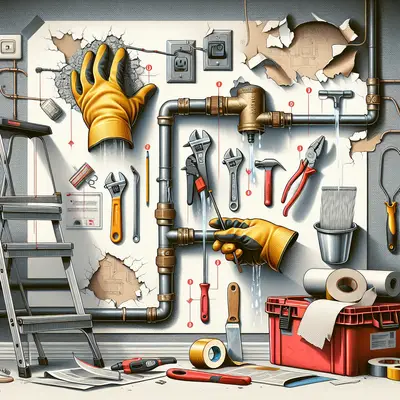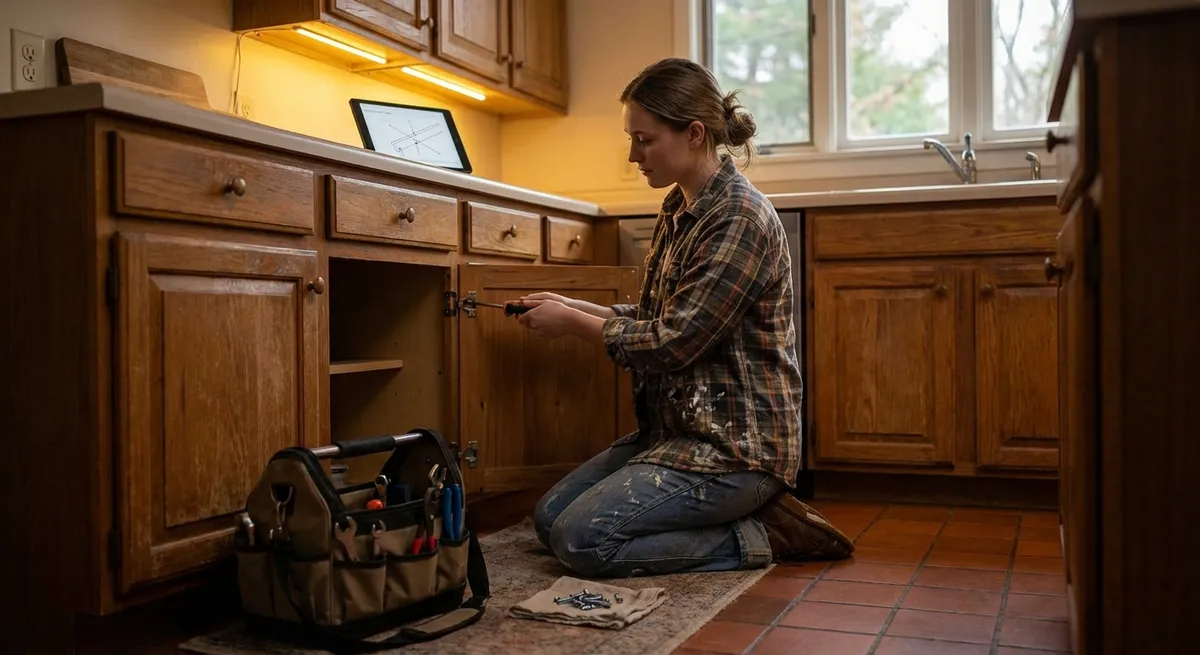
Most home repairs don’t need a full renovation or a pro on speed dial. What you do in the first hour of a problem can prevent damage, save money, and give you time to decide whether you really need outside help. This guide walks through five high-impact, step-by-step “first-response” repairs you can handle with basic tools—so small issues stay small.
Before You Start: Build a Simple First-Response Kit
Having the right basics within reach matters more than having every fancy tool. A small crate or toolbox labeled “Emergency Fix Kit” can live in a closet, laundry room, or utility area—anywhere you can grab it quickly. Include a good flashlight or headlamp, adjustable wrench, slip-joint pliers, Phillips and flathead screwdrivers, utility knife, tape measure, plunger, duct tape, electrical tape, a few hose clamps, assorted screws and wall anchors, safety glasses, work gloves, and a dust mask.
Add a notepad or painter’s tape and a marker so you can label shut-off valves, breakers, and “problem spots” as you discover them. Keep a printed list of your home’s main shutoffs: water main, individual fixture shutoffs, gas shutoff (if applicable), and electrical panel location. This kit doesn’t fix everything, but it lets you safely stabilize most issues before they spiral.
Step 1: Stop a Leaking Sink Trap Before It Ruins the Cabinet
A dripping P-trap (the curved pipe under your sink) can quietly destroy cabinets and flooring if you ignore it. Learning to stabilize this leak is one of the most useful repair skills you can have.
Clear and inspect the area
Empty everything from under the sink and lay down an old towel. Use a flashlight to find exactly where the leak is coming from: the curved trap section, the slip-nut connection, or a crack in the pipe. Turn on the faucet briefly and watch where water appears.
Shut off water and relieve pressure
Turn off the hot and cold shutoff valves under the sink by turning them clockwise. If they’re stuck, use a cloth over the handle and gently work them loose with pliers—don’t force them. Open the faucet to relieve any remaining pressure before you touch the trap.
Tighten and test the connections
Use slip-joint pliers or a large adjustable wrench to snug up the slip nuts at each end of the P-trap. Tighten just until firm—overtightening can crack plastic fittings. Turn the water back on and run it for 20–30 seconds while watching the trap. If the drip stops, you’ve likely solved it for now.
Add a temporary seal if it still leaks
If the leak persists at a joint, turn the water off again and dry the area thoroughly. Wrap the joint with plumber’s tape if you have it; if not, a carefully applied layer of duct tape can act as a stopgap. This is not a permanent fix, but it can protect the cabinet until you replace worn washers or the entire trap.
Protect the cabinet and plan the permanent repair
Place a shallow tray or baking sheet with an old towel under the trap to catch any remaining drips. Note what material your trap is (PVC or metal) and its size (usually 1 1/4" or 1 1/2"). Take a quick photo and plan a hardware store run to buy a replacement trap kit or new washers. Label the shutoff valves so next time you (or a plumber) can find them in seconds.
Step 2: Stabilize a Running Toilet So It Stops Wasting Water
A running toilet can waste hundreds of gallons a day, and most causes are simple to control. Even if you’re not ready to rebuild the inside of the tank, you can stop the waste and noise fast.
Remove the tank lid and observe
Gently set the tank lid aside on a towel—it’s heavy and fragile. Flush the toilet once and watch what happens inside the tank. Look for: water flowing into the overflow tube nonstop, a flapper that doesn’t fully seal, or a float that’s set too high.
Check and reseat the flapper
Turn off the water to the toilet using the shutoff valve near the floor, then flush to empty most of the tank. Inspect the rubber flapper at the base of the tank; if it’s warped, gritty, or doesn’t land squarely on the opening, it won’t seal properly. Clean around the seat with a cloth and gently press the flapper into place to test how it should sit.
Adjust the chain and float
If the chain from the flush handle to the flapper is too tight, the flapper can’t close; if it’s too loose, it can tangle. Adjust it so there’s just a little slack when the flapper is closed. Next, adjust the float (ball or cup) so the water level sits about an inch below the top of the overflow tube. There’s usually a screw or clip on the fill valve—small adjustments make a big difference.
Turn water back on and test for leaks
Turn the shutoff valve counterclockwise and let the tank refill. When it stops, listen: you shouldn’t hear water hissing. Put a few drops of food coloring in the tank (not the bowl). Wait 10–15 minutes without flushing—if colored water appears in the bowl, the flapper is still leaking and needs replacement.
Use a shutoff strategy if the fix doesn’t hold
If you can’t fully fix the run right away, leave the water to the toilet off when it’s not in use. Turn the supply on only when you need to flush, then shut it again. This isn’t ideal long-term, but it prevents massive water waste until you replace the flapper or fill valve kit—both are straightforward DIY jobs with clear instructions on most replacement parts.
Step 3: Secure a Loose Electrical Outlet Safely
A loose outlet that moves when you plug something in is more than annoying—it can stress wires and eventually become unsafe. You’re not rewiring your home here; you’re stabilizing it so it’s solid and safer to use.
Turn off power at the breaker
Go to your electrical panel and switch off the breaker labeled for that room. If nothing is labeled, turn off the main lights in the room and flip likely breakers until the outlet and lights lose power. Use a plug-in device (like a lamp or phone charger) to confirm the outlet is dead.
Remove the cover plate and inspect
Use a flathead screwdriver to remove the outlet cover. With power off, gently tug the outlet forward by its sides (not by the wires) to see how it’s attached. Often the box is set too deep in the wall or the mounting screws have loosened over time.
Tighten mounting screws and add spacers
Tighten the top and bottom outlet screws that attach the outlet to the electrical box. If the outlet still sits recessed or wobbles, use outlet spacers or the plastic shims sold for this purpose. In a pinch, you can stack small sections of non-conductive material (like plastic outlet spacers) behind the mounting tabs to bring the outlet flush with the wall—never use metal shims.
Reinstall the cover and test stability
Reattach the cover plate, being careful not to overtighten and crack it. Gently push and pull on a plug inserted into the outlet. The outlet should feel solid, with no wiggle in the wall. If the entire box moves, you may need a “retrofit” or “old work” electrical box insert, which is a more advanced but still DIY-friendly project.
Restore power and check for heat or humming
Turn the breaker back on. Plug in a low-load device and let it run for a few minutes. Lightly touch the cover plate: it should not feel warm or hot. Listen closely for any buzzing or humming—if you notice either, turn the breaker off and call a licensed electrician. Stabilizing the outlet is a great first step, but any sign of heat or noise deserves professional attention.
Step 4: Reinforce a Wobbly Interior Door So It Closes Cleanly
A loose, sagging, or wobbly interior door makes your home feel worn out and can damage the frame over time. Fixing it is mostly about tightening what’s already there and adding a bit of strategic support.
Identify the problem spots
Close the door slowly and watch what happens. Does it rub at the top, drag at the bottom, or miss the latch? Look at the hinge side—if the top hinge is loose, the door often sags and hits the latch side. Make a few light pencil marks where rubbing occurs so you can track progress.
Tighten hinge screws first
With the door open, use a screwdriver (preferably hand-driven, not power) to tighten all hinge screws on both the door and frame. If a screw spins without tightening, it’s stripped. Remove that screw and replace it with a longer one (often 2–3" wood screws) to bite into the framing behind the jamb.
Lift the door slightly with a wedge
Place a thin wedge (or folded cardboard) under the outer edge of the door to subtly lift it while tightening the hinges. This takes pressure off the screws so they can seat firmly. Recheck the alignment by removing the wedge and closing the door again.
Adjust the strike plate if latching is off
If the door doesn’t latch cleanly but swings freely, mark where the latch hits the strike plate with a bit of painter’s tape or a pencil. Sometimes simply loosening the strike plate screws and nudging it up, down, or inward, then retightening, is enough to get a clean latch. For minor misalignment, you can lightly file the strike plate opening.
Reduce rubbing with careful sanding, not force
If the door still rubs lightly after hinge and strike adjustments, remove it from the hinges and plane or sand the problematic edge—not the frame. Take off a small amount, then rehang and test. Avoid forcing a stuck door closed; that only stresses the hinges and screws you just repaired.
Step 5: Patch a Small Wall Hole So It Actually Disappears
Small holes from door handles, nails, or wall anchors add up and make a room look tired. Done right, a proper patch will blend in and stay invisible after painting.
Clean and prep the damaged area
Use a utility knife to trim away any loose drywall paper or crumbling material around the hole. For nail or screw holes, slightly widen them into a clean, shallow cone shape—this helps filler grip. Wipe away dust with a dry cloth.
Choose the right patch method
For tiny nail holes, lightweight spackle works fine. For holes up to about 1/2", use a heavier spackle or joint compound. For something the size of a doorknob dent, use a self-adhesive wall repair patch or mesh tape over the opening, then cover with joint compound. Match the method to the damage—overkill makes sanding harder.
Apply filler in thin layers
Load a putty knife with a small amount of compound and press it firmly into the hole, then scrape off the excess so it’s flush with the wall. For patches over mesh, feather the edges out a few inches beyond the hole. Let the first layer dry completely before deciding if you need a second pass; multiple thin coats crack less than one thick one.
Sand smoothly and inspect with angled light
Once dry, sand with fine-grit sandpaper (around 120–220 grit), using light pressure. Shine a flashlight at an angle across the wall—this reveals ridges and dips better than overhead lighting. If you see low spots, apply a very thin skim coat, let dry, and sand again.
Prime and paint for a seamless finish
Always spot-prime patched areas before painting, even for small holes. Bare compound absorbs paint differently and can flash (show through) under certain lighting. After primer dries, paint the smallest area you can while still maintaining a natural blend—often the entire wall looks best if the old paint is faded. Use the same sheen (matte, eggshell, satin) as the original.
Conclusion
You don’t need to be a contractor to keep your home solid, safe, and comfortable. By focusing on first-response repairs—stopping leaks before they spread, quieting a running toilet, securing outlets, stabilizing doors, and making wall damage disappear—you turn “emergencies” into manageable tasks. Build a small kit, learn these core steps, and you’ll handle most home hiccups with confidence, buying yourself time and saving money long before you ever think about calling in a pro.
Sources
- U.S. Environmental Protection Agency – Fix a Leak - Guidance on tracking and reducing household water leaks
- Energy.gov – Electrical Safety in the Home - Official safety tips for working around home electrical systems
- Family Handyman – How to Fix a Leaking P-Trap - Step-by-step example of diagnosing and repairing sink trap leaks
- This Old House – How to Fix a Loose Door Hinge - Practical techniques for tightening and adjusting sagging doors
- Lowe’s – How to Patch and Repair Drywall - Visual walkthrough of patching small and medium drywall holes
Key Takeaway
The most important thing to remember from this article is that this information can change how you think about Home Repair.