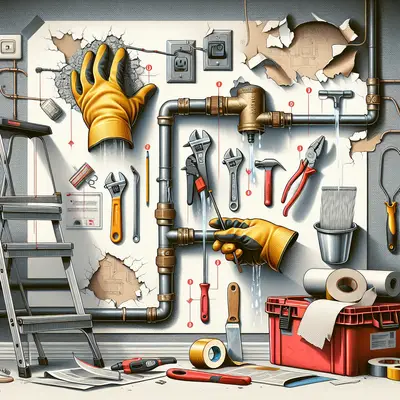
Every home has a “short list” of problems that never quite get fixed—doors that don’t close right, outlets that feel sketchy, faucets that drip, walls that look tired, and things that never seem level. This guide turns that list into a clear, do‑this‑then‑that playbook. You’ll walk through five common repair scenarios step by step, with practical tips to help you work safely, avoid damage, and get results that actually look finished.
Step 1: Fix a Door That Won’t Latch or Close Smoothly
A stubborn door usually comes down to alignment, loose hardware, or seasonal wood movement. You can often fix it in under an hour with a screwdriver, a pencil, and some sandpaper.
Diagnose what’s actually wrong
Close the door slowly and watch where it sticks: at the top, bottom, latch side, or hinge side. Check if the latch lines up with the strike plate (that metal piece on the frame). Note any rub marks on the paint or frame—they show you exactly where the problem is.
Tighten and test the hinges first
Use a screwdriver (manual, not impact) to snug all hinge screws on both the door and the frame. If a screw spins without tightening, remove it and replace it with a longer wood screw (2–3 inches) to bite into the framing. Re-test the door—many alignment issues disappear at this step.
Adjust the strike plate if the latch misses
If the latch hits above or below the hole in the strike plate, mark where the latch lands with a pencil or painters tape, then: - Remove the strike plate. - Enlarge or slightly move the opening with a metal file or chisel. - If you need to move it more than a couple millimeters, chisel out the recess (mortise) for the plate so it sits in the new position, then fill the old screw holes with wood toothpicks and wood glue before re-screwing.
Relieve a rubbing door edge the right way
If the door rubs at the top or side, mark the contact area with a pencil, then: - Remove the door from the hinges (pull hinge pins with a flat screwdriver and hammer). - Plane or sand only the marked area, checking often to avoid over-removing. - Rehang and test. Aim for a small, even gap around the door (about the thickness of a nickel).
Lock in the fix with paint or sealant
Any bare wood you exposed should be primed and painted or sealed. This helps prevent future swelling from moisture and keeps your repair from undoing itself during seasonal changes.
Step 2: Replace a Wobbly or Discolored Electrical Outlet (Non-GFCI)
A loose or old-looking outlet is both annoying and potentially unsafe. If you’re comfortable turning off power at the breaker and using a basic tester, this is a manageable DIY job. If anything feels confusing or unsafe, stop and call a licensed electrician.
Shut off power and verify it’s off
Go to your electrical panel and flip the breaker you think controls that outlet. Back at the outlet: - Plug in a lamp or use a non-contact voltage tester to confirm there’s no power. - Double-check. Never work on a live circuit.
Remove the cover and inspect the box
Unscrew the outlet cover plate. Then remove the two screws securing the outlet to the box and gently pull it out. Note: - Whether the wires are side-screwed or pushed into the back (backstabbed). - The number of cables and wire colors: typically black (hot), white (neutral), and bare or green (ground).
Disconnect and label as needed
Take a clear photo before disconnecting anything. Loosen the terminal screws and remove wires (or release backstabbed wires with a small screwdriver if needed). If there are multiple wires of the same color, label them with tape so you can reconnect to the same side/terminal.
Wire the new outlet securely
Use a modern, tamper-resistant receptacle matched to your circuit (usually 15A or 20A). Strip about 3/4" of insulation, then: - Connect white wires to the silver screws (neutral). - Connect black (or red) wires to the brass screws (hot). - Attach bare/green ground to the green screw. Bend wires into U-shapes to wrap clockwise under each screw, then tighten firmly. Avoid using backstab holes; side-screw connections are more reliable.
Reassemble, test, and listen for problems
Carefully fold wires back into the box so they aren’t pinched. Screw the outlet and cover back in place, restore power at the panel, and: - Test with a plug-in outlet tester (cheap and very useful). - Check for heat or buzzing after a few minutes of use; if you notice either, shut power off and call an electrician.
Step 3: Stop a Dripping Bathroom Faucet
A steady drip wastes water and adds up on your bill. Most modern faucets can be repaired by replacing inexpensive internal parts—usually a cartridge or rubber washers.
Identify your faucet type
Look at the faucet: is it a single-handle or double-handle? Brand name may be on the spout or handle (Moen, Delta, Kohler, etc.). Knowing the type and brand helps you buy the exact replacement cartridge or repair kit.
Shut off water and plug the drain
Turn the small shut-off valves under the sink clockwise to stop the water. If you don’t have shut-offs, you’ll need to shut water off to that bathroom or the house temporarily. Plug the sink drain with a stopper or rag so you don’t drop screws or parts down the pipe.
Disassemble in a controlled way
Pry off decorative caps on handles if needed, then remove handle screws and lift the handle off. Take pictures at every stage. Remove any retaining nuts or clips holding the cartridge or stem. Keep parts in order on a towel so you can reverse the process easily.
Replace worn parts or the cartridge
Pull the old cartridge or stem straight out (some brands sell inexpensive puller tools). Inspect O-rings and rubber seals; any that look flattened, cracked, or hardened should be replaced. Install the new cartridge or parts according to the manufacturer’s diagram and ensure orientation matches your pictures.
Reassemble and flush the faucet
Put everything back, turn the shut-offs on slowly, then run the faucet for 20–30 seconds with the aerator removed (small screen at the tip) to flush debris. Reinstall the aerator and check for leaks around the base and under the sink. If you see a slow seep, snug the retaining nut slightly rather than overtightening.
Step 4: Patch a Small Hole or Dent in Drywall So It Blends In
Random wall damage—door knob dents, nail holes, small gouges—can make a room feel tired. With the right technique, you can patch and paint those spots so they disappear instead of standing out.
Prep the area like you mean it
For nail or screw holes, scrape around the opening with a putty knife to remove loose paint or raised edges. For dents, lightly sand the area to scuff the surface. Wipe with a damp cloth to remove dust.
Choose the right patch material
- Tiny nail/screw holes: lightweight spackle works fine. - Slightly larger dents or shallow gouges: pre-mixed joint compound. - Holes bigger than about 1/2": use a patch kit or mesh tape plus joint compound, not just spackle.
Apply thin layers instead of one thick blob
Load a putty knife with a small amount of compound or spackle and press it firmly into the hole, then scrape it nearly flat, feathering the edges wider than the damage. Let it dry completely (check the label for dry time), then: - Lightly sand smooth with fine-grit sandpaper. - Check with your fingers, not just your eyes—your hand will feel dips and ridges. - Add a second thin coat if needed, feathered even wider, and sand again.
Prime to avoid “flashing” through paint
Spot-priming patched areas helps prevent dull or shiny spots after painting. Use a small brush or roller to apply primer over the repair and slightly beyond the edges. Let it dry completely before applying wall paint.
Blend the paint so the patch disappears
Use the same type and sheen of paint as the existing wall (e.g., eggshell with eggshell). For small patches, start painting in the center of the repair and feather outward, lightly lifting off as you move away so there’s no hard edge. If your wall paint is old, expect a slight color mismatch; in that case, repainting the entire wall from corner to corner gives the most seamless result.
Step 5: Rehang a Crooked or Loose Towel Bar So It Actually Stays Put
Bathroom hardware gets a lot of leverage and often wasn’t installed into anything solid. Fixing a wobbly or torn-out towel bar is part repair, part reinforcement.
Remove the bar and inspect the damage
Loosen the small set screws under the towel bar brackets with a tiny hex key or screwdriver and slide the bar out. Pull the brackets off their wall anchors. Note: - Are the existing holes stripped or enlarged? - Is the drywall crumbled around the anchor?
Decide between repair and relocation
If the wall around the holes is severely damaged or hollowed out, moving the bar an inch or two up/down or sideways into fresh drywall may be easier and cleaner. If the damage is minor, plan to repair and reuse the same general area.
Patch failed anchor holes correctly
For moderately damaged holes: - Remove old plastic anchors. - Fill the holes with joint compound or a small amount of patching plaster. - Let it dry, then re-drill a pilot hole for new anchors as needed. For larger blowouts, use a small self-adhesive mesh patch and joint compound, then repaint before reinstalling the bar.
Upgrade to proper anchors or hit a stud
Whenever possible, use a stud finder to see if you can land at least one bracket on a stud—if so, use wood screws there. For drywall-only locations: - Use high-quality toggle bolts or self-drilling metal anchors rated for bathroom accessories. - Avoid the cheapest plastic expansion anchors; they often pull out over time.
Mount level and tighten without overtightening
Mark bracket locations with a level before drilling. Install the mounting plates first, snug but not crushing the drywall. Then attach the decorative brackets and the bar, tightening set screws firmly. Give the bar a gentle pull test; if it feels rock-solid under a moderate tug, you’re done.
Conclusion
Most home repairs don’t fail because they’re too hard—they fail because the steps are rushed, the wrong materials are used, or the problem isn’t properly diagnosed. By slowing down, checking your work as you go, and using the right hardware and materials, you can turn quick fixes into long-term solutions. Keep basic tools on hand, take photos before you disassemble anything, and don’t hesitate to call in a pro if you hit something outside your comfort zone. The more repairs you tackle correctly, the more your home will feel solid, safe, and truly “fixed,” not just patched.
Sources
- U.S. Department of Energy – Doors and Windows - Covers door fit, air leakage, and why proper alignment and sealing matter
- U.S. Consumer Product Safety Commission – Electrical Receptacle Safety - Guidance on outlet safety, tamper-resistant receptacles, and basic electrical precautions
- Family Handyman – How to Fix Leaky Faucets - Detailed faucet repair walkthroughs with visuals for different faucet types
- Lowe’s – How to Patch and Repair Drywall - Step-by-step guide on patching drywall holes and dents with tools and materials lists
- National Institute of Standards and Technology – Water Conservation - Explains how dripping faucets waste water and why fixing them matters
Key Takeaway
The most important thing to remember from this article is that this information can change how you think about Home Repair.