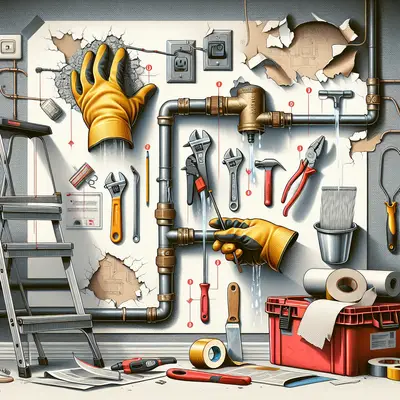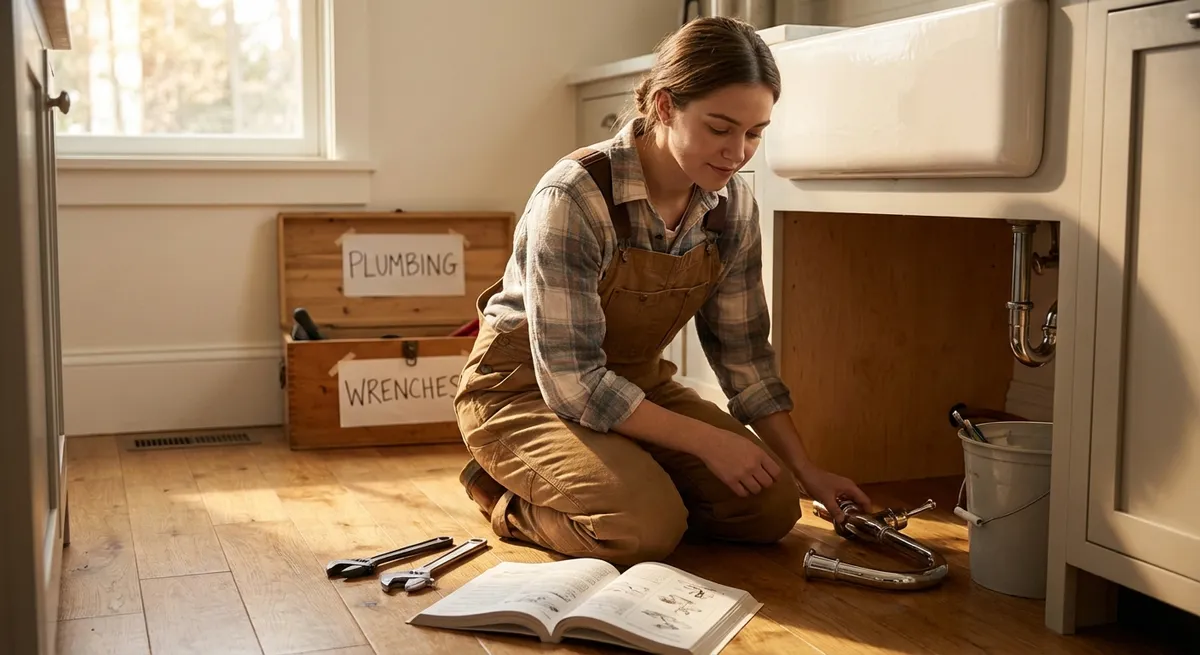
Learning basic home repair doesn’t require a workshop full of tools or years of experience. What you do need is a clear plan, a few reliable techniques, and the confidence to start. This guide walks through five practical, step-by-step fixes that most DIY enthusiasts can handle with simple tools—and that make an immediate difference in everyday living.
Each repair builds core skills you’ll reuse across many projects: turning off utilities safely, working with fasteners and anchors, sealing gaps, and making clean, durable patches.
Step 1: Quiet a Dripping Faucet
A dripping faucet wastes water, adds to your bill, and can stain sinks over time. Fixing it yourself is usually a matter of replacing a worn internal part, not the whole faucet.
- Turn off the water supply.
Look under the sink for two shutoff valves (hot and cold). Turn them clockwise until they stop. Open the faucet to confirm the water is off and to relieve pressure.
- Plug the drain and prep your workspace.
Use a sink stopper or a rag to cover the drain so you don’t lose tiny screws. Lay a towel in the sink to protect the surface and catch parts.
- Identify your faucet type and remove the handle.
Most single-handle faucets use a cartridge; double-handles often use compression or ceramic disk valves. Pry off decorative caps with a small screwdriver, then remove the screw holding the handle. Gently pull the handle off.
- Remove and inspect the internal part.
For a cartridge faucet, loosen the retaining nut with an adjustable wrench and pull the cartridge straight up. For compression faucets, remove the stem. Look for cracked rubber washers, worn O-rings, or mineral buildup.
- Replace worn components and reassemble.
Take the old parts to a hardware store to match them exactly. Install new washers, O-rings, or the entire cartridge/stem as needed. Reassemble in reverse order, turn water back on slowly, and test for leaks. If it still drips, double-check that parts are fully seated and nuts are snug but not overtightened.
Pro tip: If the faucet handle was stiff or noisy, a small amount of plumber’s grease on O-rings and moving parts (where recommended by the manufacturer) can improve operation and extend life.
Step 2: Fix a Door That Won’t Close or Latch Properly
A door that rubs, doesn’t latch, or swings open on its own isn’t just annoying; it can signal loose hardware or minor shifts in the frame. You can usually correct this with a few simple adjustments.
- Find the main problem area.
Slowly close the door and watch where it makes contact first: top, bottom, latch side, or hinge side. Note if it scrapes the floor, rubs against the jamb, or misses the latch plate.
- Tighten hinge screws.
Open the door and use a screwdriver to snug all hinge screws on both the door and frame. If a screw just spins, remove it and replace with a longer one (2–3 inches) to bite into the framing behind the jamb.
- Pull a sagging door back into alignment.
If the top of the door near the latch side is rubbing, focus on the top hinge. Replace one or two short screws in the top hinge (frame side) with longer screws angled slightly toward the stud. This draws the door upward and inward as you tighten.
- Adjust the strike plate if the latch won’t engage.
Close the door slowly and watch where the latch meets the strike plate opening. If it’s hitting high or low, loosen the two screws in the strike plate and move it slightly up or down. If you need more movement than the screw slots allow, you can carefully file the strike opening or, as a last resort, chisel a bit of the jamb to reposition the plate.
- Check for warped or swollen wood and trim if needed.
In humid conditions, the door edge may swell. If tightening and adjusting don’t solve rubbing, lightly mark the tight area with a pencil, remove the door from its hinges, and use a hand plane or sanding block to take off a small amount of material. Rehang and test frequently—remove only what you must.
Pro tip: Lubricate hinges with a small dab of petroleum jelly or a silicone-based lubricant to reduce squeaks and slow wear.
Step 3: Patch a Small Drywall Hole Cleanly
Whether from a doorknob, picture hanger, or accident, drywall holes are common—and very fixable. A proper patch blends into the wall and won’t crack later.
- Assess the hole size and choose a patch method.
Nail and screw holes (up to about 1/4 inch) can be filled directly with spackle. Holes up to about 2–3 inches typically work well with self-adhesive mesh patches. Larger holes may require a backing piece of drywall or a repair kit.
- Prep the damaged area.
Use a utility knife to clean up loose paper, crumbling edges, and flaking paint. Lightly bevel the edge of the hole so the compound can feather out. Wipe dust away with a dry cloth.
- Apply the patch or fill.
- For tiny holes: Press lightweight spackle into the hole with a putty knife, overfilling slightly.
- For small-to-medium holes: Stick a self-adhesive mesh patch over the hole, centered, then apply joint compound over the patch, pressing it through the mesh.
- Feather the compound.
Use a wider putty knife (6–8 inches) to spread compound beyond the edges of the hole, applying thin, even layers. The goal: no hard edges. Let it dry completely as directed on the product label.
- Sand, spot-check, and touch up with paint.
Sand lightly with fine-grit sandpaper (120–220) until smooth and level with the wall. Wipe off dust. If low spots remain, apply a second thin coat of compound, dry, and sand again. Spot-prime the patch if needed, then paint to match the surrounding wall.
Pro tip: For frequently bumped areas (like behind doors), consider installing a bumper or doorstop after the repair to prevent repeat damage.
Step 4: Seal Drafty Windows to Improve Comfort
Drafty windows make heating and cooling less effective, increase energy bills, and create cold spots. Air sealing is a cost-effective DIY fix that pays off quickly.
- Locate drafts and gaps.
On a windy day, hold the back of your hand, a tissue, or an incense stick around window edges, sash joints, and the meeting rail. You’ll feel or see movement where air leaks in.
- Clean surfaces before sealing.
Wipe down window frames and sills with a mild cleaner and let them dry completely. Dust and grime keep caulk and weatherstripping from sticking properly.
- Add or replace weatherstripping on moving parts.
For operable windows, use adhesive-backed foam or V-strip weatherstripping along the sides where the sash slides or closes. Measure and cut to fit; peel and press firmly into place. Make sure the window still opens and closes smoothly.
- Caulk stationary gaps and exterior joints.
Use paintable, exterior-grade caulk around fixed joints outdoors where the window frame meets siding, and interior-grade caulk for gaps along trim indoors. Cut the caulk tube tip at a small angle, apply a continuous bead, and smooth with a damp finger or caulk tool for a neat finish.
- Consider temporary film or interior panels for very leaky windows.
For older single-pane or very drafty units, install clear window insulation film on the interior for the season, or use interior storm panels if available. These create an extra barrier against cold air while remaining removable.
Pro tip: Focus first on the worst offenders in rooms you use the most. A few well-sealed windows can noticeably improve comfort without a full replacement project.
Step 5: Reset a Tripped Breaker and Identify Overloads Safely
Electrical issues can be intimidating, but learning to safely reset a tripped breaker and spot simple overloads is a core home skill. This doesn’t replace an electrician, but it helps you handle basic situations confidently.
- Recognize the signs of a tripped breaker.
If power is out in part of your home but not everywhere, and outlets or lights in one area all go dead at once, a breaker likely tripped. Avoid repeated resets without understanding why.
- Turn off or unplug devices on the affected circuit.
Before touching the panel, switch off lights and unplug small appliances on the dead circuit. This reduces the immediate load when you reset and helps narrow down troublesome devices.
- Open the electrical panel and find the tripped breaker.
Stand on a dry surface, ensure your hands are dry, and open the panel door. Look for a breaker handle that is neither fully “On” nor fully “Off” but somewhere in between or showing a different color indicator.
- Reset the breaker correctly.
Firmly switch the tripped breaker to the full “Off” position first, then push it back to “On.” If it immediately trips again, do not keep forcing it on—leave it off and call a licensed electrician, as this indicates a persistent fault.
- Distribute loads and avoid future trips.
If the breaker holds, plug in and turn on devices one at a time. High-draw appliances (space heaters, hairdryers, microwaves, vacuums) should not share circuits where possible. If you notice a specific combination of devices always causes a trip, rearrange outlets or reduce simultaneous use on that circuit.
Safety note: Burning smells, warm outlets, buzzing at the panel, or visible damage require immediate attention from a professional. Do not attempt DIY fixes on wiring inside walls or the panel itself.
Conclusion
Home repair skills grow fastest when you start with focused, repeatable tasks. Quieting a faucet, aligning a door, patching drywall, sealing drafts, and safely resetting a breaker all deliver quick wins—and they teach techniques you’ll reuse in bigger projects later.
Work methodically: turn off utilities when needed, protect surrounding surfaces, use the right materials for the job, and take time to observe what caused the problem in the first place. With each repair you complete, your home becomes more comfortable and reliable, and you become more capable of handling what comes next.
Sources
- [U.S. Environmental Protection Agency – WaterSense: Fix a Leak](https://www.epa.gov/watersense/fix-leak-week) - Guidance on household leaks, including dripping faucets and their impact
- [Energy.gov – Air Sealing Your Home](https://www.energy.gov/energysaver/air-sealing-your-home) - Official tips on locating and sealing air leaks around windows and doors
- [Family Handyman – How to Fix a Door That Won’t Latch](https://www.familyhandyman.com/project/how-to-fix-a-door-that-wont-latch/) - Practical door adjustment techniques and illustrations
- [US Department of Energy – Home Electrical Safety](https://www.energy.gov/ceser/activities/energy-security/emergency-preparedness/using-portable-generators-and-safely) - Broader safety guidance related to household electrical systems
- [Lowe’s – How to Repair Drywall](https://www.lowes.com/n/how-to/repair-drywall) - Step-by-step instructions and visuals for patching different sizes of drywall damage
Key Takeaway
The most important thing to remember from this article is that this information can change how you think about Home Repair.