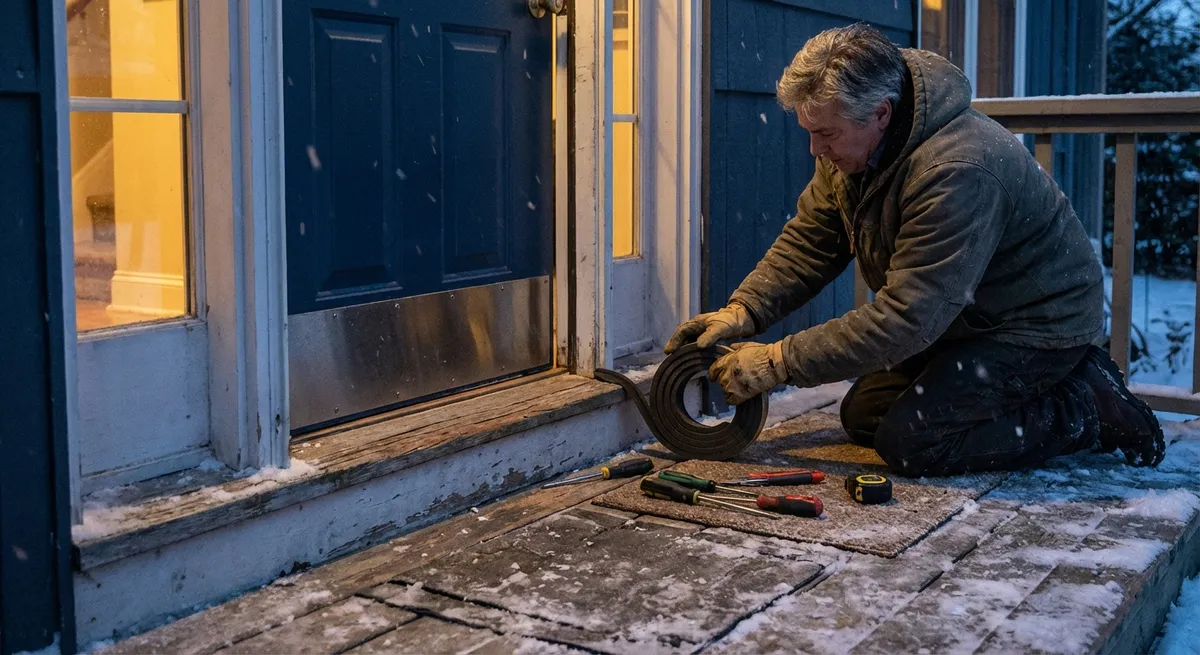
A drafty exterior door wastes energy, makes rooms uncomfortable, and can even let moisture and pests inside. The good news: in most cases, you don’t need to replace the whole door. With a handful of basic tools and a little patience, you can usually tighten things up in an afternoon. This guide walks you through a practical, DIY-friendly process to diagnose and fix the most common causes of a leaky door.
Step 1: Find Where the Draft Is Actually Coming From
Before you start buying weatherstripping or blaming the whole door, figure out exactly where the air is sneaking in.
Stand near the closed door on a windy day or when your HVAC is running. Slowly move the back of your hand around the edges of the door—along the sides (jambs), top (head), and bottom (threshold). You’ll feel cold or warm air where there’s a leak. If it’s calm outside, use one of these methods:
- Flashlight test: Have someone stand outside at night and shine a bright flashlight along the seams. If you can see light from the inside, air can pass there too.
- Paper test: Close the door on a strip of paper at different spots around the frame. If you can pull the paper out easily without resistance, the seal is weak.
- Incense or candle test: Carefully move a lit incense stick or candle around the door frame (stay away from curtains or anything flammable). Watch for smoke or flame movement that shows airflow.
Mark problem areas lightly with painter’s tape or a pencil. This simple step keeps you from guessing later and helps you buy the right materials for the actual issues.
Step 2: Tighten Hinges and Adjust the Door Alignment
A lot of drafts come from a door that has sagged or shifted over time. If the door isn’t sitting square in the frame, even the best weatherstripping won’t seal it properly.
Open the door and inspect the hinges:
- Check for loose screws: Use a screwdriver to tighten all hinge screws on both the door and the frame. If a screw spins without tightening, it may be stripped.
- Fix stripped screw holes: Remove the loose screw, insert wooden toothpicks or a short length of wood dowel coated in wood glue into the hole, cut flush, then drive a new screw into the repaired hole once it’s dry.
- Look at the gap around the door: The gap between the door and frame should be roughly even all around. If the top corner near the handle side is rubbing or there’s an uneven gap, the door may be sagging.
Adjust hinge positions if needed:
- To pull the door closer to the hinge side, you can slightly deepen the hinge mortise (the recess in the frame) with a sharp chisel. - For minor adjustments, adding a thin cardboard or plastic shim behind a hinge can push that part of the door outward.
Close the door after adjustments and re-check the gap and latch action. The door should close smoothly without rubbing and have a consistent gap that’s just wide enough for weatherstripping to compress—not wide open.
Step 3: Replace Worn Weatherstripping Around the Frame
The flexible material that lines the door frame is your main barrier against drafts along the sides and top. Over time, it gets crushed, torn, or hardened and stops doing its job.
Here’s how to refresh it:
Identify your current weatherstripping type:
Common types are: - Compression foam (soft strip that compresses when the door closes) - V-strip or tension seal (thin, springy plastic or metal that flexes) - Kerf-in (stripping that fits into a thin groove in the frame)
Carefully remove the old material:
- Pull it out gently to avoid damaging the frame. - Use a putty knife to scrape away old adhesive if needed. 3. Clean the frame surface: Wipe down the area with mild soap and water or a household cleaner. Let it dry completely so new adhesive will stick.
Measure and cut the new weatherstripping:
- Measure each side and cut pieces to length with scissors or a utility knife. - For kerf-in types, cut square ends; for adhesive-backed foam, avoid stretching while you apply it.
Install from the top down:
- Start with the top piece, then do the latch side, then the hinge side. - Press firmly along the entire length to ensure full contact. - The door should compress the stripping when closed but not be so tight that you have to slam it.
Close the door and repeat the hand test around the frame. You should feel a noticeable improvement where the new weatherstripping sits.
Step 4: Seal the Door Bottom with a Sweep or New Threshold Seal
The gap under the door is a major source of drafts, dust, and even bugs. If you can see daylight under the door, you need a better seal at the bottom.
Depending on your door and threshold, you’ll typically use either a door sweep or a bottom gasket that fits into the door itself:
Remove the old sweep/gasket (if present):
- For screw-on sweeps, back out the screws and slide the sweep off. - For bottom gaskets that slot into the bottom of the door, open the door, lift it slightly, and slide the old gasket out of its channel.
Choose the right replacement:
- For exterior doors, look for sweeps and seals labeled for “exterior use” with rubber or silicone fins or bulbs (they seal better and last longer than cheap bristle-only options). - Make sure the length matches your door or can be trimmed to fit.
Install and adjust the new seal:
- For a screw-on sweep, hold it against the inside bottom edge of the door with the rubber just brushing the threshold. Mark screw holes, drill small pilot holes, then attach. - For a slot-in gasket, match the profile, slide it into the channel, and trim to length if needed.
Test the door closure:
- Close the door and check that the sweep or gasket makes consistent contact with the threshold without dragging hard on the floor. - Slide a sheet of paper under the closed door—ideally it should not slide freely where the seal is good.
If your threshold is badly worn, cracked, or too low, replacing the entire threshold may be worth it. Many modern thresholds include built-in adjustable seals that can be raised or lowered slightly with screws to fine-tune the contact with the door bottom.
Step 5: Caulk and Seal Gaps Around the Exterior Trim
Even if the door itself is tight, air and moisture can sneak in where the frame meets the wall. Over time, exterior caulk cracks and pulls away, especially along the top of the door and where siding or brick meets the trim.
To seal those exterior leaks:
- Inspect the outside of the doorway: Look closely around the top and sides where trim meets siding, brick, or stucco. Note any cracked, missing, or separated caulk.
Remove loose or failed caulk:
- Use a utility knife or caulk removal tool to cut and scrape out old, brittle caulk. - Brush away debris and wipe the area so it’s clean and dry.
Choose the right caulk:
- For exterior door frames, use a paintable exterior-grade silicone or polyurethane caulk labeled for windows and doors. These remain flexible and handle temperature changes.
Apply a continuous bead:
- Cut the caulk tube tip at a 45-degree angle and load it into a caulk gun. - Run a steady, unbroken bead along gaps between trim and wall materials. - Work in manageable sections so you can smooth each bead before it skins over.
Tool and smooth the caulk:
- Use a damp finger or a caulk tool to press the caulk into the gap and smooth the surface. - Wipe away any excess with a damp rag.
Let it cure and paint if needed:
- Follow the manufacturer’s instructions for curing time. - Once cured, you can paint over paintable caulks to match your trim and protect the bead.
After the caulk cures, repeat your draft checks inside on a windy day. You should feel significantly less air movement around the frame.
Conclusion
Fixing a drafty exterior door is one of those small projects that delivers a big payoff: better comfort, lower energy bills, and less dust and noise creeping into your home. By tracking down leaks, tightening hardware, upgrading weatherstripping, sealing the bottom, and caulking the exterior, you tackle the most common weak points without replacing the entire door. Most DIYers with basic tools can handle this in a single afternoon—and enjoy the benefits every day after.
Sources
- U.S. Department of Energy – Air Sealing Your Home - Explains common air leakage points in homes and strategies for sealing them effectively.
- ENERGY STAR – Doors: Improve Energy Efficiency - Provides guidance on energy-efficient doors, weatherstripping, and performance considerations.
- Family Handyman – How to Stop Door Drafts - Step-by-step examples of adding sweeps, weatherstripping, and making minor door adjustments.
- This Old House – Weatherstripping a Door - Demonstrates different types of weatherstripping and proper installation techniques.
- Lowe’s – How to Install Weather Stripping - Retail-oriented but detailed instructions for choosing and installing door and window weatherstripping.
Key Takeaway
The most important thing to remember from this article is that this information can change how you think about Home Repair.