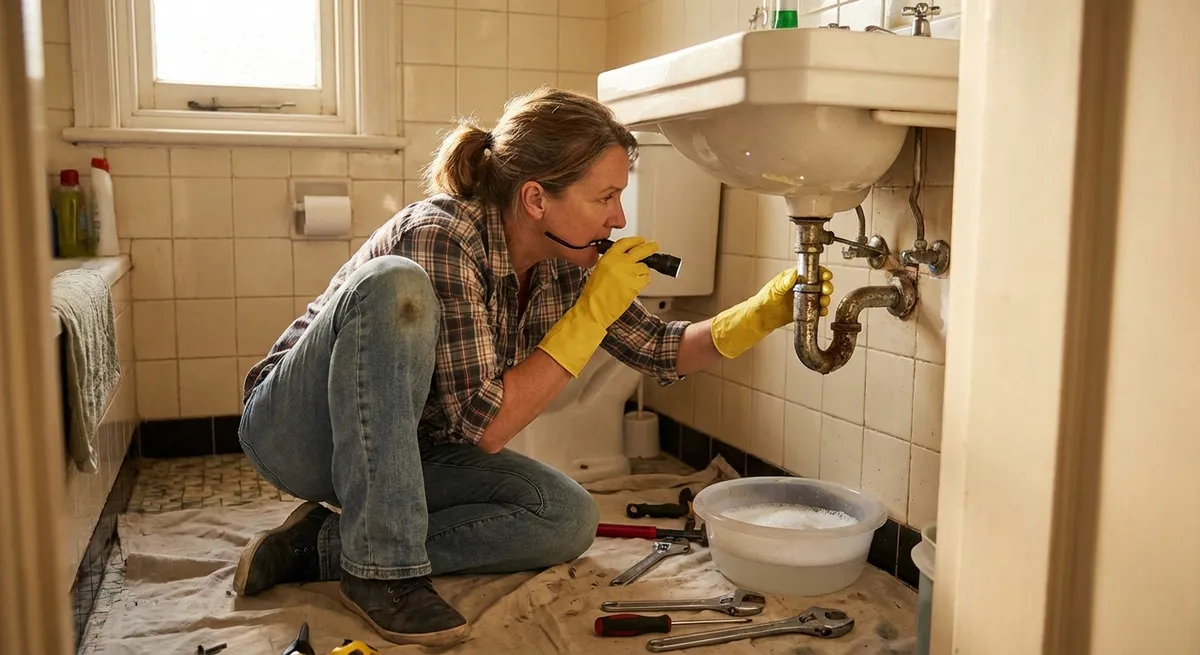
A sluggish sink is one of those annoyances that’s easy to ignore—until you’re standing in a pool of murky water every time you wash your hands or dishes. The good news: most slow drains can be fixed with basic tools and a little patience. This guide walks you through practical, step-by-step methods DIYers can use to clear a slow sink drain safely and effectively.
Understand What’s Slowing Your Sink
Before you start taking things apart, it helps to know what you’re probably dealing with. Bathroom sinks usually clog from hair, soap scum, toothpaste, and grooming products building up right under the drain. Kitchen sinks typically slow down from grease, food particles, and detergents coating the inside of the pipes.
A few quick checks:
- If water drains slowly but does go down, you likely have a partial blockage, not a full clog.
- If you hear gurgling from other drains when this sink runs, there could be a venting issue or deeper clog you shouldn’t tackle alone.
- If multiple fixtures in the same area (like a sink and a nearby tub) are draining slowly, the problem may be farther down the line.
Once you know the slow drain is isolated to a single sink and water is still moving (just slowly), you’re ready to get to work.
Step 1: Clear the Stopper and Drain Opening
This is the easiest fix and often solves bathroom sink issues on its own.
- Remove items around the sink. Give yourself space so you don’t knock anything into the drain or lose small pieces.
- Take out the drain stopper.
- Bathroom sink: Most have a lift-rod behind the faucet. Under the sink, you’ll see a horizontal rod attached to the drainpipe with a small nut. Loosen that nut by hand or with pliers and pull the horizontal rod out. Then lift the stopper out from the top.
- Kitchen sink: If there’s a removable basket strainer, just lift it out.
- Clean the stopper thoroughly. Use paper towels or an old rag to remove hair, gunk, and soap residue. A soft brush (like an old toothbrush) helps clean around rubber seals and edges.
- Check just inside the drain opening. Use a flashlight. If you see a clump of hair or debris just inside, pull it out with a bent wire, plastic drain cleaning strip, or gloved fingers.
- Reassemble the stopper.
- For bathroom sinks, slide the stopper back in from the top (hole aligned to the back), reinsert the horizontal rod into the opening on the tailpiece and tighten the nut snugly—hand-tight plus a small turn with pliers if needed.
- Test the drain. Run water for 30–60 seconds. If it flows normally now, you’re done. If it’s still slow, move to the next step.
Tip: Keep a small container or towel under the sink while working on the stopper in case a few drops leak when you loosen the rod nut.
Step 2: Flush With Hot Water (The Right Way)
If you just cleared visible gunk and the drain is still sluggish, hot water can help break down soap and grease films.
- Boil water safely. Use a kettle or pot. Aim for 1–2 liters (about 1–2 quarts) for a bathroom sink, and a bit more for a kitchen sink.
- Remove any plastic drain guards. If your sink has a plastic strainer or cover, take it off so hot water can go straight into the metal or ceramic drain.
- Pour slowly and in stages.
- Turn off the faucet.
- Carefully pour about a third of the hot water directly into the drain, avoiding the porcelain or enamel surface as much as possible to prevent thermal shock.
- Wait 30–60 seconds, then pour another third, and repeat until you’ve used all the hot water.
- Rinse with warm (not cold) tap water. Turn on the sink and let warm water run a full minute. Cold water immediately after boiling water can stress materials in some sinks and pipes.
- Evaluate the improvement. If drainage speeds up but is still not great, you probably have buildup deeper in the trap or just beyond it.
Important: Do not pour boiling water into PVC or ABS plastic pipes if you suspect they’re directly under a very short metal tailpiece. Most household plumbing can handle brief hot water, but avoid repeated direct boiling-water “shock” on plastic sections.
Step 3: Use a Plunger Correctly on a Sink
Plungers aren’t just for toilets—used right, they’re very effective on sink drains.
- Pick the right plunger. Use a standard cup plunger (flat bottom) for sinks, not a flange or “toilet” plunger.
- Block overflow openings.
- Bathroom sink: Cover the overflow hole near the rim with a damp cloth or duct tape.
- Kitchen sink with two bowls: Seal the other bowl’s drain with a rubber drain plug or a wet rag.
- Fill the sink slightly. Add enough water to cover the plunger cup by 1–2 inches; water helps create a tight seal.
- Position and seal. Place the plunger directly over the drain and press down gently to expel trapped air and form a solid seal around the drain opening.
- Plunge with steady force.
- Push down and pull up in quick, controlled motions for 15–20 seconds at a time.
- Don’t lift the plunger entirely off the drain between strokes or you’ll lose suction.
- Release and check. After a plunging round, quickly pull the plunger off the drain to break the seal. Watch to see if water drains faster.
- Repeat if needed. Do 2–3 rounds of plunging. If there’s no change at all, the clog may be beyond the trap.
This forces plunging pressure to go into the clog instead of escaping.
Tip: If you’ve recently used a chemical drain cleaner, avoid plunging—the chemicals can splash back and cause burns. In that case, it’s safer to wait, flush thoroughly, or call a professional.
Step 4: Clean the P-Trap and Tailpiece
If plunging doesn’t solve it, the blockage may sit in the curved trap under the sink. Removing and cleaning it is a straightforward DIY job for most people.
- Gather simple tools.
- Adjustable wrench or channel-lock pliers
- Bucket or large bowl
- Old towel
- Brush or long bottle brush
- Rubber or nitrile gloves
- Shut off the water at the faucet. You don’t need to close the under-sink valves, but make sure nobody turns the tap on while you’re working.
- Position your bucket. Place it directly under the P-trap (the U-shaped section of pipe). Lay a towel underneath just in case.
- Loosen the slip nuts.
- You’ll usually see two nuts: one at each end of the trap.
- Start by loosening them by hand; if they’re tight, use the wrench or pliers gently. Turn counterclockwise.
- Support the trap as you loosen the last nut so it doesn’t drop and splash.
- Remove the trap. Carefully lower it and dump the contents into the bucket. Expect dirty water, sludge, and possibly food or hair clumps.
- Clean the trap thoroughly.
- Use a brush, rag, or bottle brush to scrub the inside of the trap and rinse it out in another sink or outside with a hose.
- Check the straight tailpiece from the sink down into the trap: use a brush or a plastic drain strip to remove buildup there too.
- Inspect washers and seals. Each slip nut should have a plastic or rubber washer. If they’re cracked or deformed, replace them before reassembly.
- Reassemble the trap.
- Reattach the trap to the tailpiece and wall pipe.
- Hand-tighten the slip nuts first, then give them a gentle final snug with pliers—do not overtighten or you can crack plastic fittings.
- Test for leaks and drainage.
- Run water for 1–2 minutes while watching the trap closely.
- If you see drips, slightly tighten the leaking nut a bit more.
- Confirm the drain speed is back to normal.
Note: If the trap was fairly clean but the drain is still slow, the clog may be in the wall pipe beyond the trap. That’s where a drain snake comes in.
Step 5: Snake the Drain Line Safely
A small hand auger (drain snake) can clear clogs that are too far for your fingers or plunger to reach.
- Choose the right tool. For sinks, a 1/4" or 3/8" diameter hand-crank drain auger is usually enough. Avoid aggressive, spinning power tools unless you’re experienced—they can damage pipes.
- Access the line.
- The easiest point is often the pipe where the P-trap connects to the wall.
- If you just removed the trap in Step 4, you can feed the snake directly into the wall opening before reattaching the trap.
- Feed the cable slowly.
- Insert the cable end into the pipe and gently push while turning the handle clockwise.
- Don’t force it. If you feel resistance, you may be hitting a bend in the pipe. Rotate and ease the cable past it.
- Break through the clog.
- When you hit a solid resistance that feels different from a bend, that’s likely the blockage.
- Rotate the cable several times to break it up or hook it. Gently push a bit farther if the cable begins to move more freely.
- Retract carefully.
- Slowly pull the cable out, continuing to rotate.
- Wipe the cable with a rag as you pull it to remove gunk and keep the area cleaner.
- Flush the line.
- Reassemble the trap if removed.
- Run hot tap water for several minutes to carry loosened debris away. Watch for leaks.
- Evaluate the result.
- If the sink now drains quickly and consistently, you’ve cleared it.
- If it’s still slow, or if the cable comes back clean with little debris, the problem may be deeper in the main drain line—this is where professional equipment (and expertise) is worth the cost.
Safety tip: Wear eye protection when using a drain snake. Bits of debris and dirty water can flick back when you retract the cable.
Conclusion
A slow sink drain doesn’t automatically mean an expensive plumbing bill. In many cases, clearing the stopper, flushing with hot water, plunging properly, cleaning the P-trap, or snaking the line is enough to restore full flow—using tools most DIYers already own or can afford easily. Work step by step, test the drain after each fix, and stop if you see warning signs that point to a bigger issue (multiple drains affected, recurring clogs, or signs of leaks in walls or floors). Knowing how to handle these basic drain repairs keeps your home running smoothly and makes you more confident tackling other small fixes around the house.
Sources
- [International Association of Certified Home Inspectors – Plumbing Traps and Vents](https://www.nachi.org/plumbing-traps-vents.htm) - Overview of how traps and venting work and why they matter for proper drainage
- [The Family Handyman – How to Fix a Slow Draining Bathroom Sink](https://www.familyhandyman.com/project/how-to-fix-a-slow-draining-bathroom-sink/) - Practical walkthrough with photos for stopper and trap cleaning
- [This Old House – Clearing Clogged Drains](https://www.thisoldhouse.com/plumbing/21017644/clearing-clogged-drains) - Explains common drain-clearing methods, including plungers and snakes
- [United States Environmental Protection Agency – Preventing Household Plumbing Problems](https://www.epa.gov/septic/how-care-your-septic-system) - Tips on what not to put down drains and how to protect plumbing and septic systems
- [University of Missouri Extension – Home Plumbing Systems](https://extension.missouri.edu/publications/g5500) - Educational overview of residential plumbing layouts and components
Key Takeaway
The most important thing to remember from this article is that this information can change how you think about Home Repair.