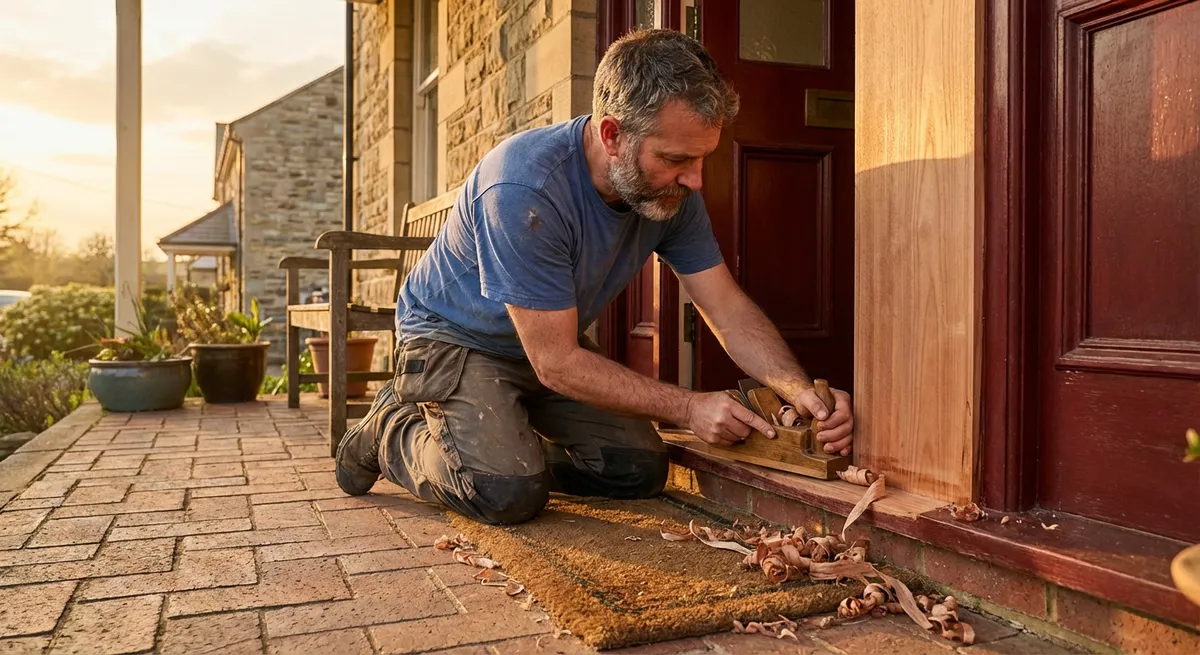
A sticking exterior door is annoying, wastes energy, and can even be a security issue if it doesn’t fully latch. The good news: you can usually fix it yourself with basic tools and a bit of patience. This guide walks you through diagnosing the problem and making simple, reliable adjustments so your door opens and closes smoothly again.
Understand Why Your Door Is Sticking
Before you grab a tool, you need to know what’s actually causing the bind. Different problems call for different fixes, and guessing often leads to extra work or damage.
Start by opening and closing the door slowly. Notice where it drags, scrapes, or resists:
- Top edge hitting the frame: The door may be sagging on its hinges or the top hinge screws are loose/stripped.
- Latch side rubbing (near the doorknob): The door may be misaligned, swollen from humidity, or the strike plate may be out of position.
- Bottom scraping the threshold or floor: The sill/threshold may have shifted, or the door may have warped or settled.
- Weatherstripping too tight: New or compressed weatherstripping can add friction and make the door hard to close.
Also check:
- If the gap between the door and frame is even on all sides (look for tight spots).
- If the hinges are loose, rusty, or bent.
- If the latch lines up properly with the hole in the strike plate.
Once you know where the problem is, you can choose the right fix instead of sanding or shaving the wrong area and making the door worse.
Step 1: Tighten and Reinforce the Hinges
Loose or weak hinges are one of the most common causes of a sticking exterior door. When hinges loosen, the door sags and shifts in the frame, leading to binding at the top or latch side.
- Inspect each hinge: Open the door fully and gently lift up on the handle. If you feel movement or hear a clunk, your hinges likely need attention.
- Tighten existing screws: Use a screwdriver (preferably hand-driven, not a drill) to snug up all hinge screws on both the door and the frame. Don’t overtighten to the point of stripping.
Replace short screws with longer ones:
- On the top hinge, remove one screw at a time from the side attached to the frame. - Replace with a 3-inch exterior-grade screw driven into the wall stud behind the frame. - This pulls the door back toward the hinge side and can correct slight sagging.
Fix stripped screw holes:
- If a screw just spins and won’t tighten, remove it. - Fill the hole with wooden toothpicks or a short piece of wood dowel coated in wood glue. Tap them in, let dry, and trim flush. - Reinstall the screw into the reinforced hole. 5. Re-test the door: Open and close it several times. Often, hinge tightening alone will solve minor sticking at the top or latch side.
Helpful tip: Always start with the hinges before sanding or planing the door. Once the door is properly supported, you may realize that no material removal is necessary.
Step 2: Adjust the Strike Plate So the Latch Engages Cleanly
If the door seems aligned but you have to push or pull hard to get the latch to click into place, the strike plate is probably out of alignment by a few millimeters. Fixing this is usually easier and safer than shaving the door edge.
Check latch alignment:
- Close the door slowly and watch where the latch hits the strike plate. - Look for shiny rub marks around the opening; these show where metal is scraping.
Try a simple bend first (for minor misalignments):
- If the latch barely misses the opening, remove the strike plate screws. - Place the plate on a firm surface and gently bend the lip out with pliers or a hammer. - Reinstall and test; sometimes that tiny change is enough.
Move the strike plate (for more noticeable misalignment):
- Remove the strike plate. - Chisel or file the mortise (the recess in the frame) slightly in the direction the latch needs to move—up, down, in, or out. Work slowly and check the fit often. - Reposition the plate, mark new screw holes if needed, and pilot drill small holes to avoid splitting the wood. - Reinstall and test.
Deepen the latch hole if the door closes but won’t latch firmly:
- Remove the strike plate. - Use a wood bit or chisel to deepen the latch hole in the frame. - Reinstall the plate; this gives the latch more room to seat and can fix a “bouncy” or half-latched door.
Aim for a door that latches with a firm but easy push—no shoulder checks required.
Step 3: Relieve Minor Binding by Sanding or Planing
If the hinges are tight and the strike plate is aligned, but the door still rubs on the frame, you may need to remove a small amount of material. The key is to work slowly and protect the door’s finish.
Locate exactly where it binds:
- Close the door until it starts to stick. - Slip a piece of scrap paper or a dollar bill into the gap and slide it around the frame. Where it stops or tears is where the door is too tight.
Mark the problem area:
- Use a pencil to mark the edge of the door where it rubs. - Keep your markings light but visible.
Decide between sanding and planing:
- Use medium-grit sandpaper (80–120 grit) for very minor adjustments. - Use a hand plane or block plane for areas that need more than light sanding.
Remove the door if needed:
- For edges near the top or hinge side, it’s usually easier to remove the door. - Tap out the hinge pins with a nail and hammer (support the door as you do this). - Lay the door flat on a pair of sawhorses or a stable surface.
Sand or plane in controlled passes:
- Work along the grain, taking off a little at a time. - Check your progress frequently by test-fitting the door back in place.
Seal exposed wood:
- Once the door closes smoothly, sand the area with fine-grit sandpaper (180–220) to smooth it. - Apply primer and paint, or exterior-grade sealer/stain, to any bare wood to protect against moisture and warping.
Do not remove more than necessary. Over-planing can create gaps that let in drafts, insects, and moisture.
Step 4: Adjust the Threshold and Weatherstripping for a Better Seal
Sometimes the door doesn’t technically “stick,” but it feels hard to close because the bottom is pressing too tightly on the threshold, or the weatherstripping is overly compressed. That friction can feel like a sticking door and also stress your hardware.
Inspect the bottom sweep and threshold:
- Look for visible wear lines or scuffing on the underside of the door and on the threshold. - If the sweep is torn or stiff, plan on replacing it.
Adjust an adjustable threshold (common on many modern exterior doors):
- Look for small screws along the top of the metal threshold. - Turning these screws raises or lowers individual sections. - Make small adjustments (¼ turn at a time), then test the door. - Aim for a seal that blocks light and drafts but doesn’t drag.
Replace or trim the door sweep if needed:
- If the rubber or vinyl sweep is too long and drags heavily, remove it from the bottom of the door. - Most sweep assemblies slide into a channel or are screwed in place. - Trim only a small amount, reinstall, and test. - If it’s cracked or brittle, replace with a new exterior door sweep cut to the same width.
Check side and top weatherstripping:
- Close the door with a sheet of paper in the gap; you should feel light resistance pulling it out, not a fight. - If it’s extremely tight, consider using slightly thinner weatherstripping or repositioning the existing strip.
Verify the seal:
- At night, have someone shine a flashlight around the door edges from outside while you look from inside. - You shouldn’t see light leaks. If you do, adjust threshold and weatherstripping until the light disappears without creating a hard slam.
A properly adjusted threshold and seal make your home more comfortable and energy efficient while keeping the door easy to operate.
Step 5: Check for Moisture and Structural Issues That Cause Recurring Sticking
If the door repeatedly goes out of alignment, or sticks mainly during certain seasons, you may be dealing with moisture, movement in the house framing, or a deeper structural problem. Addressing these early can prevent more serious damage.
Watch for seasonal patterns:
- If the door is worse in humid summer months and fine in winter, the wood may be swelling due to moisture. - Persistent year-round sticking suggests misaligned hardware, framing movement, or settling.
Inspect for moisture intrusion:
- Look for peeling paint, soft spots, or discoloration around the frame and threshold. - Check exterior caulking and flashing above and around the door to ensure water isn’t getting in.
Check for rot or damage in the frame:
- Press a screwdriver gently into the wood near the bottom of the jambs and threshold. - If it sinks easily, the wood may be rotted and losing structural support, which can twist the frame.
Look for cracks or movement in nearby walls and flooring:
- Significant settling or foundation movement can pull the frame out of square. - Hairline cracks are normal in older homes, but wide, growing cracks near the door opening may need professional evaluation.
Improve ventilation and moisture control if humidity is the issue:
- Use exhaust fans in kitchens and bathrooms. - Run a dehumidifier in damp areas or basements. - Maintain exterior paint or stain on the door to reduce moisture absorption.
Know when to call a pro:
- If the frame is visibly twisted, badly rotted, or you suspect foundation movement, a professional carpenter or contractor is the safer choice. - Replacing a rotted jamb or resetting a door frame is more advanced than simple hinge or latch adjustments.
By addressing the root cause—not just the symptom—you’ll avoid redoing the same repair every year.
Conclusion
A sticking exterior door doesn’t automatically mean you need a new door or an expensive professional visit. By working through the basics—tightening hinges, adjusting the strike plate, relieving minor binding, and fine-tuning the threshold and weatherstripping—you can usually restore smooth operation with simple DIY steps. Pay attention to moisture and structural clues, and don’t hesitate to bring in a pro if you find serious rot or movement. With a little careful troubleshooting, you’ll end up with a door that closes cleanly, seals well, and feels solid every time you come and go.
Sources
- [U.S. Department of Energy – Doors and Energy Efficiency](https://www.energy.gov/energysaver/doors) – Explains how properly fitted and sealed exterior doors improve comfort and reduce energy loss.
- [Family Handyman – How to Fix a Sticking Door](https://www.familyhandyman.com/project/how-to-fix-a-sticking-door/) – Step-by-step guidance and illustrations for diagnosing and correcting door alignment issues.
- [This Old House – Fixing Exterior Door Problems](https://www.thisoldhouse.com/doors/21016771/how-to-fix-common-door-problems) – Practical tips from pros on adjusting hinges, strike plates, and thresholds.
- [Fine Homebuilding – Adjusting Doors and Hinges](https://www.finehomebuilding.com/project-guides/windows-doors/how-to-fix-common-door-problems) – In-depth discussion of hinge reinforcement, sagging doors, and proper clearances.
Key Takeaway
The most important thing to remember from this article is that this information can change how you think about Home Repair.