A door that sticks, scrapes, or won’t latch properly is annoying—and it can make your home feel older and less cared-for than it really is. The good news: most sticky interior doors can be fixed in an afternoon with basic tools you probably already own. This guide walks you through simple, step-by-step repairs to get your door opening smoothly, closing quietly, and latching like it should—without calling a contractor or buying a new door.
Step 1: Find Exactly Where the Door Is Sticking
Before you touch a tool, you need to know what’s actually going wrong. A door can stick for several reasons: the house settled, humidity swelled the wood, hinges loosened, or the latch moved out of alignment. Narrowing it down will save you time and prevent unnecessary sanding or trimming.
Close the door slowly and watch what happens. Note whether it:
- Rubs at the top, side, or bottom of the jamb
- Catches on the latch side before fully closing
- Scrapes the floor or carpet
- Binds near the top hinge or handle side
Use a pencil to lightly mark any spots where the door hits the frame. If the door is rubbing on the latch side, run a strip of painter’s tape along that edge, close the door, and open it again—the tape will show where it’s making contact. Also check the gap around the door: it should be roughly even all around (about a nickel’s thickness). A very tight gap near the top or the latch side often points to hinge or alignment issues.
Step 2: Tighten and Adjust the Hinges
Loose or sagging hinges are one of the most common causes of sticking doors. When hinges loosen over time, the door drops slightly and begins to scrape the floor or rub against the frame. Fixing this is often as simple as tightening screws and improving the attachment to the jamb.
Start by opening the door fully so it’s easy to work on the hinges. With a screwdriver (hand tools are better than a drill here to avoid stripping), tighten every screw on both the door-side and jamb-side of each hinge. If a screw keeps spinning and won’t tighten, it’s likely stripped in the wood.
For stripped holes, remove the screw and fill the hole: insert wooden toothpicks or a short piece of wooden matchstick coated with wood glue. Pack them in snugly, snap off any excess flush with the surface, then reinsert the screw once the glue is tacky or dry (follow glue directions). This gives the screw something solid to bite into.
If the door is still sagging toward the latch side after tightening, try a simple hinge tweak: slightly bend the hinge leaf on the jamb side for the top hinge inward toward the jamb. You can do this by placing a large adjustable wrench over the hinge knuckle and carefully applying a bit of pressure. Small adjustments can pull the door back into alignment and reduce rubbing at the top or latch side.
Step 3: Realign the Strike Plate So the Latch Catches Smoothly
Sometimes the door closes all the way, but the latch doesn’t line up with the hole in the strike plate, so you have to push or lift the handle to get it to latch. This is usually a vertical alignment issue: the latch is hitting just above or below the opening. Fixing the strike plate often makes the door feel “new” again.
With the door almost closed, watch where the latch meets the strike plate. You may see a shiny rub mark at the top or bottom of the plate’s opening. You can also mark the door latch with a dry-erase marker or a bit of lipstick, close the door, and open it again—the transfer mark shows exactly where contact happens.
If it’s only a little off (1–2 mm), first try loosening the strike plate screws and gently shifting the plate up, down, or deeper into the jamb, then retighten. For larger misalignments, you may need to adjust the mortise (the recessed area in the jamb):
- Remove the strike plate.
- Use a sharp chisel to carefully extend the mortise slightly in the direction you need (up or down), keeping the recess flat and as clean as possible.
- Reinstall the plate in the new position and test the fit.
If the latch is rubbing the inner edge of the strike opening, you can also lightly file that edge to widen the opening a bit. A smooth, centered latch should click into place without you needing to force the door or pull up on the knob.
Step 4: Lightly Sand or Plane Any Swollen or Rubbing Areas
Once the hinges and strike plate are correct, any remaining sticking is usually due to swelling or a door that was always a bit too tight in its frame. Instead of hacking off big chunks of wood, aim for minimal removal: just enough to prevent binding while keeping the gap even and the door looking clean.
Use your earlier pencil marks or tape rub marks to locate problem areas. Remove the door from its hinges: place a wedge or book under the outer bottom corner for support, then tap out the hinge pins with a nail and hammer or pull them with a hinge pin tool. Lay the door flat on sawhorses or a clean surface.
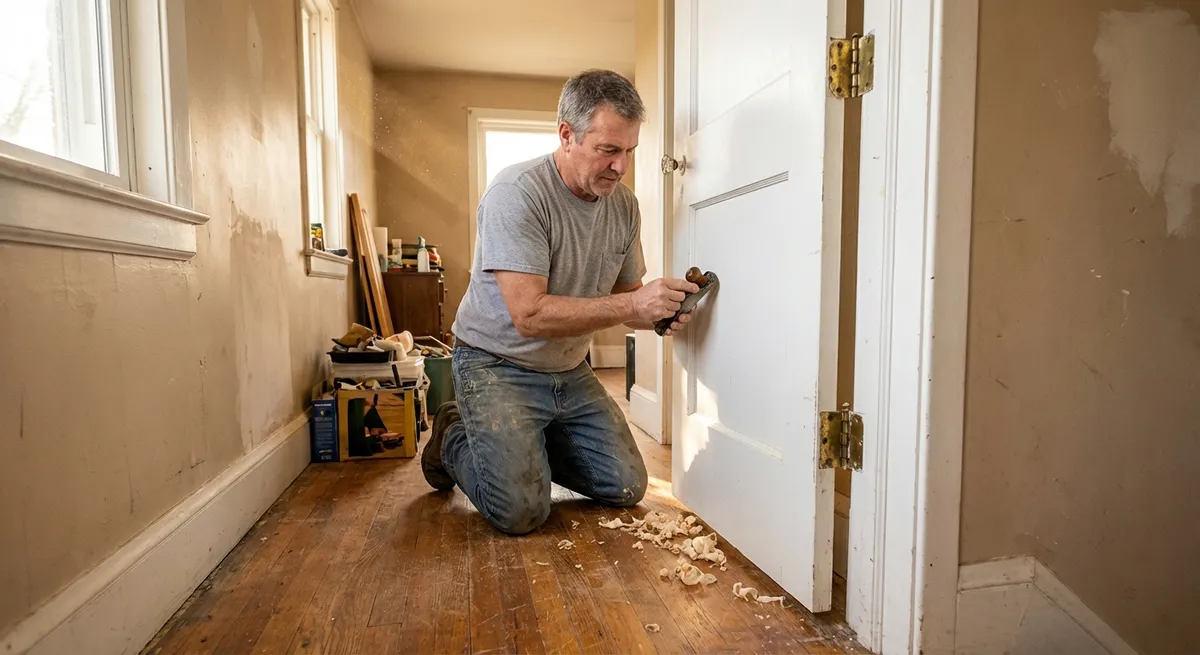
For minor high spots, start with 80–120 grit sandpaper and sand along the edge, not across it, checking your progress often. If more material needs to come off, use a hand plane, working in the direction of the wood grain to avoid tear-out. Take shallow passes and re-test the door in the frame periodically. It’s easy to remove too much if you rush.
After the door swings smoothly and closes without rubbing, smooth the sanded or planed area with 150–220 grit sandpaper. If you exposed bare wood, seal it with primer and paint or a clear finish. This is important, especially in humid climates: unsealed edges absorb moisture more easily and are more likely to swell again.
Step 5: Check the Floor Clearance and Hardware for Final Adjustments
Sometimes a door sticks not at the frame, but at the bottom—especially with thick rugs, new flooring, or house settling. Before you cut anything, measure the gap between the bottom of the door and the floor (or finished flooring). For interior doors, about ½ inch is usually enough for clearance and airflow, but you may need more over thick carpet.
If the door barely scrapes a rug, test with the rug removed. If it swings fine without the rug, consider a thinner rug or repositioning it slightly. If the door still drags directly on hard flooring or carpet, you’ll likely need to trim the bottom:
- Remove the door and mark a straight cut line using a level or straightedge.
- Use painter’s tape along the cut line to help reduce splintering.
- Cut with a circular saw or handsaw, keeping the cut square and steady.
- Lightly sand and seal the cut edge when finished.
Finally, inspect all hardware: hinges, knob, latch, and any doorstops. Tighten any loose screws and lubricate moving parts with a silicone-based spray or a small amount of graphite on the latch mechanism (avoid heavy oils that attract dust). Test the door several times: it should open easily, close without rubbing, and latch with a clean, solid click. Once everything is moving smoothly, you’ve extended the life of the door and improved how your home feels and functions—without major expense.
Conclusion
Fixing a sticking interior door is a practical DIY project that shows how small adjustments can make a big difference in everyday comfort. By methodically checking where the door binds, tightening and reinforcing hinges, realigning the strike plate, trimming only where needed, and confirming proper floor clearance, you can restore smooth operation with simple tools. These same steps work on most interior doors in your home, so once you fix one, you’ll know how to tackle the rest quickly and confidently.
Sources
- This Old House – How to Fix a Sticking Door - Step-by-step guidance and expert tips on diagnosing and repairing sticky doors
- Family Handyman – How to Fix a Door That Sticks - Practical visuals and methods for adjusting hinges, strike plates, and trimming doors
- Lowe’s – How to Install and Adjust Interior Doors - Manufacturer-backed instructions that explain clearances, hinge placement, and door alignment
- Home Depot – Door Hardware Installation & Adjustment Tips - Covers latch and strike plate alignment, plus basic door hardware setup
Key Takeaway
The most important thing to remember from this article is that this information can change how you think about Home Repair.