A sticky, hard-to-close door is annoying, but you usually don’t need a new door or a pro to fix it. With a few basic tools and about an hour, you can get most interior doors opening and closing smoothly again. This guide walks you through simple, practical steps to troubleshoot and repair a stubborn interior door so it works like it should.
Step 1: Diagnose Why the Door Is Sticking
Before you grab tools, figure out where and why the door is sticking. That tells you which fix will actually work.
Close the door slowly and notice what happens:
- Does the door rub at the top, bottom, or latch side?
- Does it scrape the floor or drag on a rug?
- Does it stick only at the latch, even though it looks aligned?
- Do the hinges squeak or feel loose when you move the door?
Use a pencil to lightly mark the exact spots where it binds—on the door edge, frame, or floor. This visual map helps you avoid removing material where you don’t need to.
Common causes you’re looking for:
- Loose or bent hinges
- Door sagging slightly in the frame
- Swollen wood from humidity
- Latch and strike plate misaligned
- Floor or carpet catching the door
Once you know the main cause, you can jump straight to the right repair instead of guessing.
Step 2: Tighten and Adjust the Hinges
Sagging hinges are one of the most common reasons a door drags or sticks, and they’re usually the easiest to fix.
First, support the door slightly:
- Slide a thin piece of cardboard or a wedge under the door handle side to take some weight off the hinges.
- Use a screwdriver (preferably hand, not power) to tighten all hinge screws on both the door and the frame.
- If any screws just spin without tightening, they’re stripped.
Fix stripped hinge screws:
- Remove the loose screw.
- Insert wooden toothpicks or a small wood plug coated with wood glue into the hole.
- Break them off flush, let the glue set a bit, then drive the screw back in.
- For severely damaged holes, step up to a slightly longer or thicker screw that can reach solid wood behind the jamb.
Check hinge alignment:
- Look at the gap between the door and frame along the hinge side.
- If the top gap is wider than the bottom, or vice versa, hinge shims (thin cardboard or plastic behind a hinge leaf) can even it out.
- Loosen the hinge screws slightly, slide a small shim behind the hinge on the frame side where needed, then retighten.
Open and close the door a few times. If the sticking is reduced or gone after hinge work, you may not need to trim or sand anything at all.
Step 3: Realign the Latch and Strike Plate
If the door closes most of the way but the latch won’t catch—or you have to slam it—your issue is probably at the latch and strike plate, not the door edges.
Check latch alignment:
- Close the door slowly and watch where the latch hits the strike plate.
- If it’s too high, too low, or hitting the plate’s solid metal instead of the opening, you’ve found the problem.
- You can also rub a bit of lipstick or chalk on the latch, close the door, and see where the mark lands on the strike.
Small misalignment fixes:
- Use a metal file to slightly enlarge or shift the opening of the strike plate toward where the latch naturally lands.
- Only remove a little metal at a time; test often so you don’t overdo it.
Larger misalignment fixes:
- Remove the strike plate and gently chisel away a small amount of wood from the jamb to reposition it.
- Move the plate up, down, or sideways as needed, mark new screw hole locations, and pre-drill small pilot holes.
- Reinstall the plate and test.
Don’t forget simple friction:
- If the door sticks as the latch bolt slides into the strike, a light spray of dry lubricant or a wipe of graphite on the latch can help it glide more smoothly.
A properly aligned latch should catch with a firm but easy push—no slamming required.
Step 4: Sand or Plane High Spots on the Door
If marks show the door is physically rubbing against the frame or floor, you may need to remove a small amount of material from the door edge. Take this slow—removing too much can leave a big uneven gap.
Identify where to trim:
- Look for your pencil marks from Step 1.
- Common trouble spots are the top corner on the latch side and the bottom edge of the door.
Remove the door safely:
- With the door closed, tap out the hinge pins using a nail set or small screwdriver and a hammer.
- Label the hinges (top, middle, bottom) if you remove them completely, so they go back in the same spots.
- Lift the door off and lay it flat on a pair of sawhorses or a sturdy table.
Trim carefully:
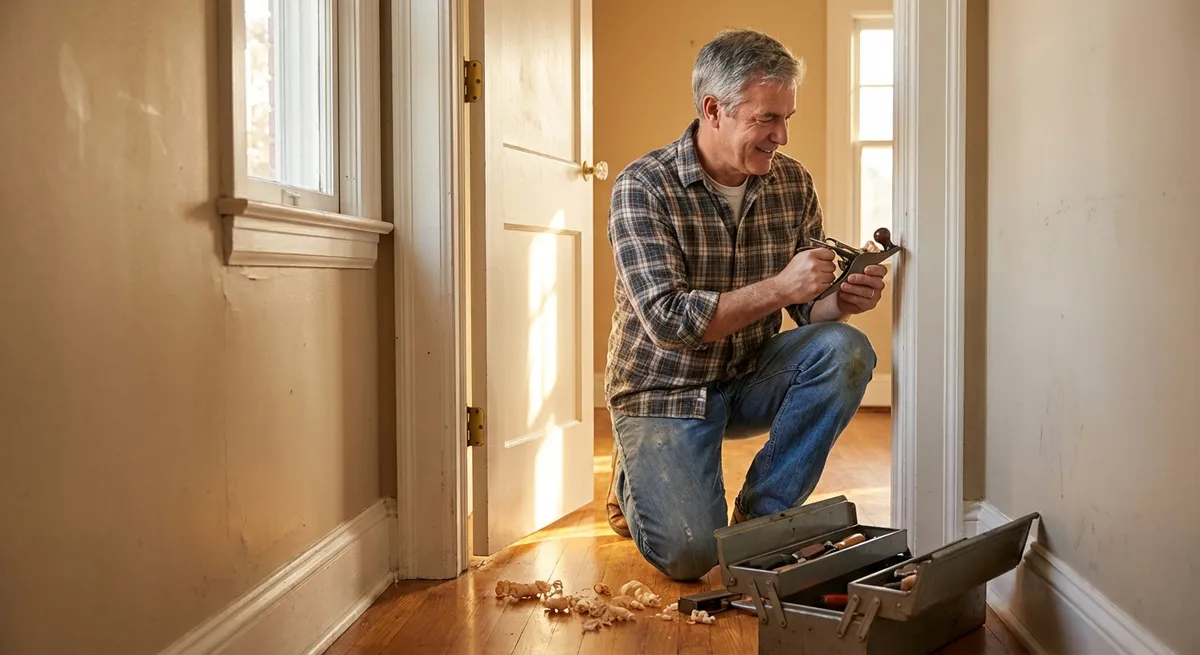
- Use 80–120 grit sandpaper for very minor adjustments, or a sharp hand plane for more noticeable binding.
- Work along the edge, not across it, taking off thin, even shavings.
- Check your progress often: hold the door back up to the frame and see if the gap has improved.
Refinish the trimmed edge:
- Bare wood will soak up moisture and can swell again, so seal it.
- Brush on a quick coat of paint, polyurethane, or clear sealer that matches your existing finish.
- Let it dry before rehanging the door.
Reinstall the door by reversing the removal steps, tapping the hinge pins back in from the top. Test the swing and make small adjustments as needed.
Step 5: Handle Floor and Humidity Issues
Sometimes the door isn’t the problem—the floor or environment is.
Check for floor and carpet interference:
- Open and close the door while watching the bottom edge.
- If it drags on carpet, a rug, or a transition strip, you have two options:
- Adjust the flooring (thinner rug, trimmed carpet near the door).
- Trim the bottom of the door slightly as in Step 4, focusing only where it contacts.
Consider seasonal swelling:
- Solid wood doors can swell in humid months and shrink in dry months.
- If the door only sticks at certain times of year, avoid aggressive trimming.
- Instead, use dehumidifiers or air conditioning during peak humidity to stabilize the door and frame.
Check the frame for movement:
- Look for cracks between the door frame and wall or visible shifting.
- If the frame has moved (common in older homes or after foundation settling), you may need to:
- Re-shim parts of the frame.
- Add or tighten screws through the jamb into the wall framing.
- For significant movement or visible wall cracks, consider getting a professional evaluation, especially if you see doors throughout the house going out of alignment.
Finishing touch: lubrication
- Apply a small amount of dry lubricant or silicone spray to hinges and the latch.
- Avoid heavy oil on interior doors—it can attract dust and grime over time.
After these checks and tweaks, a formerly stubborn door should open and close quietly with minimal effort.
Conclusion
A sticky interior door usually comes down to a few fixable issues: loose hinges, latch misalignment, swollen wood, or floor interference. By diagnosing the cause and working through these five steps—tightening hinges, realigning the latch, trimming high spots, and managing floor and humidity problems—you can get most doors working smoothly without replacing them. These are straightforward DIY tasks, and once you’ve done one door, you’ll be ready to tackle any others in your home that don’t quite cooperate.
Sources
- [Family Handyman: How to Fix a Sticking Door](https://www.familyhandyman.com/project/how-to-fix-a-sticking-door/) - Practical walkthrough of diagnosing and repairing doors that rub or bind
- [This Old House: How to Fix a Sticking Door](https://www.thisoldhouse.com/doors/21017630/how-to-fix-a-sticking-door) - Step-by-step guide with pro tips for adjusting hinges and planing doors
- [Home Depot DIY Projects & Ideas: How to Install and Adjust Door Hinges](https://www.homedepot.com/c/ah/how-to-install-door-hinges/9ba683603be9fa5395fab9011f8fa3d) - Details on hinge installation, adjustment, and dealing with misalignment
- [U.S. Department of Energy: Moisture Control for Homes](https://www.energy.gov/energysaver/moisture-control-home) - Background on humidity and moisture issues that can cause wood doors to swell
Key Takeaway
The most important thing to remember from this article is that this information can change how you think about Home Repair.