A door that sticks, drags, or won’t latch properly is annoying—and it’s one of the most common home repair issues. The good news: most sticky interior doors can be fixed in under an hour with basic tools you probably already own. This guide walks you through exactly how to diagnose the problem and make simple, lasting repairs without replacing the whole door.
Step 1: Figure Out Why the Door Is Sticking
Before grabbing a sander or plane, you need to know what’s actually causing the problem. Sticking doors usually come down to one of a few issues: seasonal wood movement, loose hinges, a shifted frame, or paint buildup.
Close the door slowly and watch what happens. Note exactly where it catches: at the top, bottom, latch side, or hinge side. Check if the latch lines up with the strike plate or if it’s hitting above or below. Look for fresh rub marks on the door edges or frame—these show you the high spots. Gently try lifting the door by the doorknob; if you feel movement, the hinges are likely loose or worn. Also, note if the door only sticks in humid weather, which can point to swelling wood instead of structural problems.
Step 2: Tighten and Adjust the Hinges First
Loose or sagging hinges are often the real culprit, and they’re the easiest fix. Grab a screwdriver that fits your hinge screws snugly—using the wrong size can strip them. With the door open, tighten all the screws on both the door side and the frame side of each hinge. Focus especially on the top hinge; when it’s loose, the door can sag and rub at the latch side or bottom.
If any screws just spin and won’t tighten, they may have stripped out the wood. Remove those screws and fill the holes with wooden toothpicks or a short piece of wood dowel coated in wood glue. Tap them in, cut them flush once dry, and then drive a new screw into the filled hole. For a door that still rubs near the top latch side, try slightly loosening the top hinge screws on the frame, shifting the door a hair upward or inward, and re-tightening while you hold the door in a better position.
Step 3: Mark the Problem Areas Before Removing Material
Only after the hinges are snug and aligned should you consider removing wood or paint. With the door closed as far as it will comfortably go, slide a piece of thin paper or a dollar bill around the edges. Where it sticks, you’ve confirmed your tight spots. Use a pencil to mark along those edges on the door or frame.
Open the door and look closely at the marks and any shiny rub spots. Decide whether it makes more sense to trim the door or adjust the frame slightly. For interior doors, it’s usually better to remove a small amount from the door edge than to alter the frame. Lightly mark a limit line so you don’t remove more than necessary—often 1–2 mm is enough. If humidity is a factor, consider whether you want a slightly looser fit to prevent future swelling from causing the same issue.
Step 4: Sand or Plane the Door Edge Carefully
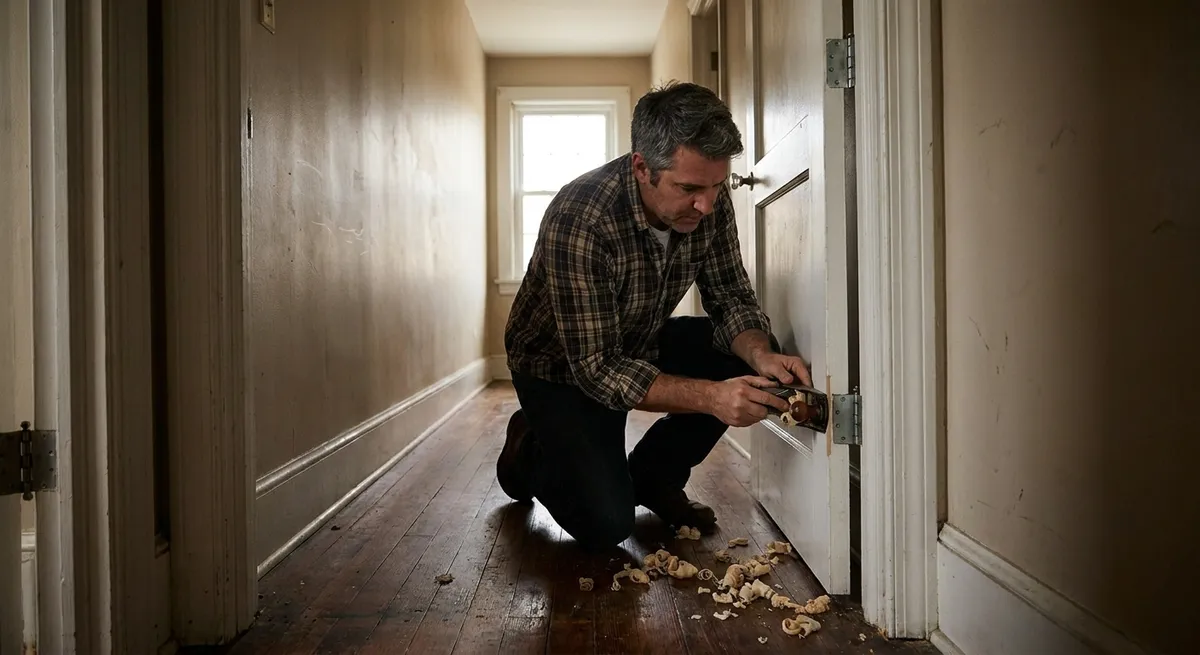
When you’re sure where the door is binding, you can remove a small amount of material. For minor rubs or paint buildup, start with medium-grit sandpaper (around 80–120 grit) wrapped around a sanding block for even pressure. Sand in the direction of the wood grain along the marked area, checking your progress frequently. For more stubborn binding or warped edges, a hand plane or power planer can speed things up—but take off very thin shavings at a time.
If you need to remove more than a millimeter or two, it may be easier to take the door off the hinges. Place it on a pair of sawhorses or a sturdy table. Plane or sand along your marked limit line, keeping your tool flat to avoid gouges. After a few passes, hang the door again and test the swing and close. Repeat this slow “remove and test” process until the door closes smoothly with a small, even gap around the edges, typically about the thickness of a nickel.
Step 5: Seal, Repaint, and Fine-Tune the Latch
Once the door swings freely, you’ll want to protect the newly exposed wood. Unsealed edges can absorb moisture and swell again, bringing back the same problem. Use a small brush to apply primer or a sealing product to the trimmed area, let it dry, then add a matching paint or clear finish. Even a thin, careful coat helps reduce future movement.
If the door closes but the latch doesn’t catch—or you have to push hard to make it latch—the strike plate may be out of alignment. Close the door and see where the latch hits the plate; you can color the latch with a marker, close the door, and see where the color rubs off on the plate. If it’s only off by a small amount, slightly bend the strike plate lip inward with pliers so the latch catches more easily. For bigger misalignments, remove the strike plate, chisel or file the mortise slightly higher or lower as needed, and reattach the plate. Test the door multiple times to confirm it closes easily and latches firmly without slamming.
Conclusion
A sticky interior door is one of those small home issues that can quietly drive you crazy—but it’s also an ideal DIY repair. By working methodically—tightening hinges, carefully identifying where it binds, removing only small amounts of material, and sealing your work—you can restore a smooth, quiet swing without calling a pro or replacing the door. The same basic process applies to many interior doors in your home, so once you’ve done it once, you’ll be ready to tackle any other stubborn doors that start to drag or stick.
Sources
- Family Handyman – How to Fix a Sticking Door - Practical walkthrough with photos on diagnosing and repairing sticky doors
- This Old House – How to Plane a Door - Step-by-step guide to safely removing material from a door edge
- Home Depot – Interior Door Buying & Installation Guide - Background on door types, clearances, and installation basics
- U.S. Department of Energy – Moisture Control in Buildings - Explains how moisture and humidity affect building materials like wood doors
- Fine Homebuilding – Hanging & Fitting Interior Doors - Detailed information on fitting doors and achieving proper clearances
Key Takeaway
The most important thing to remember from this article is that this information can change how you think about Home Repair.