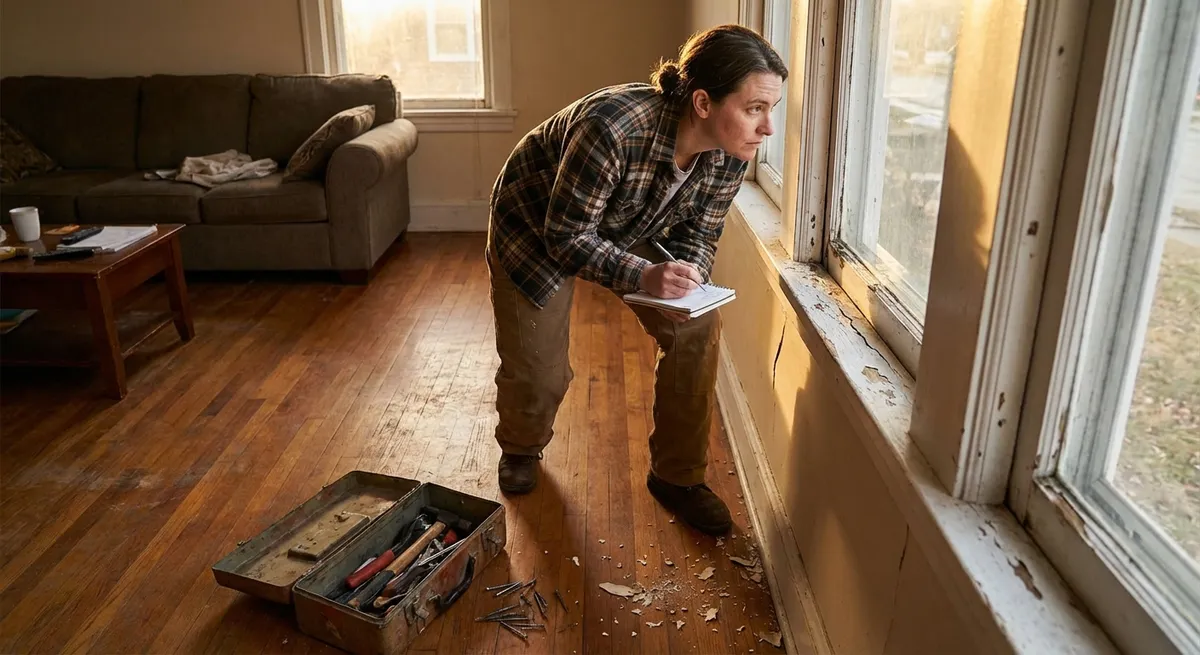
Small problems rarely stay small at home. A loose doorknob becomes a broken latch. A dripping faucet turns into a stained cabinet. This action-focused guide walks you through five high-impact home repairs you can actually do yourself—with clear steps, tool lists, and practical checks so you know when it’s time to call a pro.
Step 1: Stop a Dripping Faucet Before It Wrecks Your Sink Cabinet
A slow drip wastes water, drives up your bill, and can rot the cabinet under your sink. Most basic faucet leaks come from worn internal parts you can replace with simple tools.
What you’ll need
- Adjustable wrench
- Screwdriver (Phillips and flathead)
- Replacement cartridge, washer, or O‑rings (check your faucet brand/model)
- Plumber’s grease
- Towel or small bucket
How to do it
Shut off the water
Find the shutoff valves under the sink and turn them clockwise until they stop. Open the faucet to relieve pressure and confirm water is off.
Plug the drain and prep the area
Use a sink stopper or rag to cover the drain so small screws or parts don’t disappear. Lay a towel in the sink to protect the surface.
Disassemble the faucet handle
Look for a small cap or screw on the handle. Pry off decorative caps gently, then remove the screw and lift the handle. Keep parts in order so reassembly is easier.
Remove the old cartridge or washer
Under the handle you’ll see a retaining nut or clip. Loosen it with the wrench and pull out the cartridge or stem. For compression faucets, remove the rubber washer and O‑ring on the stem.
Match and replace the parts
Take the old parts to a hardware store and get exact matches (brand and model matter). Lightly coat new O‑rings or cartridge seals with plumber’s grease, then install them in the same orientation as the originals.
Reassemble and test
Reinstall the stem or cartridge, tighten the retaining nut (snug, not over-tight), and put the handle back on. Turn the shutoff valves back on slowly and test the faucet. Check under the sink for leaks.
When to call a pro
- Corroded or seized parts that won’t come loose
- Leaks inside the faucet body or at the base that persist after new parts
- Very old plumbing with brittle or green/white crusted pipes
Step 2: Fix a Wobbly Door That Won’t Latch Cleanly
A door that rubs, sticks, or won’t stay latched is usually a hinge or alignment issue—not a new-door problem. You can often solve it with a screwdriver and a few shims.
What you’ll need
- Screwdriver or drill with driver bits
- Wood shims or toothpicks
- Wood glue (optional but helpful)
- Utility knife
- Pencil
How to do it
Find the problem spot
Close the door slowly and watch where it hits the frame or rubs. Note if the door sags (top corner hits first) or if the latch doesn’t meet the strike plate correctly.
Tighten all hinge screws
Open the door and start by tightening all hinge screws on the door and frame. Loose hinges are the most common issue and take seconds to fix.
Re-secure stripped screw holes
If screws spin without tightening, remove them. Fill the hole with wood shims or toothpicks dipped in wood glue. Pack tightly, snap off flush, and reinstall the screw. This gives the screw something solid to bite into.
Adjust the door height and angle
If the door still sags, slightly loosen the top hinge screws on the frame and lift the door upward as you retighten them. Sometimes shifting the top hinge just a few millimeters will re-align the latch perfectly.
Fine-tune the strike plate if needed
If the latch doesn’t fully engage but alignment looks close, mark where the latch hits the strike plate with a pencil. Remove the plate and file or chisel the opening slightly in the direction needed, then reinstall.
When to call a pro
- Frame is visibly cracked, warped, or separating from the wall
- Door won’t close because the wall or frame is severely out of plumb
- Exterior doors with security or weatherproofing issues beyond basic alignment
Step 3: Patch a Small Wall Hole So It Actually Disappears
Whether it’s from a doorknob or a picture hook, wall damage is one of the most visible home issues—and one of the simplest to fix if you follow the right steps for the hole size.
What you’ll need
- Spackling compound (small holes) or joint compound (larger areas)
- Putty knife (2"–4" for small, 6"–8" for larger)
- Sanding sponge or fine-grit sandpaper (120–220 grit)
- Self-adhesive wall repair patch (for holes about 1–4 inches)
- Primer and touch-up paint
- Damp rag
How to do it
Prep the damaged area
Use the putty knife to scrape away loose paint, crumbs of drywall, or rough edges. Wipe the area with a damp rag and let dry.
Fill nail and screw holes (up to pencil size)
Press spackle directly into the hole with the putty knife, then scrape off the excess until it’s level or slightly raised. Let it dry completely, then sand smooth and wipe away dust.
Use a repair patch for larger holes (about 1–4 inches)
Place a self-adhesive patch centered over the hole. Apply joint compound over the patch, feathering the edges out a few inches beyond the patch. Let dry fully.
Add a second (and sometimes third) coat
Lightly sand the first coat, then apply a thinner, wider second coat to blend the repair into the surrounding wall. Repeat until the patch is invisible to the touch. Let each coat dry and sand lightly between coats.
Prime and paint for a seamless finish
Apply primer to the repaired area so the paint doesn’t flash (look dull or different in sheen). Once dry, paint over the spot, feathering your brush or roller into the surrounding area.
When to call a pro
- Very large holes involving studs or electrical/plumbing behind the wall
- Cracks that keep returning after proper repair (may indicate structural movement)
- Water-damaged drywall that feels soft or crumbles on touch
Step 4: Quiet a Squeaky Floor Without Tearing It Up
Squeaky floors are usually wood rubbing on wood or loose fasteners, not a sign your house is failing. You can often fix them from either above or below with minimal disruption.
What you’ll need
- Helper (helpful for locating squeaks)
- Drill or screwdriver
- Squeak repair kit or trim-head screws
- Construction adhesive (optional, for access from below)
- Safety glasses and dust mask (if working from a basement/crawlspace)
How to do it
Find the exact squeak point
Have someone walk slowly over the floor while you listen and feel for movement. Mark the noisy spot with painter’s tape or a pencil.
Determine what’s under the floor
If you can access the underside (basement, crawlspace), locate the joist under the squeak. From above, joists typically run perpendicular to the floorboards or subfloor seams.
Fix from below (best option when possible)
From underneath, have your helper step on the squeaky area. Drive screws up through the subfloor into the flooring layer (not all the way through) at an angle on either side of the joist. You can also apply a bead of construction adhesive between subfloor and joist to reduce movement.
Fix from above with hidden screws (for carpeted floors)
Use a squeak repair kit that lets you drive special scored screws through the carpet into the subfloor and joist. Once driven, the top of the screw snaps off below the carpet surface, leaving it invisible.
Fix from above on wood floors (visible fasteners)
If you accept visible holes, pre-drill and drive trim-head screws into the floorboard and subfloor at the squeak point, angling slightly toward the joist. Countersink the head and fill with matching wood filler.
When to call a pro
- Floors that sag significantly or bounce excessively over a wide area
- Visible cracking or separation of structural beams or joists
- Older homes with complex, historic flooring you don’t want to risk damaging
Step 5: Replace a Worn-Out Caulk Line Around Your Tub or Sink
Cracked, moldy, or peeling caulk doesn’t just look bad—it lets water get behind walls and into subflooring. Re-caulking is a simple, high-value repair you can do in an afternoon.
What you’ll need
- Caulk remover tool or utility knife
- Caulk (100% silicone for tubs/showers; paintable latex or silicone for sinks/counters)
- Caulk gun (for standard tubes)
- Painter’s tape
- Rubbing alcohol or mildew remover
- Paper towels or rags
- Small bowl of soapy water (for smoothing)
How to do it
Remove the old caulk completely
Cut along both edges of the existing caulk bead with a utility knife or caulk removal tool. Peel it out, then scrape off remaining residue. Be patient—leftover caulk prevents good adhesion.
Clean and dry the area
Wipe surfaces with rubbing alcohol or a bathroom cleaner that removes soap scum and mildew. Let the area dry fully; moisture under new caulk leads to early failure.
Mask the joint for a clean line
Apply painter’s tape along both sides of the joint, leaving the width you want for the caulk bead exposed (usually about 1/8"–1/4").
Cut the caulk tube and apply a steady bead
Cut the tube tip at a 45-degree angle, making a small opening at first. Apply even pressure to the caulk gun and pull it smoothly along the joint, filling the gap without big gaps or blobs.
Tool the bead and remove the tape
Dip a finger in soapy water and run it gently along the bead to smooth and press it into the joint. Immediately pull the painter’s tape away at a sharp angle, away from the bead. Let the caulk cure as directed on the package before getting it wet.
When to call a pro
- Soft or spongy surfaces around tubs and showers (possible hidden water damage)
- Visible mold that returns quickly after cleaning or extends into wall/ceiling areas
- Cracked grout or loose tiles combined with failed caulk
Conclusion
You don’t need a full workshop or contractor-level skills to make your home feel tighter, quieter, and more solid. By tackling problems you see every day—dripping faucets, sticky doors, damaged walls, noisy floors, and failing caulk—you stop small issues from turning into expensive repairs.
Start with one project, gather the right tools, and move carefully step by step. The more you fix, the more you’ll understand how your home is put together—and the more confident you’ll be when the next problem shows up.
Sources
- U.S. Environmental Protection Agency – Fix a Leak - Explains how household leaks waste water and why fixing dripping fixtures matters
- This Old House – How to Fix a Leaky Faucet - Detailed faucet repair techniques and part identification
- Family Handyman – How to Fix a Door That Won’t Latch - Visual walkthroughs for door and latch alignment problems
- U.S. Department of Energy – Air Sealing Your Home - Background on sealing gaps and joints to prevent moisture and drafts
- Mayo Clinic – Mold Exposure - Health information on mold growth and when it becomes a concern in damp areas
Key Takeaway
The most important thing to remember from this article is that this information can change how you think about Home Repair.