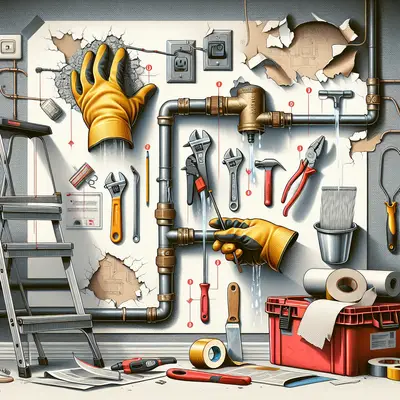
DIY home repair doesn’t have to be guesswork or stress. With a clear plan, a few core skills, and realistic expectations, you can handle a surprising amount of maintenance yourself—and know when to call in a pro. This guide walks you through five practical, step‑by‑step repairs that come up in real homes all the time, plus the mindset and prep that keep projects from spiraling.
Start with Safety and a Simple Assessment
Before you grab a hammer or screwdriver, you need two things: a safe work area and a basic understanding of what’s actually wrong. Skipping either usually leads to wasted time—or injuries.
Begin by clearing the area you’ll be working in. Move furniture, rugs, and anything that can trip you or get damaged. Good lighting is non-negotiable, especially for electrical, plumbing, or detail work. If natural light is poor, plug in a work light or a bright lamp so you can clearly see what you’re doing.
Next, gather your basic safety gear: safety glasses, work gloves, hearing protection if you’re using loud tools, and a dust mask or respirator for sanding or cutting. For any work near electricity, turn off the power at the breaker and verify with a non-contact voltage tester. For plumbing, find and test the shutoff valve before you start opening anything.
Now do a quick assessment of the issue instead of jumping straight into fixing it. Look for patterns: Is that water stain getting bigger over time? Does the breaker trip only when a certain appliance runs? Take a couple of photos, note where and when the problem occurs, and check for obvious signs like loose screws, worn seals, or corrosion. This short “diagnose first” habit will make every step-by-step project you tackle more successful.
Step 1: Quiet a Persistent Interior Door That Won’t Stay Put
A door that won’t close right—rubs, sticks, swings open on its own—can be annoying enough to notice every single day. You can usually fix these issues without replacing the door or frame.
- Check the hinges for looseness.
Open the door halfway and gently lift up on the handle. If you feel play or movement, the hinge screws are likely loose. Tighten each screw with a screwdriver (hand tools give better feel than a drill). If a screw spins without grabbing, the wood is stripped.
- Fix stripped screw holes.
Remove the loose screw and fill the hole with wooden toothpicks or a short section of wooden dowel coated in wood glue. Pack it tightly, snap it flush, and let it dry. Then drive the screw back into the repaired hole. This gives the screw fresh wood to bite into.
- Adjust for a door that swings open or closed by itself.
Often this is a hinge alignment issue rather than a crooked house. Remove the top hinge pin, lay it on a hard surface, and give it a slight bend in the middle with a hammer. Reinsert the pin. The added friction often keeps the door from drifting open or closed. Repeat lightly if needed.
- Fix rubbing or sticking at the latch side.
Close the door slowly and watch where it binds. Use a pencil to mark the tight spot on the door edge. Remove the door from its hinges, lay it on a stable surface, and use a hand plane, rasp, or sanding block to remove a small amount of material along that line. Rehang and test; repeat in small passes rather than taking off too much at once.
- Adjust the strike plate if the latch won’t catch.
If the latch hits above or below the hole in the strike plate, loosen the plate’s screws and shift it slightly up, down, in, or out to line up with the latch. For a bigger adjustment, chisel a small amount of wood from the jamb and relocate the plate. Test the door each time until it clicks smoothly into place.
Step 2: Upgrade a Leaky Kitchen or Bath Faucet Connection
Not every “plumbing problem” means opening walls. Many small leaks happen at visible connections and can be fixed quickly with basic tools and patience.
- Shut off the water and relieve pressure.
Turn the shutoff valves under the sink clockwise until they stop. Open the faucet to release leftover water in the lines. Place a towel and a small bucket or pan under the connections you’ll be working on.
- Find exactly where the leak starts.
Dry the area thoroughly with a towel. Turn the water back on momentarily and watch closely with a flashlight: look for the first spot where water appears—at the base of the faucet, around the supply line nut, or at a joint. Turn the water off again once you know the source.
- Tighten loose supply line connections.
If the leak is at a threaded connector (like the nut connecting the supply line to the faucet or shutoff valve), use an adjustable wrench to snug it up a quarter-turn at a time. Don’t over-tighten; that can damage threads or crush washers. Turn the water back on briefly to test after each small adjustment.
- Replace worn washers or supply lines.
If tightening doesn’t solve it, disconnect the leaking supply line by loosening the nut fully. Inspect the rubber washer or O-ring at the end. If it’s cracked, flattened, or missing, replace it or swap in a new flexible supply line of the same length and connection size. Wrap male threads (if present) with plumber’s tape in a clockwise direction before reconnecting.
- Test and monitor for a full day.
Turn the water back on slowly while watching the repaired connection. Dry it and check again in 5–10 minutes, then after using the faucet a few times. Revisit later that day to confirm no slow seepage is returning. A truly fixed joint stays bone dry.
Step 3: Restore a Wobbly Electrical Outlet Safely
A loose outlet that moves when you plug something in is more than just annoying—it can stress the wiring and create unsafe connections. You can stabilize it without rewiring the whole box, as long as you work carefully.
- Cut the power and verify it’s off.
Turn off the breaker that controls the outlet. At the outlet, use a plug-in tester or a non-contact voltage tester to confirm there is no power. Never rely just on a label or guess which breaker is correct.
- Remove the cover plate and inspect the box.
Unscrew the cover plate and set it aside. Gently wiggle the outlet and look inside with a flashlight. You’re checking whether the electrical box itself is solidly attached to the stud or wall, and whether the outlet mounting screws are loose or the wall surface is recessed too far.
- Tighten the outlet mounting screws.
With power still off, use a screwdriver to snug the two screws that hold the outlet to the electrical box—one at the top, one at the bottom. This alone can fix many wobbles. If the outlet still sits too deep or rocks, you need to bring it forward.
- Use outlet spacers or shims for a flush fit.
Add plastic outlet spacers or small, approved shims behind the outlet’s mounting tabs to bring it level with the wall surface. Stack spacers as needed for depth. Reattach the outlet to the box with its screws, making sure it sits straight and firmly without rocking.
- Replace the cover plate and retest.
Reinstall the cover plate, taking care not to overtighten and crack it. Turn the breaker back on and test the outlet with a lamp or outlet tester. Plug and unplug a few times to confirm the outlet feels solid and doesn’t shift in the wall.
If you see damaged wiring, burn marks, or melted plastic at any point, stop and call a licensed electrician. That’s beyond DIY scope.
Step 4: Fix a Drafty Window with Simple Sealing Techniques
Drafty windows can make a home uncomfortable and expensive to heat or cool, even if the glass is intact. You can often cut drafts dramatically using affordable sealing materials without replacing the whole unit.
- Find exactly where the air is coming in.
On a windy day or with your HVAC running, hold the back of your hand or a lit stick of incense near the window edges, sash, and trim. Wherever you feel a breeze or see the smoke move sharply, mark that area with painter’s tape or a pencil.
- Seal gaps around the interior trim.
If the draft is coming from the joint between the window trim and the wall, run a bead of paintable acrylic latex caulk along the crack. Cut the caulk nozzle at a small angle, apply a steady bead, then smooth it with a damp finger or caulk tool. Wipe away excess with a damp cloth. Let it cure, then paint if desired.
- Replace worn or missing weatherstripping.
Open the window and look at the sides and bottom where the sash meets the frame. If the existing weatherstripping is brittle, missing, or flattened, remove it. Clean the surface, then apply new adhesive-backed foam or V-strip weatherstripping sized for your window type. Press firmly so it adheres well.
- Use rope caulk or removable sealant for seasonal gaps.
For older windows you don’t open in winter, press rope caulk or removable weatherseal into gaps around the sash. This is temporary but very effective and can be peeled away in warmer months when you want to open the window again.
- Consider a film kit for single-pane or very leaky windows.
For windows that still feel cold and drafty, install a clear window insulation film on the interior. Clean the glass and frame, apply the double-sided tape, press on the film, then shrink it gently with a hair dryer to tighten and clear it. This creates an insulating air layer that can noticeably reduce drafts.
Step 5: Secure a Loose Towel Bar or Wall Hook in Drywall
That wobbly towel bar or coat hook isn’t just annoying—it’s one abrupt pull away from tearing out a chunk of drywall. A proper anchor makes the repair stronger than the original installation.
- Remove the loose fixture and inspect the damage.
Unscrew the towel bar brackets or hook base and pull it away from the wall. Note whether it was screwed into a stud or just drywall, and how big the holes have become. Brush away loose drywall paper and dust.
- Decide between patching or using a larger anchor.
For small, slightly enlarged holes, a solid drywall anchor can be enough. For bigger craters, patch the hole first with joint compound or a pre-cut patch, then redrill for a new anchor after it dries. If the fixture lines up over a stud location, you can skip anchors and screw directly into the stud.
- Choose the right anchor type and size.
For light to moderate loads (towels, light robes), plastic expansion anchors or self-drilling drywall anchors are usually enough. For heavier loads (coat hooks with bags), consider metal anchors or toggles rated for higher weight. Match the anchor size to the screw size recommended by the manufacturer.
- Install the anchors correctly.
For standard plastic anchors, pre-drill a hole sized to the anchor, then tap it flush with a hammer. For self-drilling anchors, drive them in with a screwdriver until they sit snugly and flush. Avoid overtightening; if the anchor spins freely, the hole may be too big and you’ll need a larger anchor or patch.
- Reattach the fixture and test gently.
Hold the bracket or hook in place and drive the screws into the anchors until snug. Don’t crank them down so hard that the anchor or drywall crushes. Gently pull and push on the fixture to check stability before putting full weight on it. If it feels solid, it’s ready for regular use.
Conclusion
Confident home repair isn’t about knowing how to fix everything—it’s about having a repeatable process: stay safe, diagnose clearly, work step by step, and respect your limits. By stabilizing doors and outlets, controlling small leaks, cutting drafts, and reinforcing wall fixtures, you’ll handle problems that come up in almost every home, all while learning skills that build on each other.
The more you practice these kinds of repairs, the easier it becomes to spot issues early and tackle them before they become expensive emergencies. Keep basic tools handy, take your time, and document what you do. Your home becomes easier to live in—and you become the person who actually knows how to fix things when they go wrong.
Sources
- [U.S. Consumer Product Safety Commission – Home Maintenance and Safety](https://www.cpsc.gov/Safety-Education/Safety-Guides/home) – General safety guidance for working on common household systems and fixtures
- [Energy.gov – Air Sealing Your Home](https://www.energy.gov/energysaver/air-sealing-your-home) – Official U.S. Department of Energy advice on finding and fixing drafts around windows and doors
- [Family Handyman – How to Fix a Door That Sticks](https://www.familyhandyman.com/project/how-to-fix-a-door-that-sticks/) – Practical walkthrough of diagnosing and correcting common interior door problems
- [Mayo Clinic – Power Tool Safety](https://www.mayoclinic.org/healthy-lifestyle/adult-health/in-depth/power-tool-safety/art-20045400) – Safety tips relevant to using power tools during DIY repairs
- [NFPA (National Fire Protection Association) – Electrical Safety in the Home](https://www.nfpa.org/Public-Education/Fire-causes-and-risks/Top-fire-causes/Electrical) – Guidelines and risks to be aware of when working around electrical outlets and wiring
Key Takeaway
The most important thing to remember from this article is that following these steps can lead to great results.