Home repairs don’t usually fail all at once—they fail in stages. A tiny stain, a loose tile, or a door that sticks is often your house quietly asking for help. If you learn how to catch and handle these early warning signs, you’ll avoid expensive repairs and emergency calls later. This guide walks you through a practical, step‑by‑step “triage” approach so you can decide what to tackle now, what to monitor, and when to call in a pro.
Step 1: Do a Simple Monthly Walkthrough (Your 20-Minute House Checkup)
Think of this as a routine checkup for your home, not a deep dive. Once a month, take 20 minutes to walk inside and outside your home with your phone or a notebook and do the following:
- Look up at ceilings and along upper walls for new stains, hairline cracks, or bubbling paint—these can signal moisture problems.
- Open and close doors and windows. Note anything that sticks, scrapes, or doesn’t latch. Sudden changes may point to humidity issues, settling, or framing problems.
- Check under sinks, around toilets, and near appliances (dishwasher, washing machine, water heater). Look for damp spots, corrosion on valves, and soft or discolored flooring.
- Outside, walk the perimeter. Look for gaps around windows and doors, peeling caulk, cracked siding, and soil that slopes toward your foundation instead of away.
- Snap photos and jot quick notes: where it is, how big it is, and today’s date. This makes it easier to spot changes over time instead of relying on memory.
By repeating the same quick route every month, you’ll start noticing what’s “normal” in your home—and what’s not.
Step 2: Sort Issues by Risk, Not Just Annoyance
Some problems are irritating (a squeaky door), while others are quiet but serious (a slow leak). DIYers often start with what’s easiest or most annoying, but a smarter approach is to rank repairs by risk:
- High risk (handle now or in days): anything involving water intrusion, possible electrical hazards, or structural changes. Examples: active drips, a breaker that keeps tripping, rapidly spreading cracks, spongy floors, or water near outlets.
- Medium risk (weeks): things that can cause damage over time or affect energy use: failed caulk around a tub, missing weatherstripping, small gaps in siding, minor roof shingle damage you can see from the ground.
- Low risk (months): mostly cosmetic or convenience issues: scuffed walls, squeaky hinges, loose knobs, tiny nail pops in drywall, minor dings in trim.
Create a simple three-line list in your notes app:
- “Urgent – This Week”
- “Soon – This Month”
- “Later – This Season”
Move items into one of these buckets. High-risk issues jump to the top, even if they’re boring or invisible. This approach keeps you focused on what protects your home first, then on comfort and looks.
Step 3: Gather a Basic “First-Response” Repair Kit
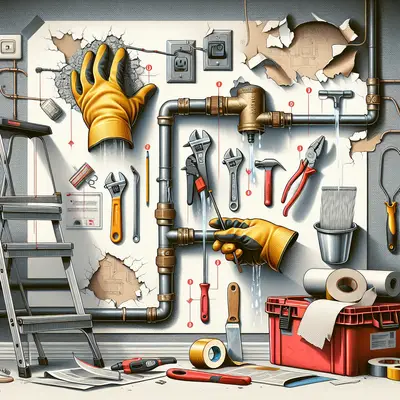
Most small home repairs don’t require specialized tools, but trying to fix anything without a few basics turns simple jobs into frustrating ones. Before you start tackling your list, build a compact kit you can carry from room to room:
- Hand tools: a 16–20 oz hammer, two screwdrivers (one Phillips, one flathead), an adjustable wrench, pliers, and a utility knife with sharp blades.
- Measurement and marking: a 25-foot tape measure, a small level, and a pencil or permanent marker.
- Fasteners and hardware: a small assortment of wood screws, drywall screws, anchors, and picture-hanging hooks.
- Sealants and patching supplies: a tube of paintable caulk, plumber’s tape (Teflon tape), a small container of spackle or pre-mixed joint compound, and a putty knife.
- Safety gear: safety glasses, work gloves, dust mask or respirator rated for dust, and ear protection if you’ll use power tools.
Store these together in a bucket, tool bag, or toolbox. The goal is to have one grab-and-go kit so you don’t waste time hunting for what you need. When a small issue shows up, you’re ready to handle it immediately instead of putting it off.
Step 4: Fix and Prevent: Five Practical Repairs You Can Do Yourself
Here are five step-by-step fixes most DIY enthusiasts can handle with basic tools. Each one tackles a common issue that, if ignored, can lead to bigger problems.
1. Stop a Slow-Dripping Faucet
A slow drip wastes water, raises your bill, and can stain sinks.
- Turn off water to the faucet using the shutoff valves under the sink (turn clockwise).
- Plug the sink drain so you don’t lose small parts.
- Remove the handle (usually a screw hidden under a cap or behind the handle).
- Take out the cartridge or washer assembly (this varies by faucet type; take photos as you go).
- Inspect rubber washers and O-rings for cracks or flattening and replace with matching parts, or replace the entire cartridge if your faucet uses one.
- Reassemble in reverse order, turn water back on, and test for leaks.
Tip: Bring the old parts to the hardware store to match sizes exactly.
2. Reseal a Drafty Window or Door
Drafts make your home uncomfortable and drive up energy costs.
- On a windy day or using a lit incense stick, move slowly around the interior frame of the window or door to spot air leaks (the smoke will move where air flows).
- Clean the area with a dry cloth and, if needed, mild cleaner to remove dirt and old, loose caulk.
- For gaps between the frame and wall trim, apply paintable caulk in a continuous bead, then smooth it with a damp finger or a caulk tool.
- For gaps between the sash and frame on windows or the door and frame, install or replace adhesive-backed weatherstripping where the surfaces meet.
- Allow caulk to cure as directed, then test again to confirm the draft is gone.
Tip: Avoid sealing weep holes on windows or any gaps specifically designed to drain water.
3. Patch a Small Drywall Hole (Up to About 2 Inches)
Left alone, small holes can grow and make repainting harder.
- Lightly scrape around the hole with a putty knife to remove loose drywall or flaking paint.
- For nail or screw holes, you can fill directly; for slightly larger holes, apply a self-adhesive mesh patch over the area.
- Apply spackle or joint compound with a putty knife, pressing it into the hole and feathering the edges out beyond the damaged area.
- Let it dry completely (check the product label), then sand lightly with fine-grit sandpaper until smooth and flush with the wall.
- Wipe off dust and touch up with matching paint, blending out past the patched area.
Tip: Multiple thin layers of compound are better than one thick one; they dry faster and crack less.
4. Quiet and Align a Sticking Interior Door
A door that sticks or rubs can damage the frame and is often easy to fix.
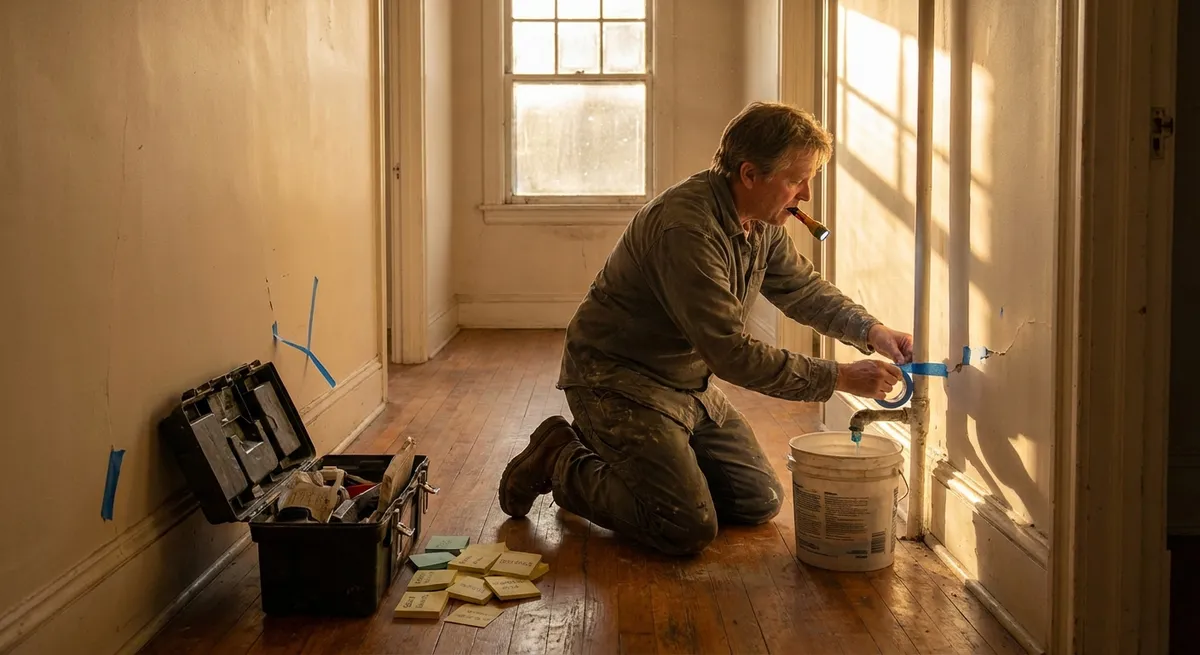
- Identify the problem area: does the door rub on the top, bottom, latch side, or near the hinges? Mark light rub spots with painter’s tape or pencil.
- Check the hinges first. Tighten loose hinge screws; if a screw spins without tightening, replace it with a longer screw that reaches into the framing.
- If the top of the door hits the frame, slightly tighten the top hinge and loosen the bottom hinge to pull the door upward on the latch side; do the opposite if the bottom rubs.
- For minor rubbing on the edge, remove the door pin(s), take the door off, and lightly sand the rubbing area. Check the fit, then sand more if needed.
- Lubricate hinges with a tiny amount of oil or silicone spray, wipe off excess, and rehang the door.
Tip: Adjusting hardware solves many door problems—start there before removing material.
5. Seal a Tub or Shower with Fresh Caulk
Cracked or missing caulk lets water behind walls and into floors.
- Use a utility knife or caulk removal tool to carefully cut and peel away old caulk where the tub or shower meets walls and corners.
- Clean the joint thoroughly with a bathroom cleaner, then wipe with rubbing alcohol to remove soap scum and residue; let everything dry completely.
- Apply painter’s tape slightly above and below the joint for a clean, straight line.
- Cut the caulk tube tip at a 45° angle to match the size of the gap (start small) and apply a steady, continuous bead along the joint.
- Smooth the bead with a damp finger or caulk tool, then remove the tape while the caulk is still wet.
- Let the caulk cure as directed before using the shower or tub.
Tip: Use a quality 100% silicone or “tub and tile” caulk labeled as mold- and mildew-resistant.
Step 5: Know When to Stop and Call a Professional
Being handy doesn’t mean doing everything yourself. Part of smart DIY is knowing your limit and recognizing issues that need a specialist. Hit pause and get help when:
- You smell burning, see scorch marks around outlets, or have breakers tripping repeatedly.
- There’s active water where it shouldn’t be—especially near electrical, ceilings bowing from moisture, or floors suddenly soft.
- Cracks in walls or ceilings are wide, growing quickly, or accompanied by doors and windows going suddenly out of alignment.
- Any work involves gas lines, major structural framing, or roofing beyond what you can safely access.
When you suspect a bigger issue:
- Take clear photos and notes on what you see and when it started.
- Turn off any relevant systems (water, power, gas) if there’s immediate risk.
- Contact a licensed pro and share your notes; this can speed up diagnosis and reduce billable time.
Calling in help early on serious issues is still a form of “fixing it yourself”—you’re protecting your home by acting quickly and making informed decisions.
Conclusion
Home repair doesn’t have to feel like a constant game of catch-up. With a simple monthly walkthrough, a basic tool kit, and a focus on risk instead of annoyance, you can stay ahead of most problems. Tackle small leaks, drafts, cracks, and sticking doors before they escalate, and don’t hesitate to bring in a professional when the issue moves beyond your comfort zone.
The more you treat your home like a system that needs regular triage, the fewer surprises you’ll face—and the more your time, tools, and budget will work in your favor.
Sources
- U.S. Department of Energy – Air Sealing Your Home - Guidance on finding and sealing drafts to improve comfort and efficiency
- Environmental Protection Agency (EPA) – WaterSense - Information on leaks, water waste, and simple fixes for common plumbing issues
- Consumer Product Safety Commission – Home Electrical Safety Checklist - Key warning signs and safety practices for household electrical systems
- University of Missouri Extension – Home Maintenance Checklist - Seasonal and routine maintenance tasks that help prevent major repairs
- Mayo Clinic – Power Tool Safety - Safety fundamentals to keep in mind when using tools for DIY home projects
Key Takeaway
The most important thing to remember from this article is that following these steps can lead to great results.