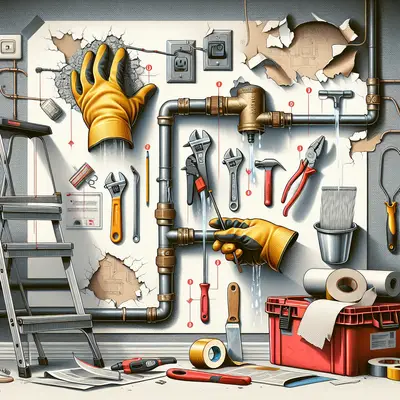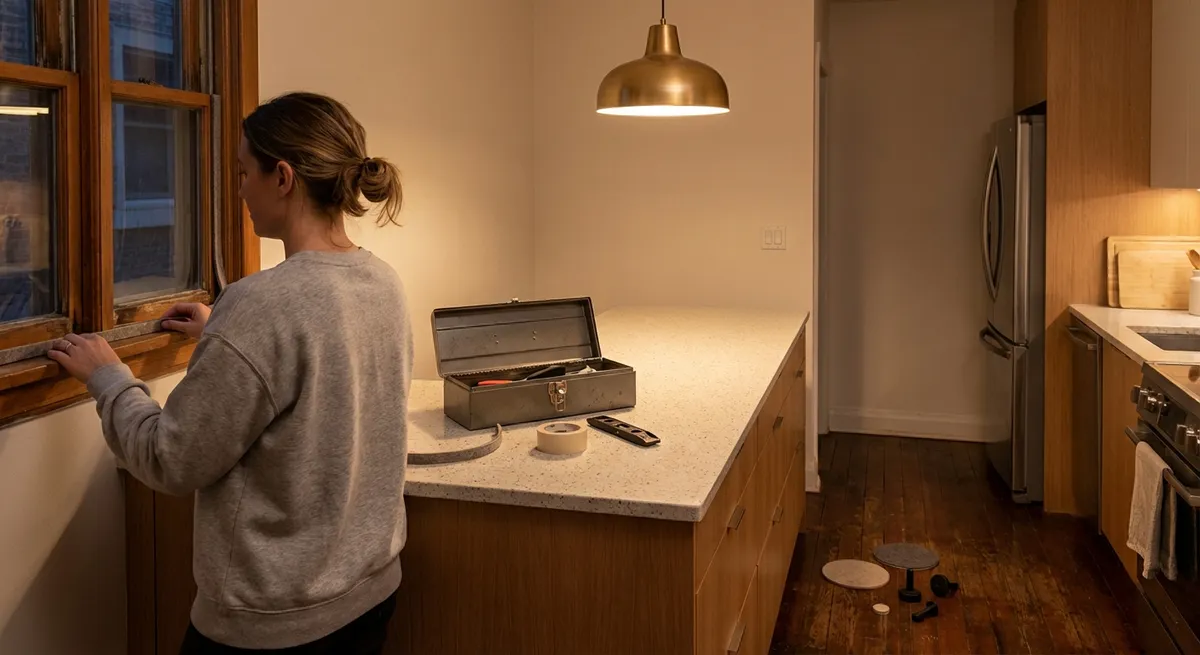
A lot of home repair advice jumps straight to big renovations and expensive upgrades. But the things that bother most people day to day are simpler: a door that won’t latch, a faucet that won’t stop dripping, a cabinet that slams, a toilet that won’t quit running, or a wall anchor that keeps pulling out. These aren’t flashy projects, but fixing them makes your home feel calmer, quieter, and more reliable.
This guide walks you through five clear, step-by-step fixes any DIY-minded homeowner can handle with basic tools. Each repair focuses on solving a real annoyance with practical, repeatable steps.
Fix a Door That Won’t Latch Properly
When a door won’t stay closed, the problem is almost always the alignment between the latch and the strike plate on the door frame. You don’t need a new door—just a small adjustment.
Step 1: Diagnose the misalignment
- Close the door slowly and watch the latch meet the strike plate.
- Look for where it’s hitting: too high, too low, or not reaching far enough.
- Use a pencil to mark the latch position on the strike plate edge.
- Check the hinges for loose screws that might be letting the door sag.
Step 2: Tighten and test the hinges
- With a screwdriver, snug all hinge screws on both the door and the frame.
- If a screw just spins, the hole may be stripped—replace that screw with a slightly longer one so it bites fresh wood deeper in the frame.
- Test the door again. Sometimes this alone brings the latch back into alignment.
Step 3: Adjust the strike plate position
- If the latch still hits above or below the opening, mark the correct spot on the frame.
- Remove the strike plate with a screwdriver.
- If you need a small adjustment (1–2 mm), you can often file the hole slightly larger in the direction you need using a metal file.
- For bigger adjustments, chisel a shallow recess in the frame to move the strike plate up, down, or out slightly.
Step 4: Reinstall the strike plate
- Hold the strike plate in the new position, aligning it with your pencil marks.
- Pre-drill small pilot holes for the screws so the wood doesn’t split.
- Reinstall with wood screws, tightening them firmly.
- Close and latch the door several times to check the fit.
Step 5: Fine-tune the latch action
- If the door latches but feels too tight, slightly loosen the strike plate screws and nudge it a fraction of a millimeter.
- If it feels too loose, check that the curved side of the latch faces the strike plate and that the strike plate’s lip isn’t bent outward.
- Lightly lubricate the latch with a dry lubricant or a tiny amount of silicone spray (avoid messy oils that attract dust).
Stop a Dripping Faucet at the Source
That constant drip is more than annoying—it wastes water and raises your bill. Most drips come from worn internal parts you can replace yourself.
Step 1: Identify your faucet type
- Common types: compression (separate hot/cold knobs that tighten down), cartridge, ball, and ceramic disc.
- Look up your faucet brand/model if possible (often printed on the faucet body).
- Knowing the type makes it easier to buy the right repair kit.
Step 2: Shut off the water and prepare the area
- Turn off the shutoff valves under the sink (clockwise to close). If there are no valves, shut off the main water supply.
- Open the faucet to relieve pressure and drain remaining water.
- Plug the sink drain with a stopper or rag so you don’t lose screws or small parts.
Step 3: Disassemble the faucet carefully
- Pry off decorative caps with a small flat screwdriver if present.
- Remove the handle screws and lift off the handles.
- Take a clear photo of each stage so you can reassemble correctly.
- Use an adjustable wrench or pliers (with a cloth to protect finishes) to remove the retaining nuts and access the cartridge, washer, or valve.
Step 4: Inspect and replace worn parts
- For compression faucets, replace the rubber washer and O-ring at the end of the stem.
- For cartridge or ceramic disc faucets, replace the cartridge or disc set with the exact match.
- Clean any mineral buildup in the faucet body using vinegar and a soft brush.
- Lightly coat new O-rings with plumber’s silicone grease to help them seal and move smoothly.
Step 5: Reassemble and test for leaks
- Rebuild the faucet in the reverse order of disassembly, checking your photos.
- Turn the shutoff valves back on slowly and watch for leaks at the base and handles.
- Turn the faucet on and off several times to confirm the drip is gone.
- If it still drips, recheck that the replacement parts match your model and that all retaining nuts are snug but not over-tightened.
Quiet Slamming Cabinet Doors
Soft-close hinges are nice, but you don’t need to replace all your hardware to stop cabinet doors from banging shut. A few simple tweaks can make your kitchen much quieter.
Step 1: Check hinge tension and alignment
- Open each door and gently move it up/down and side to side.
- If it feels loose, tighten the mounting screws on both the door and cabinet box.
- Look for rubbing or misalignment—gaps that are wider on one side than the other.
Step 2: Adjust European-style hinges (if you have them)
- Many kitchen cabinets use concealed “Euro” hinges with small adjustment screws.
- The front screw typically adjusts side-to-side; the rear screw fine-tunes in/out depth.
- Make small turns (1/4 turn at a time) and close the door to test the fit.
- Aim for even gaps and a door that closes without hitting the frame.
Step 3: Add simple stick-on bumpers
- Clean the inside corners of the cabinet door where it meets the frame.
- Apply small felt or rubber bumpers (often sold as “cabinet door bumpers” or “surface savers”).
- Place them at the top and bottom corners, and a third one near the handle side if needed.
- These soften the impact and dramatically reduce noise.
Step 4: Install surface-mount soft-close devices (optional upgrade)
- If you want a near soft-close effect without changing hinges, install clip-on or screw-on soft-close devices inside the cabinet.
- Position them on the hinge side so the plunger contacts the door as it closes.
- Follow the device’s instructions for mounting height and depth.
- Test and adjust position until the door closes smoothly without bouncing.
Step 5: Maintain for long-term quiet
- Once a year, check hinge screws and snug them up.
- Replace worn bumpers if they fall off or compress flat.
- Wipe hinges clean; avoid heavy grease that collects dust—use a dry lubricant if they squeak.
Stop a Toilet That Keeps Running
A running toilet wastes a surprising amount of water. The fix is almost always inside the tank and usually doesn’t require special tools.
Step 1: Remove the tank lid and observe
- Gently lift off the tank lid and set it somewhere safe—it’s fragile ceramic.
- Listen and watch: is water flowing into the overflow tube, or is the flapper not sealing?
- Note the type of fill valve you have (older float ball on a rod vs. newer vertical float).
Step 2: Check the flapper and chain
- Turn off the water at the shutoff valve behind the toilet.
- Flush to lower the water and inspect the rubber flapper at the bottom of the tank.
- Look for warping, cracks, or slime/mineral buildup on the sealing edge.
- Ensure the chain has a little slack—too tight and it holds the flapper open; too loose and it can get stuck underneath.
Step 3: Replace the flapper if needed
- Unhook the old flapper from the overflow tube tabs and disconnect the chain from the flush lever.
- Take it to the store and match it with the same style and size (universal flappers work for many toilets).
- Install the new flapper, attach the chain, and make sure the flapper drops straight down onto the opening.
Step 4: Adjust the water level
- Turn the water back on and let the tank fill.
- The water line should sit about 1 inch below the top of the overflow tube (often marked inside the tank).
- For float-ball valves: bend the metal arm slightly downward to lower the water level.
- For modern fill valves: turn the adjustment screw or slide the float collar down.
- Avoid overfilling—excess water spilling into the overflow tube will keep the toilet running.
Step 5: Clean and test
- Wipe mineral buildup from the overflow tube and tank components.
- Flush several times and watch for any leaks around the flapper and fill valve.
- If water continues running and the flapper is new, consider replacing the fill valve; most modern valves come with simple, illustrated instructions and require only an adjustable wrench.
Secure Loose Wall Anchors and Hanging Hardware
Pictures, shelves, and hooks are only as strong as what they’re attached to. Fixing loose anchors properly prevents damage and gives you confidence to hang what you need.
Step 1: Assess the existing anchor and wall type
- Gently pull on the item—if it shifts or the anchor moves, don’t ignore it.
- Remove the picture or shelf and inspect the wall: is it drywall, plaster, or masonry?
- Note whether the existing anchor is a simple plastic plug, a toggle bolt, or just a screw in drywall (a common failure point).
Step 2: Remove failed anchors cleanly
- Back out the screw using a screwdriver.
- For plastic anchors that spin, gently pry the rim with a flat screwdriver or needle-nose pliers while pulling.
- If the hole is badly chewed up, you may need to enlarge it slightly to repair it properly.
Step 3: Repair or reinforce the hole
- For drywall holes that are too large:
- Pack the hole with setting-type joint compound or a drywall repair patch, let it cure fully, then redrill a new pilot hole.
- Or move the anchor point an inch or two to fresh drywall if your layout allows.
- For heavier loads, plan to hit a stud with a wood screw instead of relying on anchors alone.
Step 4: Choose the right anchor for the job
- Light items (small frames, clocks): plastic expansion anchors or self-drilling anchors.
- Medium loads (larger frames, small shelves): threaded metal anchors or toggle bolts.
- Heavy loads (TV mounts, deep shelves): lag screws directly into studs, or heavy-duty toggle bolts if no stud is available.
- Match the anchor’s rated load to what you’re hanging, and when in doubt, overbuild slightly for safety.
Step 5: Reinstall and test the mount
- Drill a clean pilot hole sized appropriately for your new anchor.
- Install the anchor flush with the wall surface—don’t countersink or leave it proud.
- Drive the mounting screw into the anchor, leaving enough of the screw head exposed to hang your item.
- Gently pull down and outward on the mount to test for movement before rehanging anything breakable.
Conclusion
Most everyday home frustrations aren’t “huge projects”—they’re small problems that hang around for months because they seem annoying to deal with. Once you know the basic steps, things like a running toilet, a loose wall anchor, or a door that won’t latch turn into 20–40 minute fixes you can handle with a basic toolkit.
Start with the issue that bothers you most, follow the steps carefully, and take photos as you disassemble anything unfamiliar. As you stack up a few wins, you’ll build the kind of practical home repair confidence that makes your place feel quieter, more efficient, and much more “ready” every day.
Sources
- U.S. Environmental Protection Agency – Fix a Leak - Covers how small leaks (like dripping faucets and running toilets) waste water and basic guidance on fixing them.
- Family Handyman – How to Fix a Door That Won’t Latch - Step-by-step reference for diagnosing and adjusting door latch and strike plate issues.
- This Old House – How to Fix a Leaky Faucet - Detailed guide to different faucet types and which parts typically fail.
- Energy.gov – Water Heating & Saving Hot Water - Explains why fixing leaks and drips helps reduce energy and water use.
- The Spruce – How to Fix a Running Toilet - Walks through flapper, fill valve, and overflow adjustments for common toilet problems.
Key Takeaway
The most important thing to remember from this article is that this information can change how you think about Home Repair.