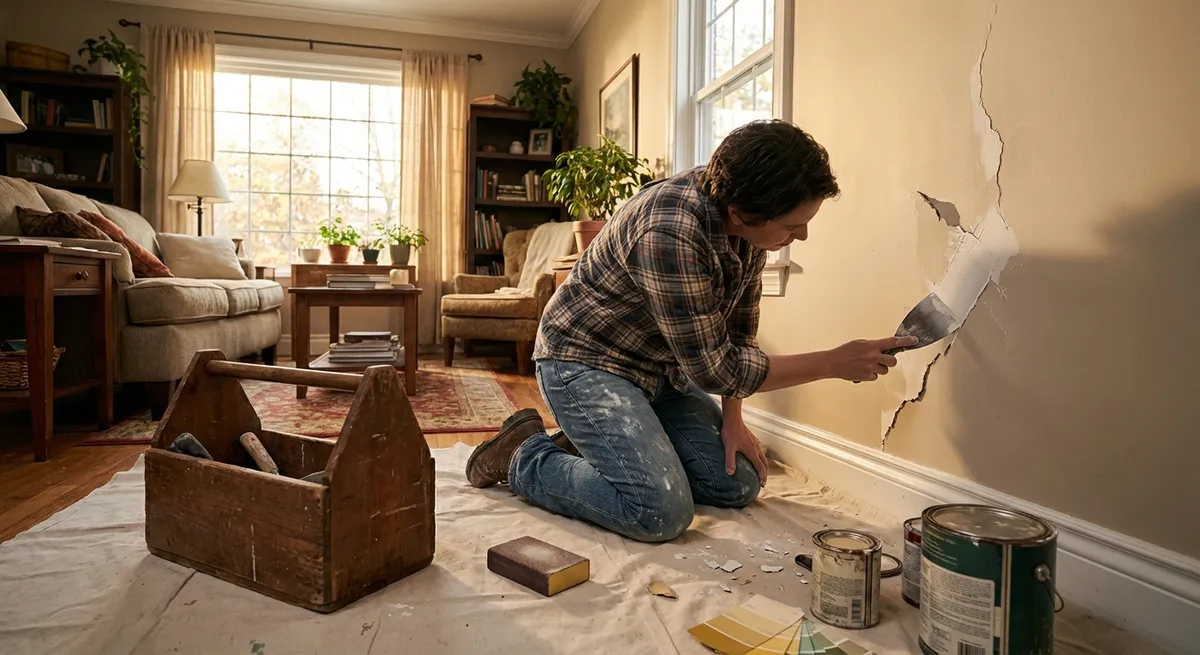
Minor wall damage is one of the most common eyesores in any home—dings from moving furniture, nail holes from old décor, or even a small hole from a doorknob. The good news: you can usually repair it yourself without calling a pro. This guide walks you through a straightforward, step‑by‑step process to fix typical drywall damage so your walls look smooth and ready for paint again.
Know What You’re Fixing Before You Start
Not all wall damage is the same, and how you fix it depends on size and severity.
Tiny nail holes and hairline cracks can be patched with lightweight spackle and a putty knife in minutes. Small dents and screw pops (where the drywall screw pushes through slightly) take a bit more work but are still simple DIY repairs. Larger holes—around the size of a doorknob or bigger—usually require a patch and joint compound.
Before you start, inspect the area carefully. Look for signs of moisture (stains, soft drywall, or peeling paint), which may indicate a leak that must be fixed before patching. Also note if the damage is near an outlet or switch; in that case, be cautious of electrical wiring behind the wall and avoid driving screws or nails blindly.
Once you understand what you’re dealing with, gather the right materials so you can complete the repair in one continuous workflow instead of stopping mid‑project.
Step 1: Gather the Right Tools and Materials
A smooth wall repair starts with the right setup. For most interior drywall repairs, you’ll want:
- Putty knife (2"–4" for small patches, 6"–8" for larger areas)
- Utility knife with a sharp blade
- Sanding sponge or sandpaper (120–220 grit)
- Lightweight spackle or pre‑mixed joint compound
- Drywall repair patches or scrap drywall (for larger holes)
- Joint tape (paper or fiberglass mesh) for cracks or seams
- Primer and matching paint
- Drop cloth and painter’s tape
- Dust mask and safety glasses (for sanding and cutting)
Lay down a drop cloth under the work area and move furniture away from the wall to avoid dust covering everything. Have a small bucket or tray for compound so you’re not dipping directly into the main container, which can dry out or gather debris over time.
Before you touch the wall, wipe the damaged area with a dry cloth to remove dust and loose paint—compound sticks poorly to dirty or chalky surfaces.
Step 2: Prep and Clean the Damaged Area
Good prep work is what separates a quick patch from a almost-invisible repair.
For nail holes or tiny dings, use the corner of your putty knife or a screwdriver to lightly scrape away any loose paint or drywall. If the hole has a raised edge, gently tap it flat with the putty knife handle or lightly cut away the ridge with a utility knife. You want a slightly recessed area so your patch material doesn’t sit proud of the wall.
For small cracks, use the utility knife to widen them slightly into a shallow V‑shape. This sounds counterintuitive, but it gives the compound something to grab onto, reducing the chances of the crack returning. Brush or vacuum away any dust.
For larger holes (like from a doorknob), square off the edges with the utility knife so you have a clean rectangular opening rather than an irregular tear. Remove any loose, crumbling drywall. If the damage is caused by a door impact, consider installing a door stop after the repair to prevent future damage.
Once prepped, make sure the surface is dry and free of dust. This is the base your repair will bond to, so don’t rush this part.
Step 3: Patch and Fill the Damage
Now you’ll build the repair in thin, controlled layers instead of trying to fix it all at once.
For nail holes and small dents:
Use a small putty knife to apply lightweight spackle directly over the hole. Press firmly to push the material into the void, then scrape off the excess so the patch is flush or slightly proud of the wall. Feather the edges by dragging the knife outwards at a shallow angle. Most tiny repairs can be done in a single application.
For cracks:
First, apply a thin layer of joint compound over the crack. While it’s still wet, press a strip of joint tape along the crack and smooth it with your putty knife to embed it. Apply another thin coat of compound over the tape, feathering the edges 1–2 inches past the tape. This reinforcement helps keep the crack from opening back up.
For larger holes:
You can use a self‑adhesive mesh patch or create a backing support with a scrap of wood:
- With a mesh patch, stick it over the hole, centering it so it overlaps undamaged wall.
- With a backing support, insert a thin piece of wood behind the hole, screw it into the existing drywall from the front, then screw a piece of drywall cut to size onto the backing.
Once the support or patch is in place, apply a first coat of compound over the area, extending a couple of inches beyond the edges. Don’t try to make it perfect; aim for full coverage and secure bonding. Let it dry completely—the product label will give a drying time, but high humidity can slow it down.
Step 4: Build Up Smooth Layers and Sand Carefully
A professional-looking repair is usually the result of two or three thin coats, not one thick one.
After the first coat of compound is dry, lightly knock down any ridges or bumps with your sanding sponge or sandpaper. You’re not trying to fully smooth the patch yet—just remove obvious high spots so the next coat goes on cleanly.
Apply a second, slightly wider coat of compound over the repair. Feather the edges further out onto the wall so the transition from patch to original surface is gradual, not abrupt. For larger holes, you may need a third coat. Each coat should be thinner than the last but cover a wider area.
Once the final coat is fully dry, sand the entire repair area using light pressure and circular or back‑and‑forth motions. Check your progress often by running your hand over the area; your fingers will feel imperfections your eyes miss. Avoid oversanding, which can create low spots or expose the tape underneath.
Wipe away dust with a clean, dry cloth or a slightly damp sponge. Any dust left behind can interfere with primer and paint adhesion, leaving a dull or uneven finish.
Step 5: Prime, Paint, and Blend the Repair
Without primer, your patch can flash through the paint—a shiny or dull spot that’s obvious in certain light—so don’t skip this step.
Use a quality primer appropriate for interior walls (usually a water‑based primer for drywall). With a small brush or roller, cover the entire repaired area and extend slightly past the patch to help blend the sheen. Let the primer dry fully according to the manufacturer’s instructions.
Next, apply your wall paint. If you have leftover paint from the original job, check that it’s still in good condition and well‑mixed. If you’re color‑matching, have a paint store scan a paint chip or take a clear, well‑lit photo of the wall for a closer match.
Use a small roller for larger patches or a brush for tiny repairs, and follow the same direction and technique used on the rest of the wall. Feather the paint out beyond the edges of the repair rather than stopping abruptly. Two thin coats are often better than one heavy coat for blending.
Once the paint dries, step back and look at the wall from different angles and in different lighting (day and evening). A good repair should practically disappear and feel smooth to the touch.
Conclusion
Fixing damaged interior walls is a manageable project for most DIYers as long as you’re patient with prep, layering, and sanding. By taking the time to clean the damage, build up thin coats of compound, and finish with proper priming and painting, you can restore a clean, uninterrupted wall surface without hiring a contractor. Once you’re comfortable with this process on a small area, you’ll be ready to tackle more rooms and keep your home looking well‑maintained year‑round.
Sources
- [USG Sheetrock – Wall Repair How‑To Guides](https://www.usg.com/content/usgcom/en/resource-center/online-tools-resources/wall-ceiling-repair.html) - Manufacturer guidance on patching holes, cracks, and other common drywall repairs
- [Lowe’s – How to Patch and Repair Drywall](https://www.lowes.com/n/how-to/patch-and-repair-drywall) - Step‑by‑step instructions with photos for different sizes of drywall damage
- [Home Depot – How to Repair Drywall and Fix a Hole](https://www.homedepot.com/c/ah/how-to-repair-drywall/9ba683603be9fa5395fab902abedb3b) - Practical tips on tools, materials, and repair methods for DIYers
- [Benjamin Moore – How to Touch Up Paint on Walls and Ceilings](https://www.benjaminmoore.com/en-us/paint-and-stain-tips/how-to-paint/touch-up-paint-walls) - Guidance on blending new paint with existing finishes after repairs
Key Takeaway
The most important thing to remember from this article is that this information can change how you think about Home Repair.