Squeaky floors are one of those small home annoyances that quickly drive you crazy. The good news: you can usually fix them without ripping up your whole floor or calling a contractor. This guide walks you through simple, practical ways to quiet those creaks—whether you have carpet, hardwood, or a subfloor you can reach from below.
Understand Why Your Floor Is Squeaking
Before you grab tools, it helps to know what’s causing the noise. Most floor squeaks come from movement: wood rubbing on wood, nails moving in their holes, or flooring flexing against joists.
When someone steps on a squeaky spot, pieces that should be tight together shift slightly. That friction is the creaking sound you hear. Common culprits are loose subfloor panels, shrunken floorboards (especially in dry seasons), or nails that have loosened over time.
Your job is to remove that movement by tightening the connection between the flooring and the structure below. Once things stop flexing and rubbing, the sound goes away. In many cases, you can do this from above the floor in a few minutes with basic tools.
Step 1: Find the Exact Source of the Squeak
Start by tracking the squeak to a precise spot—not just “this general area.”
- Walk slowly across the room and listen carefully. Wear soft-soled shoes or socks.
- When you hear a squeak, rock your weight back and forth to pinpoint the loudest spot.
- Mark that exact area with painter’s tape or a small pencil dot. If the area is larger than a dinner plate, mark several points.
- Ask someone to walk across the floor while you kneel and place your ear (or hand) near the floor to feel where it flexes most.
- If you have access to the underside (like in a basement), have one person walk above while you watch and feel the joists and subfloor below to see where movement happens.
Taking a few extra minutes to get the location right saves time later and keeps you from making unnecessary holes.
Step 2: Fix Squeaks Under Carpet Without Removing It
If your squeak is under carpet, you can usually fix it without pulling the carpet up.
- Identify the floor joist direction. In many homes, joists run the same way as the shorter room dimension. Use a stud finder on the floor (set to “deep scan” if available) to confirm.
- Starting from a wall, measure in 16 inches at a time (a common joist spacing) and use the stud finder to double-check where each joist is.
- At your squeak marks, drive special breakaway screws designed for carpeted floors (like Squeeeeek-No-More or similar kits) directly into the subfloor and joist. These screws tighten the subfloor but snap off below the carpet surface.
- If you don’t have a specialty kit, you can carefully use 2–3 inch trim-head wood screws: push the carpet backing down with your fingers and drive the screw through the pad into the subfloor and joist. Go slowly and stop as soon as the head is flush with the subfloor so it doesn’t catch the carpet fibers.
- Test the area by walking on it. If it still squeaks, add a couple more screws in a small triangle pattern around the first screw until the movement stops.
Work carefully to avoid tearing carpet fibers. If you’re unsure, start in a closet or less visible area to practice.
Step 3: Tighten Noisy Hardwood or Laminate Floors From Above
For exposed wood or laminate, you’ll need to be more precise to keep the repair discreet.
- Confirm whether your flooring is solid hardwood, engineered wood, or laminate. Solid and engineered wood can usually be screwed or nailed; laminate typically floats and must stay free to move.
For solid or engineered wood:
- Locate the joist under the squeak using a stud finder. - Pre-drill a small pilot hole at a slight angle through the floorboard into the joist. - Drive a trim-head wood screw (1 ½–2 inches) just below the surface and stop when the squeak disappears. - Fill the small hole with matching wood putty or a wax stick and wipe clean.
For laminate or floating floors:
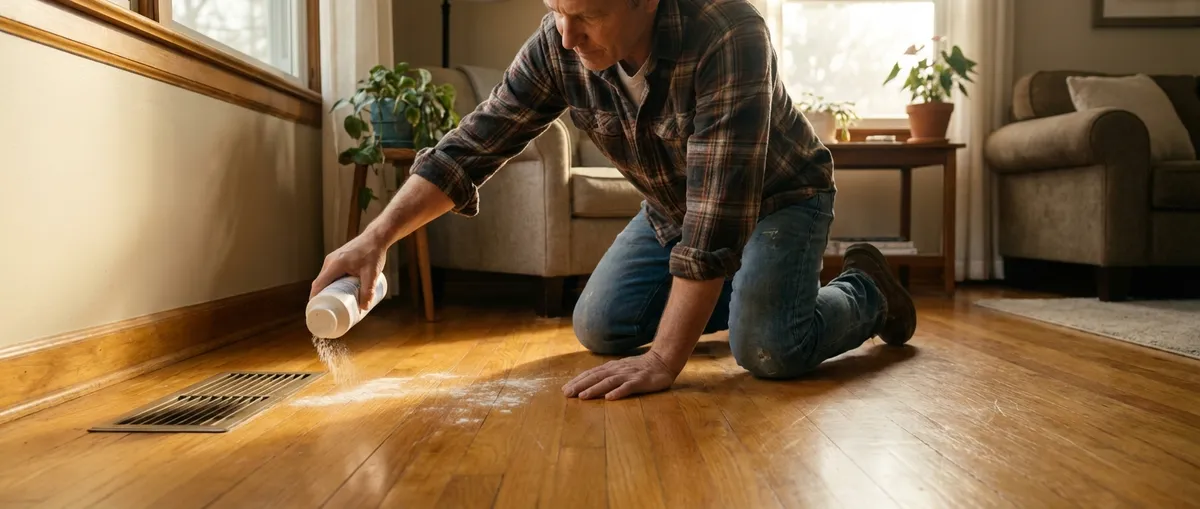
- Do not screw or nail through the surface; that can damage the locking system and cause worse problems. - Check for gaps along the edges or at transition strips. Sometimes padding or shims at the perimeter can reduce movement. - Verify that expansion gaps are not blocked by tight baseboards or heavy furniture pressing the floor in place; relieving this pressure can reduce squeaks. 4. After each screw or adjustment, walk the area again. You might need two or three fasteners around the squeak zone to fully stabilize it. 5. If boards are obviously rubbing against each other, rub a bit of powdered graphite or talc into the seams, then work it in by stepping on the area. This can help reduce friction noises in minor cases.
Always confirm the floor thickness before choosing screw length—you want to bite into the subfloor or joist without punching through anything below.
Step 4: Secure Loose Subflooring From Below (If You Have Access)
If you can reach the underside of the floor from a basement, crawl space, or unfinished ceiling, this is often the cleanest fix.
- Have a helper walk on the floor above while you stand below and watch the subfloor and joists. Look and feel for any movement or gaps where the subfloor pulls away from the joists.
- Mark the problem joist areas with a pencil so you can find them after your helper steps away.
- Use 2 ½–3 inch wood screws to fasten the subfloor tightly to the joist, driving screws at an angle (“toe-screwing”) if needed. Space them every 6–8 inches in the problem zone.
- If you see a visible gap between the joist and subfloor, carefully tap in a wood shim with construction adhesive on it until it fills the gap, then trim any excess shim with a hand saw. Don’t force the shim too hard or you can lift the floor above and create a new bump or squeak.
- For long sections that move, consider using a construction adhesive bead along the top of the joist where it meets the subfloor. Add screws while the adhesive is still wet to pull everything tight.
This approach keeps your finished floor untouched and is especially effective in older homes where nails have loosened over time.
Step 5: Prevent Future Squeaks With Simple Maintenance
Once things are quiet, a bit of prevention helps keep them that way.
- Control indoor humidity. Wood expands in humid air and shrinks in dry air, which can loosen fasteners and create gaps. Aim for 30–50% relative humidity year-round with a humidifier or dehumidifier as needed.
- Avoid letting water sit on floors—especially wood. Wipe spills quickly to prevent swelling or warping.
- When renovating, use screws (not just nails) to fasten new subfloors to joists, and consider adding construction adhesive along joists before laying panels. This creates a more solid, squeak-resistant structure.
- Don’t overload a single area with very heavy furniture or storage that can flex the floor. Spread weight out when possible.
- During routine cleaning, listen for new squeaks and address them early while they’re usually smaller and easier to fix.
A floor will never be perfectly silent in every home, but with these steps you can eliminate the loud, annoying squeaks that bother you most and extend the life of your flooring.
Conclusion
Squeaky floors aren’t a sign your house is falling apart—they’re usually just loose connections and minor movement you can fix with a few screws, shims, and a bit of patience. By carefully finding the source, choosing the right method for your floor type, and tightening the structure where it counts, you can quiet most creaks in an afternoon. Next time a board complains underfoot, you’ll know exactly how to deal with it instead of just living with the noise.
Sources
- Family Handyman – How to Fix Squeaky Floors - Practical overview of different methods for silencing squeaks in carpeted and hardwood floors
- This Old House – Silencing Squeaky Floors - Step-by-step techniques and product examples for squeak repairs
- U.S. Department of Energy – Energy Saver: Air Sealing Your Home - Background on building assemblies and why gaps and movement matter (relevant to subfloor and joist issues)
- NWFA (National Wood Flooring Association) – Wood Flooring Humidity and Temperature - Explains how humidity affects wood floors and why controlling it helps prevent squeaks and gaps
- Home Depot – How to Fix Squeaky Floors - Visual guide to locating squeaks and using repair kits and screws effectively
Key Takeaway
The most important thing to remember from this article is that this information can change how you think about Home Repair.