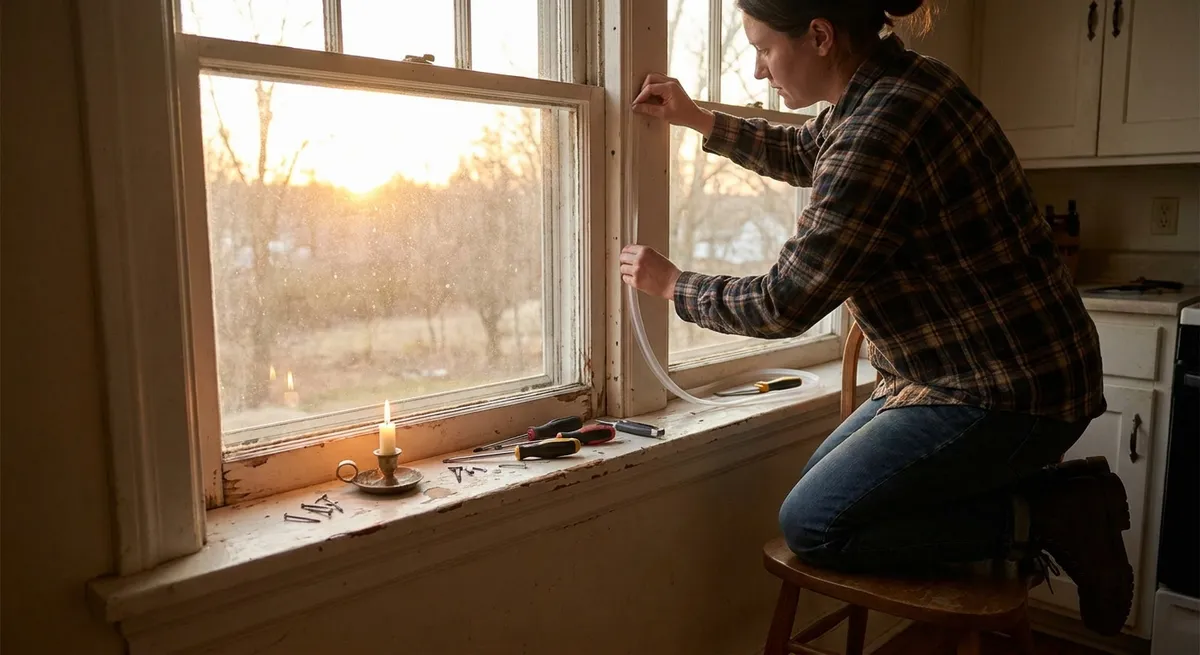
Drafty windows make your home uncomfortable and your energy bills higher than they need to be. The good news: in most cases, you can tighten things up yourself without replacing the entire window. This guide walks you through simple, practical fixes you can tackle in an afternoon with basic tools.
Understand Where the Draft Is Really Coming From
Before you start sealing everything in sight, it’s worth figuring out exactly where the air is getting through. That way, you fix the real problem instead of just covering it up.
Stand near the window on a windy day or when your HVAC is off so you can feel temperature changes more easily. Slowly move your hand around the edges of the frame, sash (the part that moves), and sill. Pay attention to corners and where different pieces meet.
If the draft is subtle, hold a lit stick of incense, a candle, or a thin strip of toilet paper near the window frame and watch for movement in the smoke or paper. Any sudden flick or pull shows you where air is leaking.
Check these common trouble spots:
- Between the window sash and the frame
- Around old or cracked caulking on the inside or outside
- Between the window frame and the wall (especially in older homes)
- At the meeting rail where two sashes touch on double-hung windows
- Around window locks that don’t fully engage
Once you know exactly where the problem is, you can choose the right repair instead of wasting time and materials on areas that aren’t leaking.
Step 1: Clean and Prep the Window Area
Any repair will fail quickly if you try to seal over dirt, loose paint, or old, crumbling caulk. Preparation is boring, but it’s what makes the fix last.
Start by opening the window fully (if it still opens) and vacuuming the tracks and frame. Use the crevice tool to pull out dust, bugs, and loose debris. Follow up with a damp cloth and mild soap to remove any remaining grime. Let all surfaces dry completely.
On the interior and exterior where you see old caulking, use a caulk removal tool or a sharp utility knife to cut along both edges of the old bead. Gently pry it out with a putty knife, being careful not to gouge the frame or siding. Brush away remaining bits with a stiff brush.
If you expose bare wood, lightly sand any rough or flaking areas and wipe away the dust. Check for signs of water damage or rot, especially on the sill and lower corners. Soft, spongy wood may need more than just a draft fix—if you can easily push a screwdriver into it, plan for a repair or replacement section later.
Once everything is clean, dry, and smooth, tape off nearby surfaces with painter’s tape if you’re worried about messy caulking lines. Good prep makes the sealing steps faster and cleaner later.
Step 2: Replace Worn Weatherstripping on Moving Parts
If the draft is coming from where the window opens and closes, worn-out weatherstripping is a likely culprit. Replacing it is one of the most efficient, low-cost improvements you can make.
Identify the type of weatherstripping your window uses now. Common types include:
- Adhesive foam tape along the frame
- V-strip (tension seal) inside the jambs
- Bulb or fin seals in newer vinyl windows
Carefully peel or pry off the old material. Clean any adhesive residue with a scraper and, if necessary, a bit of rubbing alcohol so the new strip will stick properly. Measure each section of the frame or sash where you’ll install new weatherstripping and cut the new pieces slightly long; you can trim them precisely once they’re in place.
Apply adhesive-backed foam or V-strip along the surfaces where the sash meets the frame, pressing firmly along the full length to avoid gaps. For double-hung windows, pay attention to the sides of the sash and the meeting rail where the two sashes touch. Make sure the material doesn’t interfere with the window’s ability to lock fully.
Once installed, open and close the window several times to confirm it moves smoothly and still locks securely. If it’s suddenly hard to close, you may need a thinner material or slight repositioning. Done correctly, fresh weatherstripping tightens the seal without making the window a struggle to operate.
Step 3: Recaulk Gaps Around the Frame (Inside and Out)
Stationary joints—the places where the window frame meets the wall, siding, or trim—are prime spots for leaks. Caulk is your main line of defense here, but only if it’s applied correctly and in the right places.
Choose a high-quality, paintable exterior-grade caulk for the outside, labeled for windows and doors. For the inside, a paintable latex or acrylic-latex caulk usually works best. Avoid using pure silicone indoors if you plan to paint later; most paint won’t adhere to it.
On the exterior, look for gaps or cracks where:
- The window frame meets the siding or masonry
- The trim meets the wall
- The frame corners meet each other
Load the caulk into a caulk gun and cut the tip at a 45-degree angle, making a small opening. Run a steady bead along the gap, aiming to fill it—not just cover it. Immediately smooth the bead with a damp finger or caulk-smoothing tool, pressing it into the joint.
Inside, follow the same process along the window casing where it meets the wall and the frame. Skip any weep holes or designed drainage openings on the exterior parts of the window; those are meant to stay open so water can escape.
Allow the caulk to cure as directed before painting or heavy use. Properly recaulked joints reduce drafts and help prevent water intrusion that can lead to future structural issues.
Step 4: Seal Larger Gaps With Backer Rod and Foam (Without Overdoing It)
If you discover gaps larger than about 1/4 inch between the window frame and the surrounding wall, standard caulk alone isn’t enough—it will crack, sag, or fail quickly. You’ll need to fill the space correctly before sealing.
For deep gaps, use foam backer rod (a flexible foam cord) to fill most of the depth. Gently press the backer rod into the gap using a blunt tool or your fingers, leaving about 1/4 inch of space at the surface. This gives the caulk something to sit on and keeps it from sinking inside the wall.
In areas you can’t reach with backer rod but that open into a cavity (like between framing and the window unit), a can of low-expansion spray foam labeled for windows and doors is useful. Shake the can well, attach the straw, and apply a small amount around the perimeter inside the cavity. Low-expansion foam is critical—regular expansion foam can exert enough pressure to bow the frame and prevent the window from opening properly.
Let the foam fully cure, then trim any excess flush with a utility knife. Finally, apply caulk over the surface seam for a neat, airtight finish. This approach gives you a solid, insulated barrier without damaging the window or making future adjustments impossible.
Step 5: Add Temporary or Seasonal Upgrades for Extra Insulation
Once you’ve addressed the structural leaks, you can add seasonal solutions to boost comfort and efficiency, especially in older homes where the glass and frames themselves are less efficient.
Interior window insulation film kits are a practical option for winter. These clear plastic sheets attach to the interior window frame with double-sided tape. After you stick them in place, you use a hair dryer to shrink the film, pulling it tight and nearly invisible. This adds an air gap layer, similar to a storm window, and can significantly cut drafts.
For renters or those who want completely reversible options, consider:
- Removable rope caulk pressed into small gaps around the sash
- Magnetic or Velcro-mounted interior storm panels
- Insulating cellular shades or lined curtains that seal close to the wall
In especially drafty rooms, combining good permanent sealing with a tight-fitting shade or curtain creates a noticeable improvement. Just remember that any covering that blocks airflow can also trap condensation, so periodically check for moisture buildup and allow the window area to dry out as needed.
By layering permanent fixes with smart seasonal add-ons, you can make old windows more comfortable without the immediate cost of full replacement.
Conclusion
Drafty windows aren’t just an annoyance—they waste energy and make your home harder to heat and cool. By systematically finding the leaks, cleaning and prepping the surfaces, replacing worn weatherstripping, recaulking gaps, and filling larger spaces correctly, you can greatly improve comfort with basic tools and materials. Seasonal add-ons like insulation film or interior storm panels give you even more control. Take it one step at a time, and you’ll end up with cozier rooms and lower energy bills without a major renovation.
Sources
- U.S. Department of Energy – Air Sealing Your Home - Explains why air leaks matter and outlines best practices for sealing around windows and doors
- Energy Star – Reduce Energy Bills With Proper Sealing - Details the impact of sealing and insulating on home efficiency and comfort
- Family Handyman – How to Stop Window Drafts - Practical, illustrated techniques for locating and sealing window air leaks
- This Old House – Weatherstripping Windows - Step-by-step guidance on choosing and installing weatherstripping on different window types
- Lowe’s – How to Use Caulk and Sealant - Covers types of caulk, application methods, and preparation tips for longer-lasting seals
Key Takeaway
The most important thing to remember from this article is that this information can change how you think about Home Repair.