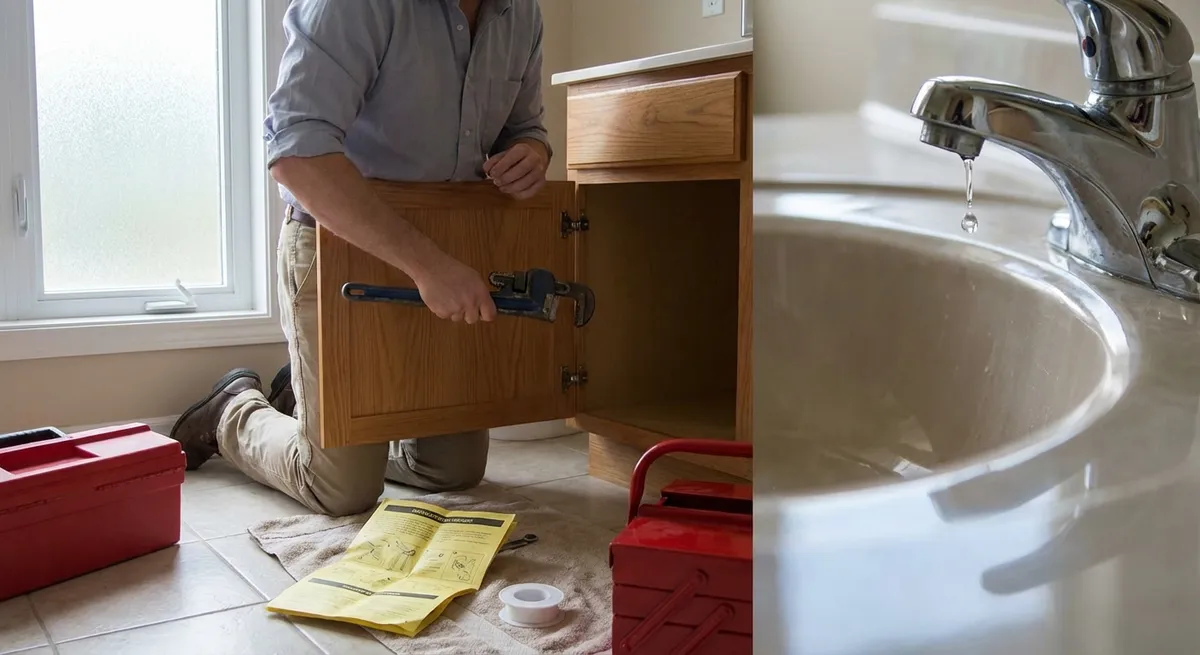
That slow, annoying drip from your faucet isn’t just background noise—it’s wasted money and a warning sign your plumbing needs attention. The good news: this is one of the most fixable home repairs, and most DIY‑minded homeowners can handle it in under an hour.
This guide walks you through the repair from start to finish, using basic tools you probably already own. Follow each step carefully, and you’ll not only stop the drip—you’ll also build skills you can use on other repairs around the house.
Step 1: Track Down The Type Of Faucet You’re Dealing With
Before you grab a wrench, figure out what kind of faucet you have. The repair steps are similar, but the internal parts differ, and knowing the type helps you buy the right replacement pieces. The four most common types are compression (separate hot and cold handles that turn multiple times), cartridge (handles that turn a quarter or half turn), ball (often a single handle with a rounded cap), and ceramic disk (usually a single lever with a wider body). Look closely at the shape of the handle and how it moves; a quick search of your faucet brand and model (often stamped on the base or handle) can confirm it. Take a clear photo of the faucet and any labels—this will help at the hardware store. If the faucet is older and you can’t find a model number, don’t stress; the internal parts are usually standard sizes. Just be ready to bring worn parts with you later for a side‑by‑side match.
Step 2: Shut Off Water And Prep Your Work Area
Never start faucet work with live water lines. Locate the shut‑off valves under the sink—small oval or lever handles on the hot and cold supply lines. Turn them clockwise until they stop; if they’re stuck, use gentle pressure with an adjustable wrench, but don’t force them hard enough to bend the pipe. Once off, open the faucet to release pressure and drain remaining water; this also confirms the water is truly shut off. Put a towel or old rag in the sink basin to protect it from dropped tools and to prevent small parts from bouncing into the drain. Then, close the sink stopper or cover the drain opening with a rag—losing a tiny screw down the drain is a classic DIY frustration you can avoid in two seconds. Lay out a small tray, plate, or even a piece of cardboard nearby to keep parts organized in removal order; snapping a photo at each stage will save you from guessing how things go back together.
Step 3: Carefully Disassemble The Faucet Without Damaging Finishes
Most faucets start with a decorative cap covering a handle screw. Use a small flathead screwdriver or a plastic trim tool to gently pry it off; protect the finish by placing a thin cloth under the tool if needed. Remove the screw beneath with a Phillips or flathead screwdriver, then lift off the handle—wiggling side to side helps if it’s stuck from mineral buildup. Under the handle you’ll see a retaining nut, clip, or collar that holds the cartridge, stem, or ball assembly in place. Use an adjustable wrench or basin wrench to loosen it; keep steady pressure and avoid slipping, which can scratch chrome or nickel. As you pull parts out, note their order and orientation. Many internal parts look reversible, but only work correctly in one direction, so a quick phone photo at each stage is your best “reassembly manual.” If anything feels seized, spray a small amount of penetrating oil, wait a few minutes, and try again rather than forcing and snapping old parts.
Step 4: Inspect, Clean, And Replace Worn Internal Parts
The usual culprits in a dripping faucet are worn rubber washers, O‑rings, seats, or a damaged cartridge. Inspect rubber pieces for cracks, flat spots, or brittleness; any that don’t feel flexible should be replaced. Look at metal seats for pitting or grooves—these prevent a tight seal and cause leaks. Use a non‑scratch scrub pad or an old toothbrush and white vinegar to remove mineral deposits from metal surfaces and the faucet body; avoid harsh abrasives that can damage sealing surfaces. For compression faucets, replace the washer at the end of the stem and any O‑rings along the shank. For cartridge or disk faucets, it’s often easiest and more reliable to replace the entire cartridge rather than hunting down every tiny seal. Take the old parts to the hardware store and match them exactly by diameter, height, and style; “close enough” doesn’t work with plumbing seals. When installing new rubber parts, a small dab of plumber’s grease helps them seat smoothly and last longer.
Step 5: Reassemble, Test For Leaks, And Fine‑Tune The Fix
Once cleaned and equipped with new parts, slide the stem or cartridge back into the faucet body in the same orientation you noted earlier. Reinstall the retaining nut or clip and tighten it snugly, but don’t overtighten; crushing seals can cause new leaks. Put the handle back on, secure it with the screw, and snap the decorative cap into place. Before you fully trust the repair, reopen the under‑sink shut‑off valves slowly, one at a time, while watching the faucet and under the sink for any immediate leaks. Turn the faucet on and off a few times to clear air from the lines; expect a bit of sputtering at first. Then close the faucet and watch closely for a solid minute—if the drip is gone, you’ve done it. If there’s still a slow drip, gently tighten the retaining nut a bit more and test again. Finally, feel around all connections with a dry paper towel; any moisture will show up clearly, confirming whether everything is sealed.
Conclusion
Fixing a dripping faucet is one of the most practical home repairs you can learn. You cut down your water bill, prevent future damage, and get more comfortable working with plumbing—without waiting for a pro or paying an emergency visit fee. The same skills you used here—shutting off water, disassembling carefully, matching parts, and testing for leaks—apply to many other small repairs around the house.
Save your part photos and notes; they’ll make the next fix even faster. And if you hit a snag, take a clear photo of the problem area and bring it to your local hardware store—most counter staff can spot what’s wrong in seconds and point you to the right part.
Key Takeaway
The most important thing to remember from this article is that this information can change how you think about Home Repair.