Hairline and small wall cracks are easy to ignore—until they start to grow, collect dirt, or ruin an otherwise clean room. The good news: most minor cracks in drywall or plaster are simple, low-cost repairs you can handle in an afternoon with basic tools. This guide walks you through a straightforward process to fix them so they blend in and stay fixed.
Understand What Kind of Crack You’re Dealing With
Before you grab a putty knife, spend a few minutes figuring out what you’re looking at. Not every crack is a DIY job.
Hairline cracks (thinner than a credit card), small vertical or diagonal cracks above doors and windows, and short seams where drywall sheets meet are usually related to normal settling, humidity changes, or minor movement. These are ideal for DIY repair. If a crack is wider than 1/4 inch, runs the full height of a wall, keeps reopening after previous repairs, or is accompanied by doors sticking, sloping floors, or visible foundation problems, hit pause and consider a professional inspection.
Also check for moisture: stains, bubbling paint, soft drywall, or a musty smell around the crack can indicate a leak. If water is involved, fix the leak first or your patch will fail and mold can become a problem. Take a couple of clear photos of the crack and surrounding area before you start; it’s an easy way to monitor whether it returns later.
Gather Tools and Materials That Make the Job Easier
You don’t need pro-level gear, but the right basic tools will give you a much cleaner result. For small drywall or plaster cracks, plan on using:
- 2–3 putty or taping knives (2", 4–6", and 8–10" widths)
- Utility knife with sharp blades
- Sanding sponge or fine-grit sandpaper (120–220 grit)
- Joint compound (pre-mixed “all-purpose” works well) or lightweight spackle for tiny cracks
- Fiberglass mesh tape or paper tape (for cracks on seams)
- Damp sponge or rag
- Primer (stain-blocking or drywall primer)
- Touch-up paint and a small roller or brush
- Vacuum or brush for dust control
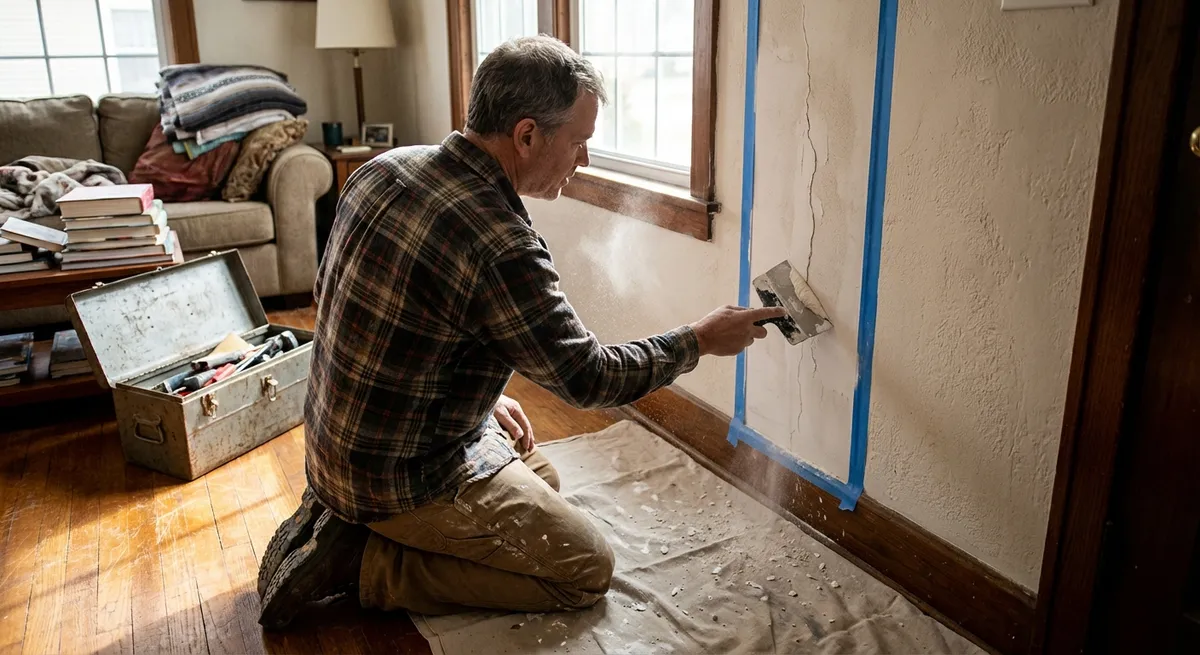
- Drop cloth and painter’s tape to protect floors and trim
Arrange everything near your workspace so you’re not walking through the house with compound on your tools. If you’re sanding indoors, close doors to other rooms, lay down a drop cloth, and consider a dust mask and safety glasses; fine dust from joint compound gets everywhere if you don’t contain it.
Step 1: Open and Clean the Crack So the Repair Can Grip
It feels wrong, but you usually need to make a crack slightly bigger to fix it properly. If you just smear compound on the surface, it tends to flake off as the wall moves.
Use a utility knife or the corner of a putty knife to gently “V” out the crack, widening it just enough that you can see a solid groove. Don’t dig aggressively—you’re cleaning and shaping, not excavating. Remove loose paint, flaking drywall paper, and crumbly plaster along the edges.
Once the crack is opened up, vacuum or brush out the dust. Wipe with a slightly damp rag or sponge to remove remaining powder; compound bonds better to a clean, dust-free surface. If the area is glossy or has multiple paint layers, a quick scuff with sandpaper will help the patch blend and adhere. Let the wall dry completely before moving on.
Step 2: Add Tape or Filler for a Stable, Flexible Base
For very small, isolated hairline cracks (not on seams), you can often skip tape and go straight to compound. For anything along a drywall joint, near a corner, or in a spot you’ve repaired before, reinforcing tape is worth the extra step to prevent the crack from coming back.
Lay fiberglass mesh tape directly over the crack, keeping it centered. Mesh sticks on its own and is easy to work with. If you’re using paper tape, you’ll first spread a thin layer of joint compound over the crack, press the tape into the wet compound, then smooth it with your knife to remove bubbles and excess.
For slightly wider cracks in plaster, pack joint compound or a patching plaster firmly into the groove with your smallest knife, pressing it in so it fills the depth completely. Scrape off the excess so it’s roughly level with the surrounding surface. The goal in this step is strength and fill, not a perfect finish. Let this initial fill or taped layer dry according to the product directions—typically a few hours to overnight.
Step 3: Build Up Smooth Layers of Joint Compound
Once the base is dry, you’ll build out a smooth surface with two or more thin coats of compound. Thin layers are easier to sand and less likely to crack or shrink badly as they dry.
Start with a 4–6" knife and apply a thin, even coat over the taped or filled area, extending a couple of inches beyond the crack on both sides. Hold the knife at a slight angle and use firm pressure to feather the edges into the existing wall so there’s no harsh ridge. Don’t overwork it; a few clean passes are better than dozens of small ones.
When the first coat is dry, lightly scrape off any high spots or ridges with your knife, then apply a second, wider coat with an 8–10" knife. This coat should extend further out and gently transition the patch into the original wall. In many cases, two coats are enough for small cracks; deeper or highly visible areas might need a third. Always let each coat dry fully and scrape, rather than aggressively sanding, between coats to keep dust down.
Step 4: Sand, Prime, and Blend the Surface for Paint
A solid repair can still look bad if the finish is rough or the paint flashes (looks patchy) in certain light. Taking time here is what makes the repair disappear.
After the final coat is fully dry, gently sand with a fine-grit sanding sponge or sandpaper. Focus on blending the outer edges of the patch into the surrounding wall. Run your hand over the area with your eyes closed; if you can’t feel a hard edge or bump, you’re in good shape. Remove dust with a vacuum and a damp cloth.
Next, apply a coat of primer over the repaired area. Raw joint compound and patched spots absorb paint differently than the existing wall, so priming helps prevent dull or shiny “patch outlines.” A quality drywall or stain-blocking primer is best. Let the primer dry, then inspect in good lighting; shallow flaws are easier to see now and can be touched up with a tiny bit of compound if needed.
Step 5: Paint and Watch for Signs of Recurring Movement
With primer dry, paint the patched area to match the rest of the wall. If you have leftover paint from the original job, stir it well so the color is consistent. For small areas, feather your brush or roller beyond the patch line so the blend is gradual. On older walls, you may need to repaint the entire wall for a perfect match, especially if the existing paint has faded.
After the repair is complete, keep an eye on the area over the next few weeks and months. If the crack doesn’t return, you’ve likely solved a simple movement or settling issue. If it reopens quickly, widens, or you notice new cracks in several places, that can point to ongoing structural movement or moisture problems. At that point, it’s worth contacting a qualified contractor or structural engineer to evaluate the bigger picture before doing more cosmetic repairs.
Conclusion
Fixing small wall cracks isn’t just about looks—it’s about stopping minor issues from turning into bigger, more expensive problems. With basic tools, careful prep, and a few thin coats of compound, most DIYers can repair minor drywall or plaster cracks in a single weekend. Focus on cleaning and opening the crack, reinforcing where needed, building thin layers, and finishing with primer and paint. Done right, your repair will blend in so well you’ll forget where the crack was in the first place.
Sources
- [U.S. General Services Administration – Repairing Cracks in Drywall](https://www.gsa.gov/real-estate/historic-preservation/historic-preservation-policy-tools/preservation-tools-resources/technical-documents/repairing-cracks-in-drywall) - Technical guidance on causes and repair methods for drywall cracks
- [The Family Handyman – How to Repair Drywall](https://www.familyhandyman.com/project/how-to-fix-drywall/) - Step-by-step instructions and tool recommendations for common drywall repairs
- [USG (United States Gypsum) – Joint Compound Application Guide](https://www.usg.com/content/usgcom/en/products-solutions/products/wallboard-systems/joint-treatment/joint-compounds.html) - Manufacturer information on types of joint compound and best practices
- [National Association of Home Builders – Understanding Wall Cracks](https://www.nahb.org/other/consumer-resources/understanding-cracks-in-drywall-and-plaster) - Explains typical causes of wall cracks and when to seek professional help
Key Takeaway
The most important thing to remember from this article is that this information can change how you think about Home Repair.