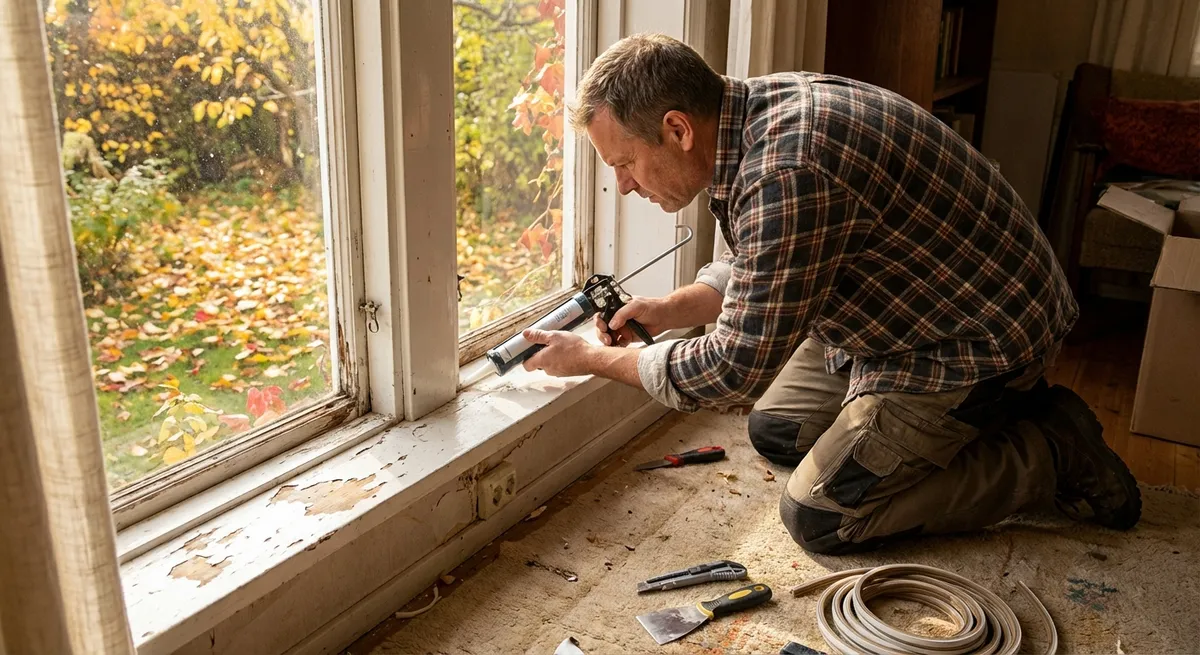
Drafty windows and doors don’t just make your home uncomfortable—they quietly drain your wallet through higher energy bills. The good news: most air leaks are simple to find and fix with basic tools and a free afternoon. This guide walks you through a practical, step-by-step process to track down drafts and seal them so your home stays comfortable year-round.
Understand Where Drafts Come From
Before you grab the caulk gun, it helps to know what you’re actually fixing. Drafts are usually caused by small gaps and cracks where conditioned indoor air escapes and outdoor air sneaks in. Common trouble spots include:
- The gaps between window or door frames and the wall
- Worn or missing weatherstripping around doors
- Cracked, brittle caulk around window trim
- Gaps at the bottom of doors where sweeps are missing or damaged
- Old, single-pane windows with loose sashes
These leaks might look tiny, but collectively they can add up to having a window open all year. Fixing them improves comfort, reduces noise, and cuts heating and cooling costs—all without major renovation work.
Step 1: Find the Drafts the Smart Way
You can’t seal what you don’t find. Use these simple methods to locate leaks around windows and doors:
- Hand test: On a windy day or when your HVAC is running, slowly move your hand around window edges, door perimeters, and where trim meets the wall. Feel for cold (or hot) spots and moving air.
- Flashlight test (for doors): At night, have someone shine a flashlight from the outside around door edges while you stand inside with the lights off. If you see light, air can likely get through there.
- Paper test (for doors with weatherstripping): Close the door on a sheet of paper. If you can pull the paper out easily without resistance, the seal is weak or missing in that spot.
- Smoke or incense test: With all exterior doors and windows closed and exhaust fans running (bathroom, kitchen), carefully move a lit stick of incense or a blown-out match around window and door frames. If the smoke wavers or gets pulled in a direction, you’ve found a leak. Use caution and keep away from flammable materials.
- Check from outside: Walk the exterior of your home and look for visible gaps between window/door frames and siding, cracked caulk, and old, peeling sealant.
Make a quick list or sketch marking problem spots so you don’t miss anything when you start sealing.
Step 2: Choose the Right Sealing Materials
Using the correct materials makes your repair last longer and work better. Here are the basics you’ll need and when to use them:
- Caulk (for cracks between fixed surfaces):
- Acrylic latex caulk: Easy to use and paintable; good for interior trim and small gaps (up to about 1/4").
- Silicone or hybrid sealant: More flexible and longer-lasting; better for exterior gaps or areas exposed to moisture. Not all silicone is paintable, so check the label.
- Weatherstripping (for moving parts like doors/windows):
- Adhesive foam tape: Simple to install; good for sealing window sashes and uneven gaps.
- Rubber or vinyl weatherstripping: More durable and flexible; great for door jambs and frequently used doors.
- V-strip (tension seal): Thin, flexible strips that work well along the sides of windows or the top/sides of doors.
- Door sweeps and thresholds (for gaps under doors):
- Door sweep: Attaches to the bottom of the door to close the gap to the floor or threshold.
- Adjustable threshold: Replaces or supplements existing thresholds to fine-tune the seal at the bottom of the door.
- Backer rod (for larger gaps):
- Foam rope used to fill deep or wide gaps before caulking. Helps you avoid wasting caulk and makes the joint more flexible.
- Basic tools:
- Utility knife, tape measure, scissors
- Caulk gun
- Putty knife or scraper
- Rags and mild cleaner
- Painter’s tape (optional, for clean caulk lines)
Buy materials rated for energy sealing or weatherproofing, and always check packaging for whether they’re intended for interior, exterior, or both.
Step 3: Prep the Area So the Fix Actually Lasts
Rushing straight to caulking or sticking on weatherstripping is tempting, but proper prep is what makes the job hold up over time:
- Clean the surfaces: Use a mild cleaner or soapy water to remove dust, grease, and loose paint from window and door frames. Let everything dry completely; caulk and adhesive don’t stick well to dirty or damp surfaces.
- Remove old, failed caulk: Use a utility knife or caulk removal tool to cut away cracked, loose, or peeling caulk. Scrape the area smooth with a putty knife. Leaving bad caulk in place often leads to new caulk peeling off sooner.
- Protect adjacent surfaces (optional): If you want crisp caulk lines, apply painter’s tape along both sides of the joint, leaving the gap exposed.
Inspect for damage: While surfaces are exposed, check for:
- Soft or rotten wood - Loose trim or frame sections - Missing or damaged screws or nails Fix these issues first; sealing over structural problems only hides them temporarily.
Dry fit weatherstripping and sweeps:
- Measure twice, cut once. Hold weatherstripping or a door sweep in place before peeling backing or drilling holes. - Cut slightly long rather than short; a tight fit seals better than a gap at the corners.
This prep step adds a bit of time but saves you from redoing the same work in a few months.
Step 4: Seal Gaps Around Windows and Doors
Now you’re ready to close up those leaks. Work methodically around each window and door:
For Gaps Between Frames and Walls (Caulking)
Load the caulk gun:
- Cut the nozzle at a 45-degree angle to roughly match the gap size. - Puncture the inner seal (if present) with a nail or the caulk gun’s built-in puncture tool.
Apply a steady bead:
- Hold the gun at a slight angle and pull it along the joint, squeezing the trigger smoothly. - Aim for a continuous bead that fully fills the gap without large bulges.
Tool the joint:
- Immediately smooth the bead with a damp finger or a caulk-smoothing tool. - Press gently to push caulk into the gap and create a clean, slightly concave line. - Wipe excess off with a damp rag.
Use backer rod for large gaps:
- For gaps wider than about 1/4", press backer rod into the gap first, leaving about 1/4" depth for caulk. - Then caulk over it as usual. This saves material and creates a flexible seal.
Allow proper cure time:
- Follow the product’s instructions, but most caulks need 24 hours to fully cure. - Avoid heavy cleaning or painting on fresh caulk until it’s cured.
For Drafty Window Sashes and Door Edges (Weatherstripping)
Seal along window sashes:
- With the window closed, measure the sides and top where you feel drafts. - Apply adhesive foam or V-strip along the frame where the sash meets it, pressing firmly so it adheres. - Test the window to make sure it still opens and closes smoothly.
Seal door jambs:
- Close the door and check where light or air comes through around the sides and top. - Mark those areas, open the door, and apply weatherstripping on the jamb so it lightly compresses when the door closes, but doesn’t require force to latch.
Install or adjust a door sweep:
- With the door closed, hold the sweep against the inside bottom so the flexible part just brushes the threshold or floor. - Mark and drill pilot holes if needed, then screw the sweep into place. - Open and close the door to confirm it seals without dragging too hard.
Aim for a firm, continuous seal, but not so tight that doors and windows are difficult to operate.
Step 5: Check Your Work and Maintain the Seal
Sealing drafts isn’t a one-time job you forget forever. A quick check once or twice a year keeps your home comfortable and catches small issues early.
Retest for leaks:
- After seals and caulk have cured, repeat the hand test and, if needed, the smoke or incense test. - Pay attention to any spots you might have missed or where seals didn’t compress properly.
Adjust as needed:
- If doors are hard to close, back off screws on the sweep slightly or reposition weatherstripping. - If you still feel a draft, add an additional thin layer of weatherstripping or switch to a thicker type.
Inspect seasonally:
- In spring and fall, walk around your home and look for: - Cracked caulk - Weatherstripping that’s flattened, brittle, or peeling - Door sweeps that are worn or tearing - Replace worn materials promptly; it’s cheaper and faster than waiting until they completely fail.
Combine with other simple upgrades:
- Use insulated curtains or cellular shades on older windows. - Add draft stoppers (door snakes) for extra protection at particularly leaky doors. - Consider interior window film kits for very drafty, single-pane windows in winter.
Watch your energy bills and comfort:
- After sealing, you should notice fewer cold spots and less temperature swing near windows and doors. - Over time, better sealing typically shows up as lower heating and cooling costs, especially in extreme seasons.
Keeping up with these simple checks ensures your work keeps paying you back in comfort and savings.
Conclusion
Stopping drafts around windows and doors is one of the most effective DIY home repairs you can tackle with basic tools and a modest budget. By systematically finding leaks, choosing the right materials, prepping carefully, sealing gaps properly, and checking your work, you can make your home noticeably more comfortable in a single weekend. Treat this like routine home maintenance instead of a one-time fix, and you’ll extend the life of your windows and doors while keeping energy costs under control.
Sources
- [U.S. Department of Energy – Air Sealing Your Home](https://www.energy.gov/energysaver/air-sealing-your-home) - Explains where typical air leaks occur and recommended sealing methods
- [Energy Star – Do-It-Yourself Guide to Sealing and Insulating](https://www.energystar.gov/campaign/seal_insulate/DIY_guide) - Practical guidance on materials and techniques for air sealing
- [U.S. Department of Energy – Windows, Doors and Skylights](https://www.energy.gov/energysaver/windows-doors-and-skylights) - Overview of how windows and doors affect home energy use and comfort
- [University of Georgia Extension – Caulks and Sealants for Home Energy Savings](https://extension.uga.edu/publications/detail.html?number=C1035) - Details on caulk types, selection, and application for homeowners
- [Family Handyman – How to Weatherstrip a Door](https://www.familyhandyman.com/project/how-to-weatherstrip-a-door/) - Step-by-step illustrations and tips for installing weatherstripping and door sweeps
Key Takeaway
The most important thing to remember from this article is that this information can change how you think about Home Repair.