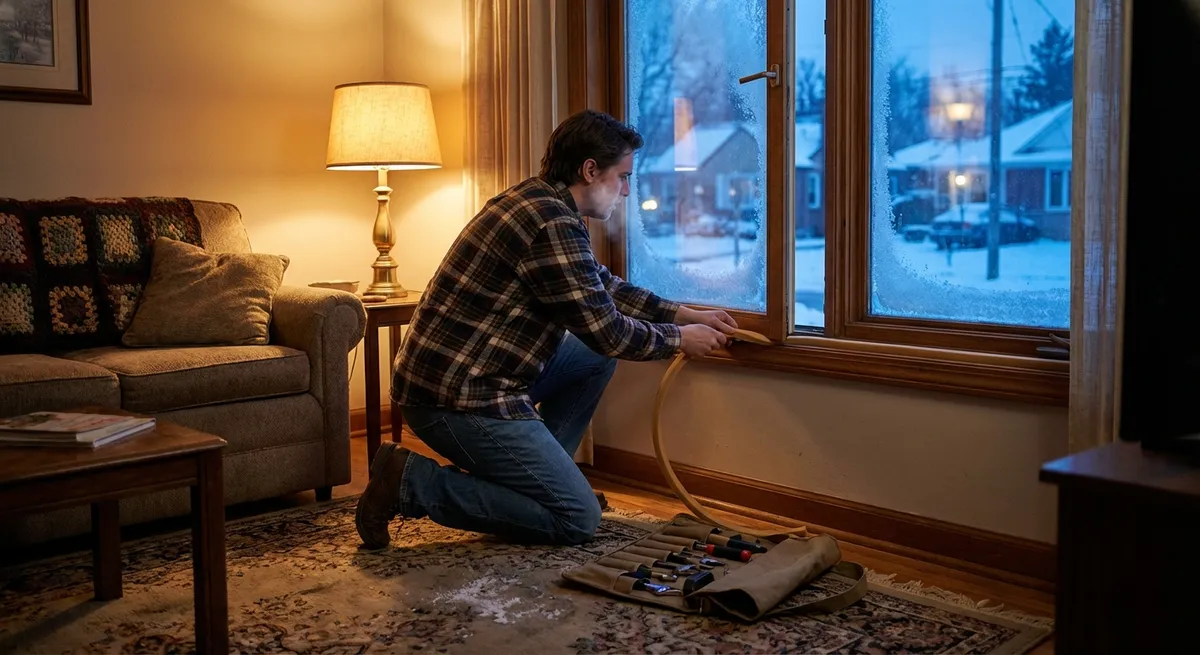
A drafty door or window doesn’t just feel uncomfortable—it quietly drains your heating and cooling budget. The good news: you can seal most common air leaks in a single afternoon with basic tools and inexpensive materials. This guide walks you through a practical, step-by-step process to add or replace weatherstripping so your home stays more comfortable and energy-efficient all year.
Understand Where Drafts Are Really Coming From
Before you grab tools, you need to find the actual leak points. Guessing usually leads to overbuying materials and missing the real problem areas.
Start by checking exterior doors and windows on a windy day or when there’s a big temperature difference between inside and out. Slowly move your hand around the edges and corners; you’ll often feel a cool or warm stream of air where the seal has failed. Pay attention to the bottom of doors, the latch side of the frame, and the meeting rails of double-hung windows.
For a more precise test, close the door or window on a thin strip of paper. If you can easily slide the paper out without resistance, the seal there is weak. You can also turn off HVAC fans and hold a lit incense stick or a very small candle near suspect gaps—the smoke or flame will move toward the draft. Make a quick sketch of your door or window and mark the exact locations of leaks. This will help you buy the right types and lengths of weatherstripping later.
Choose the Right Weatherstripping for Each Spot
Not all weatherstripping is designed for the same job, so matching the product to the gap is critical. Using whatever is on sale often leads to short-lived fixes or doors that won’t close properly.
For the sides and top of doors, adhesive-backed foam tape or V-strip (also called V-seal) works well for small to medium gaps. Foam tape is easier for beginners and very forgiving; V-strip offers a more durable, springy seal, especially on older wood doors and windows. For the bottom of exterior doors, you’ll usually want a door sweep (for smooth floors) or a door shoe/threshold combination for larger, irregular gaps.
Windows benefit from self-stick V-strip along the sides of sashes, and compressible foam or rubber along the meeting rails where the upper and lower sashes touch. Avoid bulky foam that forces the sash out of alignment. For very large or uneven gaps, consider a combination: for example, a new adjustable threshold plus a door sweep, or thicker foam tape in one section and thinner in another. Take measurements of your gaps and frame widths before shopping, and bring a couple of photos for reference.
Step 1: Gather Tools and Prep the Surfaces
A solid weatherstripping job starts with clean, dry surfaces. Adhesive will not stick well to dust, old paint flakes, or greasy fingerprints, and mechanical strips need a stable base to screw into.
You’ll typically need: a tape measure, pencil, utility knife or heavy scissors, flat screwdriver or putty knife, cleaning rags, mild detergent, and possibly a drill with small bits if you’re installing a screwed-on door sweep or threshold. If you’re removing old nailed or screwed strips, a pry bar and appropriate screwdriver bits are essential.
Begin by removing any old, loose, or cracked weatherstripping. Gently pry it off with a flat screwdriver or putty knife to avoid damaging the frame. Peel away old adhesive as much as you can. Clean the area with a mild detergent solution to remove dirt and oils, then wipe with clean water and let it dry completely. If there’s stubborn adhesive residue, use a small amount of adhesive remover or rubbing alcohol on a rag, but avoid soaking wood. Make sure the surface feels smooth and dry before proceeding.
Step 2: Measure Carefully and Test-Fit Before Sticking
Accurate measurements save time, money, and frustration. Cutting strips too short creates weak points; cutting them too long can cause bunching that prevents doors and windows from closing.
Measure the height of each side of the door or window frame and the width across the top and bottom. Note these dimensions, then add a few extra inches for trimming. If using pre-cut door sweeps or thresholds, measure the door width and the distance between the doorjambs precisely; many products can be trimmed with a hacksaw or tin snips if needed.
Before removing any adhesive backing, hold each piece of weatherstripping in place to check fit. On doors, close the door gently while holding the strip against the frame to see how much compression you’ll get. You want a firm seal when closed but not so much that you have to slam the door. On windows, test that you can still open and close the sash without excessive resistance. Lightly mark start and end points with a pencil to guide placement.
Step 3: Install Side and Top Seals on Doors and Windows
With measurements confirmed, it’s time to install the main seals around the frame. Always start with one side, then the top, then the other side, so you can adjust as needed.
For adhesive foam tape, peel a small section of the backing and press the strip into the corner of the frame, working a short length at a time. Keep it straight and avoid stretching it; stretched foam tends to shrink back and create gaps later. Press firmly with your fingers along the entire length to ensure good contact. At the ends, trim with a utility knife so that the corners meet snugly without overlapping.
For V-strip, position it so the open side of the “V” faces the direction of the moving part (door or sash). This way, closing the door or window compresses the V for a tight seal. Many V-strips are self-adhesive; install them similarly to foam, but be extra careful to keep the fold line straight. On double-hung windows, run V-strip along the vertical sides of the upper and lower sashes where they slide in the track. Test the movement: the window should close firmly but still slide with steady pressure, not excessive force.
Step 4: Add or Upgrade the Door Bottom Seal
The bottom of exterior doors is one of the biggest sources of drafts, and it often needs a different solution than the sides and top. A good door bottom seal also helps keep out insects, light, and dust.
For a simple door sweep (a flat strip with a flexible rubber or brush edge), first mark a straight line along the bottom of the door where the sweep will sit. With the door open, hold the sweep in place so the flexible edge just barely touches the floor or threshold; too much pressure will cause drag and wear. Mark the screw holes, drill small pilot holes if needed, and then attach with the provided screws. Check that the door opens and closes smoothly and that light is blocked along the bottom.
If your threshold is warped, too low, or missing, consider replacing it with an adjustable threshold. This type has small screws you can turn to raise or lower the sealing surface. Remove the old threshold, clean underneath, and cut the new one to fit if necessary. Secure it according to the manufacturer’s instructions, then adjust the screws so the door just contacts the threshold when closed without binding. Combined with a new door shoe or sweep, this can dramatically reduce drafts.
Step 5: Seal Window Meeting Rails and Final Air-Tightness Check
Once the main strips are installed, your final step is to seal smaller but important gaps and verify your work. This ensures you’re not missing the leaks that still let in surprising amounts of air.
On double-hung windows, the meeting rail is where the top of the lower sash meets the bottom of the upper sash. Clean this area, then apply a thin, compressible foam strip or specialized weatherstripping designed for this joint. Avoid anything so thick that it prevents locking the window. For casement and sliding windows, inspect the perimeter gasket and add adhesive foam or replacement gaskets where original seals have flattened or cracked.
With everything in place, repeat your earlier draft tests. Use the paper test along the frame—ideally, you should feel noticeable resistance when pulling the paper out of a closed door or window. On a windy or cold day, run your hand along the edges to check for remaining leaks; a small amount of air movement around locks or hinges is sometimes unavoidable, but long, steady drafts should be gone. If you find a persistent leak, adjust screws on sweeps or thresholds, or add a short piece of weatherstripping targeted to that exact spot.
Conclusion
Proper weatherstripping is one of the most cost-effective home repairs you can tackle yourself, and it pays you back in comfort and lower energy bills. By identifying real draft sources, choosing the right materials, and installing them carefully, you can turn leaky doors and windows into solid barriers against the elements. Take your time on measuring and test-fitting, and don’t be afraid to make small adjustments after your first pass—those final tweaks are often what transform a decent seal into an airtight one.
Sources
- U.S. Department of Energy – Weatherstripping - Overview of weatherstripping types, materials, and basic installation tips
- Energy Star (EPA) – Air Sealing Your Home - Guidance on finding and sealing air leaks to improve efficiency
- Family Handyman – How to Weatherstrip Doors - Practical, step-by-step instructions and product recommendations
- This Old House – How to Weatherstrip a Window - Detailed techniques specifically for different window styles
- Mass Save – Finding and Fixing Air Leaks - Helpful visuals and examples of common air leak locations in homes
Key Takeaway
The most important thing to remember from this article is that this information can change how you think about Home Repair.