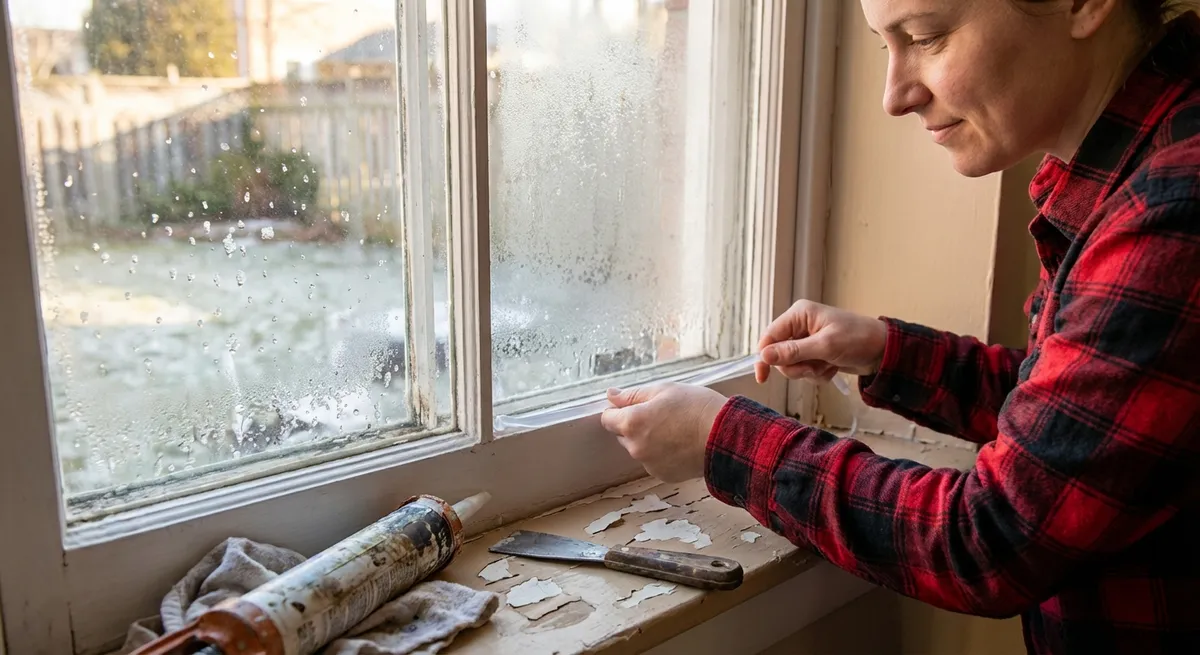
Drafty windows can make your home uncomfortable, drive up your energy bills, and let in dust and noise. The good news: you don’t need to replace your windows to feel a big difference. With a few basic tools and materials, you can seal gaps, block drafts, and make your home more comfortable in a single afternoon.
This guide walks you through a practical, step-by-step process to find and fix window air leaks—even if you’ve never tackled a home repair project before.
Understand Where Window Drafts Come From
Drafts usually sneak in through small, often invisible gaps around and on your windows. Before you can fix the problem, it helps to know what you’re looking for.
Common draft sources:
- The joint where the window frame meets the wall (trim gaps, cracked caulk)
- Between the window sash and frame (worn weatherstripping, loose latches)
- Around the window stool/sill (shrinkage, settlement, old putty)
- Old single-pane windows with failing glazing around the glass
- Settling or warped frames that no longer fit tightly
Why this matters:
- Even tiny gaps add up: a few small cracks can equal the area of a brick.
- Leaks bring in cold or hot air, dust, pollen, and sometimes moisture.
- Sealing gaps is one of the cheapest energy upgrades you can do, often with payback in a season or two.
Once you know the likely leak points, you can move methodically instead of guessing.
Step 1: Find Every Draft (Simple Tests You Can Do Today)
Before sealing, you need a clear picture of where air is getting in. You don’t need special equipment—just attention and a few household items.
Try these simple methods:
Hand test
On a windy day or with your HVAC running, slowly move your hand around the edges of each window—especially corners, where the frame meets the wall, and where the sashes meet. Feel for subtle temperature changes or moving air.
Paper strip test (for movable sashes)
- Open the window and place a strip of paper or a dollar bill where the sash meets the frame. - Close and lock the window. - Gently tug the paper. - If it slides out easily without resistance, the seal is weak at that spot and needs weatherstripping or latch adjustment.
Incense or candle test (use with care)
- Turn off fans and close doors to limit air movement. - Light an incense stick or candle and move it slowly around window edges. - Watch for smoke or flame that flickers or gets pulled in one direction. - Mark those spots with painter’s tape or a pencil so you know where to seal later. - Keep flammables away from curtains and wood, and never leave flame unattended.
Visual inspection
- Look for visible gaps between trim and wall. - Check for cracked or missing exterior caulk around the window. - Look for daylight showing through around the sash, especially in older windows. - Note peeling paint or water stains, which can signal moisture entering at a gap.
Walk through your home and list the worst offenders first. That’s where you’ll see the biggest comfort and savings improvements.
Step 2: Prep the Window Area for a Long-Lasting Seal
Good preparation is what separates a quick fix from a lasting repair. Sealing over dirt, loose paint, or brittle old caulk won’t hold.
You’ll need: utility knife, putty knife or scraper, mild cleaner, rags, vacuum, and painter’s tape (optional).
Do this for each leaky window:
Clean the surfaces
- Inside: Wipe down window frames, sills, and trim with a mild cleaner. - Outside (if reachable and safe): Remove dirt, spider webs, and loose debris. Clean where the frame meets the siding or masonry.
Remove loose or cracked caulk
- Use a utility knife or caulk removal tool to cut along old caulk lines that are cracked, separated, or pulling away. - Gently scrape with a putty knife until loose material is gone. You don’t need to dig out every trace—just anything that’s no longer well-bonded.
Check for damaged wood or soft spots
- Press gently on wood sills and trim with your finger or a screwdriver handle. - If the wood feels spongy or crumbles, you may have rot that needs to be repaired or replaced before sealing. Don’t trap moisture behind caulk.
Dry everything thoroughly
- Let surfaces air-dry completely before applying new sealing materials. - If you’ve washed the exterior, wait at least a few hours in dry weather.
Mask adjacent surfaces (optional but helpful)
- Apply painter’s tape along the edges where you’ll caulk if you want clean, straight lines. - This is especially useful for beginners or when caulking against visible, finished surfaces.
Good prep adds a bit of time now but saves you from redoing the job in a season or two.
Step 3: Seal Stationary Gaps with Caulk and Foam
Now you’ll tackle the non-moving parts of the window—the joints that should be permanently sealed. This stops air infiltration around the frame and trim.
Materials
- Interior/exterior paintable acrylic latex caulk for most joints
- Silicone caulk for high-moisture areas (like around a shower window)
- Low-expansion spray foam labeled for windows and doors (for larger hidden gaps)
- Caulk gun, caulk smoother or your finger, rags
Where and how to caulk
Inside joints
- Run a thin, continuous bead where the interior trim meets the wall. - Fill visible cracks between the trim and the window frame. - Smooth the bead immediately with a damp finger or a caulk tool. Aim for a slightly concave, even line.
Outside perimeter (if accessible and safe)
- Seal where the window frame meets the siding, brick, or stucco. - Pay close attention to the top corners and horizontal surfaces where water can sit. - Avoid blocking weep holes (small drainage openings in some window frames). These must remain open so water can escape.
Use foam for bigger, hidden gaps
- From inside, carefully remove interior casing (trim) only if you’re comfortable with basic carpentry. - Look for large gaps between the window frame and the rough opening. - Gently apply low-expansion foam in a light bead—overfilling can warp the frame and affect operation. - Let it cure as directed, then trim excess with a knife before reinstalling trim.
Wipe and touch up
- Clean up any stray caulk with a damp rag while it’s still wet. - Once dry, you can paint over paintable caulk to match your trim or wall.
Focus on consistent, sealed lines rather than heavy beads. A smaller, well-applied bead seals better than a huge, messy one.
Step 4: Add or Replace Weatherstripping on Moving Parts
Caulk handles the parts that shouldn’t move. Weatherstripping seals the parts that do—like sliding or swinging sashes—so windows can operate while keeping air out.
Choose the right weatherstripping
Common DIY-friendly types:
- Adhesive foam tape – Easy to install; good for gaps on window stops and sashes.
- V-strip (V-seal) – Thin, flexible plastic or metal that works well along sides of double-hung or casement windows.
- Felt – Inexpensive but wears out faster; use only for light-duty or short-term fixes.
Check the product label for recommended gap size and locations (sashes, frames, etc.).
How to install weatherstripping
Measure and test fit
- Measure the length of each side you’ll be sealing. - Cut pieces slightly longer than needed; trim for exact fit after dry fitting.
Apply foam tape (common for many windows)
- Clean the application surface with a mild cleaner and let it dry. - Peel a small section of the backing and carefully press the tape into place along the stop where the sash closes. - Work slowly, peeling backing as you go to avoid stretching the tape. - Press firmly to ensure good adhesion.
Install V-strip along sashes
- For double-hung windows, install V-strip along the sides and sometimes at the meeting rail where the sashes touch. - For casements, follow the manufacturer’s diagram, usually along the frame where the sash compresses when closed. - Nail or stick in place per the product instructions.
Check operation
- Open and close each window several times. - The window should close snugly, but not so tight that you need to force it. - If it’s too tight, use thinner weatherstripping or move it slightly toward the interior so the seal is firm but not crushed.
Properly applied weatherstripping should be nearly invisible and make the window feel “solid” when you shut and lock it.
Step 5: Fine-Tune for Comfort and Efficiency
Once the major leaks are sealed, you can make a few additional tweaks that improve comfort, reduce condensation, and get more value from your work.
Adjust or repair window locks and latches
- Ensure latches align and pull the sashes tightly together. - Slightly loose latches can often be corrected by adjusting strike plates or tightening screws. - A properly locked window usually seals better than one that’s just closed.
Add insulating window film (seasonal option)
- For older or single-pane windows, clear shrink film kits can significantly cut drafts and heat loss. - Apply film over the entire interior frame, then use a hair dryer to tighten it. - It’s removable at the end of the season and works well in rooms where you rarely open windows in winter.
Use thermal curtains or cellular shades
- Heavy, insulated curtains or honeycomb shades create an extra barrier against cold or heat. - Close them at night in winter and during the hottest part of the day in summer to support your sealing work.
Monitor for moisture and condensation
- After sealing, watch for increased condensation on glass in cold weather. - Some condensation can be normal, but persistent moisture can indicate indoor humidity is too high. - Use bathroom and kitchen exhaust fans, or a dehumidifier, to keep indoor humidity in a healthy range (typically 30–50%).
Re-test your windows
- Repeat the hand or incense test around your repaired windows. - You should notice fewer or no drafts where you previously marked leaks. - Note any stubborn spots and address them with an extra bit of caulk, foam, or a different weatherstripping type.
These finishing touches help you get the full benefit of your effort and keep your home more comfortable year-round.
Conclusion
Sealing drafty windows doesn’t require specialized tools or professional training—just patience, careful inspection, and the right materials. By:
- Finding the true source of drafts
- Prepping surfaces properly
- Sealing fixed gaps with caulk and foam
- Adding or replacing weatherstripping on moving parts
- Fine-tuning with films, curtains, and latch adjustments
you can noticeably cut drafts, improve comfort, and potentially lower your energy bills.
Start with the worst windows first, work methodically, and take your time. Your home will feel calmer, cozier, and more efficient—without the cost or disruption of full window replacement.
Sources
- [U.S. Department of Energy – Air Sealing Your Home](https://www.energy.gov/energysaver/air-sealing-your-home) - Explains where air leaks typically occur and best practices for sealing around windows and doors
- [ENERGY STAR – Windows, Doors and Skylights](https://www.energystar.gov/products/building_products/residential_windows_doors_and_skylights) - Provides guidance on window performance, energy savings, and improvement options
- [This Old House – How to Weatherstrip Windows](https://www.thisoldhouse.com/windows/21017726/how-to-weatherstrip-windows) - Step-by-step instructions and visuals for adding weatherstripping to common window types
- [Family Handyman – How to Find and Seal Air Leaks](https://www.familyhandyman.com/project/how-to-find-and-seal-air-leaks/) - Practical methods for detecting drafts and choosing the right sealing materials
- [University of Minnesota Extension – Managing Indoor Humidity](https://extension.umn.edu/air-quality/managing-indoor-humidity) - Explains proper indoor humidity levels and how sealing and ventilation affect condensation
Key Takeaway
The most important thing to remember from this article is that following these steps can lead to great results.