Wall cracks look small, but they can signal shifting structures, hidden leaks, or just normal settling. Knowing which ones you can fix yourself—and how to do it properly—can save you money and keep small issues from turning into major repairs.
This guide walks you through understanding different types of cracks, choosing the right materials, and completing a clean, durable repair in five clear steps.
Understand What Your Wall Crack Is Telling You
Before you touch a tool, you need to know what you’re looking at. Not all cracks are the same, and not all should be treated as a simple DIY fix.
Hairline cracks (thinner than a credit card) are usually from normal settling, paint shrinkage, or minor humidity changes. These are typically safe for DIY repair. Wider cracks, especially those that are 1/8" wide or more, may indicate movement in your foundation, framing, or plaster base.
Pay attention to direction and location. Vertical cracks that stay narrow and don’t grow often come from settling or plaster shrinkage. Long horizontal cracks, or stair-step cracks around doors, windows, or in basements, may point to structural movement. Bulging, soft, or stained areas around a crack can signal water damage, which needs to be fixed at the source (roof, plumbing, or exterior) before you patch anything.
If you see rapidly growing cracks, doors or windows suddenly sticking, or significant bowing in walls, talk to a structural engineer or qualified contractor before attempting repairs. DIY is great—but only when the underlying problem is stable and safe.
Step 1: Inspect and Prepare the Area
Proper prep makes the difference between a crack that stays hidden and one that comes right back through your paint.
Start by cleaning the wall. Use a dry cloth or vacuum with a brush attachment to remove dust, cobwebs, and loose debris around the crack. If the wall is greasy (often in kitchens), lightly clean it with a mild detergent and water, then let it dry completely.
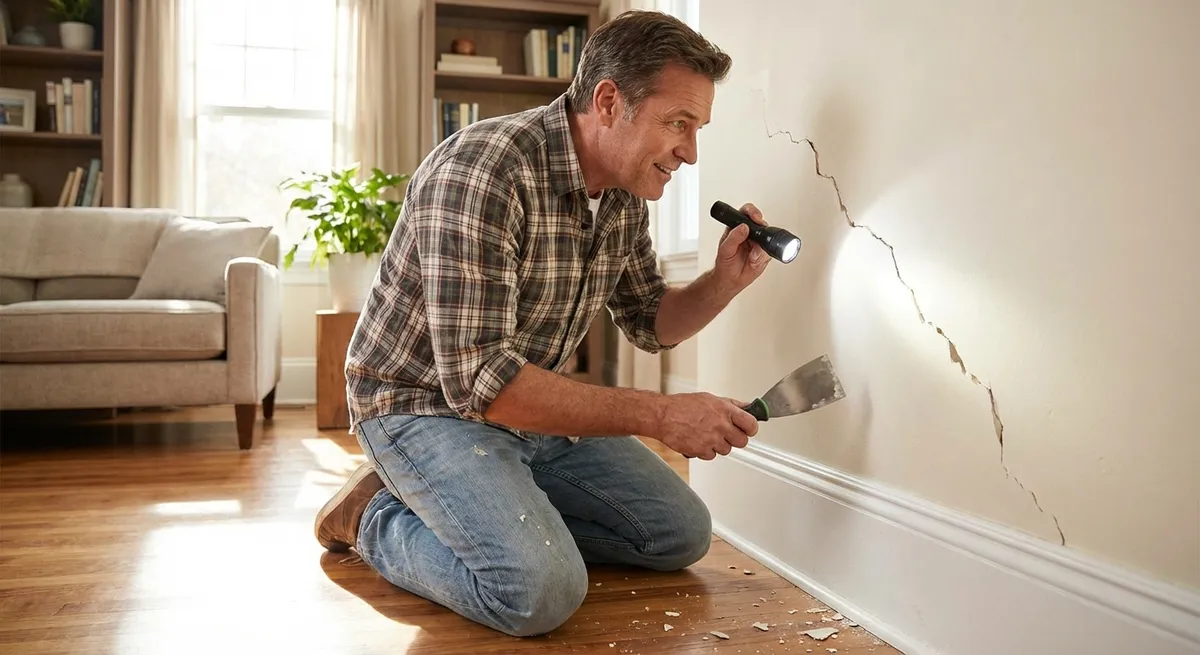
Use a utility knife or painter’s 5‑in‑1 tool to lightly score along the crack and remove any loose or flaking material. For drywall, gently widen hairline cracks into a small V-shape so filler can grab onto something instead of just sitting on the surface. For plaster walls, be careful not to break the sound surrounding plaster—you want to remove only what’s loose.
Once the crack is opened and cleaned out, wipe it again with a dry brush or cloth. If there’s visible moisture, stop and trace the source of the water problem before you patch; otherwise, your repair will fail and mold may develop behind the wall. Allow the area to fully dry before proceeding.
Step 2: Choose the Right Repair Materials
The best results come from matching materials to both the wall type and crack size.
For drywall hairline cracks and small gaps, a lightweight joint compound or pre-mixed spackle works well. It’s easy to sand, dries quickly, and is simple to work with for beginners. For larger drywall cracks (especially 1/8" or wider), use all-purpose joint compound paired with self-adhesive fiberglass mesh tape for added strength.
With plaster walls, skip basic spackle for anything beyond tiny surface cracks. A setting-type joint compound or plaster repair product is better; it cures harder and is less likely to crack again. These often come as powders you mix with water and have a specific working time, so read the label and mix only what you can apply within that window.
For cracks at corners, around door frames, or where two materials meet (like wall-to-ceiling), consider a high-quality paintable acrylic latex caulk. Caulk handles movement better than rigid compounds, making it ideal for joints that naturally expand and contract. Whatever you choose, make sure it’s labeled as paintable if you’ll be finishing the wall afterward.
Step 3: Reinforce the Crack (So It Doesn’t Come Back)
Simply smearing compound over a crack often leads to a repeat problem. Reinforcement keeps the repair from re-cracking as the wall moves slightly over time.
For straight cracks in drywall, apply a strip of fiberglass mesh tape directly over the cleaned, opened crack. Center the tape on the crack and press it down firmly so it adheres flat with no bubbles. If you’re using paper tape, you’ll first apply a thin bed of joint compound, then press the tape into it with a drywall knife.
On plaster walls with more serious cracks, you may need plaster washers or repair clips to reattach loose plaster to the lath underneath. These are small discs or fasteners that pull the plaster back tight to the framing. Only use them where the plaster is actually loose; tapping lightly around the crack can help you find hollow areas.
At corners or joints, consider using corner tape or flexible joint tape specifically designed for inside corners if the crack runs along the angle. This gives a much stronger, cleaner repair than trying to rely on compound alone.
Once your reinforcement is in place, lightly run your knife over it to ensure there are no raised edges. It’s better to fix bumps now than to fight them while sanding.
Step 4: Fill, Smooth, and Sand for a Seamless Finish
Now you’re ready to build up a smooth surface that disappears once painted.
Using a drywall knife (4–6" for the first coat, then 8–10" for later coats), apply a thin layer of compound over the taped crack, extending a couple of inches beyond the tape on each side. The goal of the first coat is to embed and cover the tape, not to make everything perfectly flat. Pull your knife firmly to avoid leaving thick ridges that are hard to sand.
Let the first coat dry completely—this can take several hours or overnight depending on the product and room conditions. Once dry, lightly sand with fine-grit sandpaper (120–150 grit) or a sanding sponge to knock down high spots and edges. Don’t oversand back into the tape; you just want to smooth out transitions.
Apply a second, wider coat of compound, feathering the edges farther out from the crack so the repair blends into the existing wall. Again, allow it to dry fully, then sand lightly. Deep or wide cracks may need a third thin coat for a flawless finish. The key is several thin layers rather than one thick one, which is more likely to shrink and crack.
When you run your hand over the area with your eyes closed, it should feel flat and seamless. Use your fingertips—they’ll catch imperfections your eyes might miss.
Step 5: Prime, Paint, and Monitor the Repair
Proper finishing protects your repair and helps you spot any future movement early.
Start with a quality primer designed for repaired drywall or patched surfaces. Priming seals the compound so your topcoat doesn’t soak in unevenly and create visible “flashing” (dull patches) where the repair is. Spot-prime the repaired area at minimum; for best blending, many people prefer to prime the entire wall.
Once the primer is dry, apply your wall paint using the same type of applicator originally used on the wall (roller, brush, or both). Match sheen (matte, eggshell, satin, etc.) and paint type as closely as possible. If you’re touching up a small section, feather your paint into the surrounding wall while the edges are still wet to avoid obvious lap lines.
After the wall is fully dry, take another close look at the repair in natural daylight and with lights on. If you can see a slight difference in texture, you may need an extra light sanding and one more thin topcoat of paint.
Over the next few weeks and months, casually keep an eye on the area. If the crack reappears in the same place and gradually widens, that’s a sign of ongoing movement rather than a bad repair. In that case, consider bringing in a professional to assess potential structural, foundation, or moisture issues behind the wall.
Conclusion
Wall cracks don’t have to be alarming or expensive to fix, as long as you know how to read them and repair them correctly. By inspecting carefully, choosing the right materials, reinforcing the weak spot, and finishing the surface properly, you can turn an eyesore into a clean, durable patch that blends into the rest of your home.
Handled early, most cosmetic cracks stay exactly that—cosmetic. The real win is developing the habit of investigating issues instead of ignoring them, so your home stays solid, safe, and ready for whatever project you tackle next.
Sources
- [U.S. General Services Administration – Inspecting and Recording Cracks in Buildings](https://www.gsa.gov/real-estate/design-construction/engineering-and-architecture/building-technology/engineering-judgment-and-crack-monitoring) - Overview of how professionals think about crack monitoring and movement
- [National Association of Home Builders – Common Drywall Problems](https://www.nahb.org/advocacy/industry-issues/construction-codes-and-standards/drywall/common-drywall-problems) - Explains typical drywall issues and when they’re usually cosmetic
- [This Old House – How to Fix a Crack in Drywall](https://www.thisoldhouse.com/walls/21016527/how-to-fix-a-crack-in-drywall) - Step-by-step guidance on drywall crack repair techniques
- [U.S. Geological Survey – Cracks in Your House: What’s Normal, What’s Not](https://www.usgs.gov/media/images/cracks-your-house-whats-normal-whats-not) - Background on how ground and structural movement can show up as cracks
- [Family Handyman – Plaster Repair Made Easier with Plaster Washers](https://www.familyhandyman.com/project/how-to-fix-loose-plaster/) - Details on reinforcing and repairing loose plaster safely
Key Takeaway
The most important thing to remember from this article is that this information can change how you think about Home Repair.