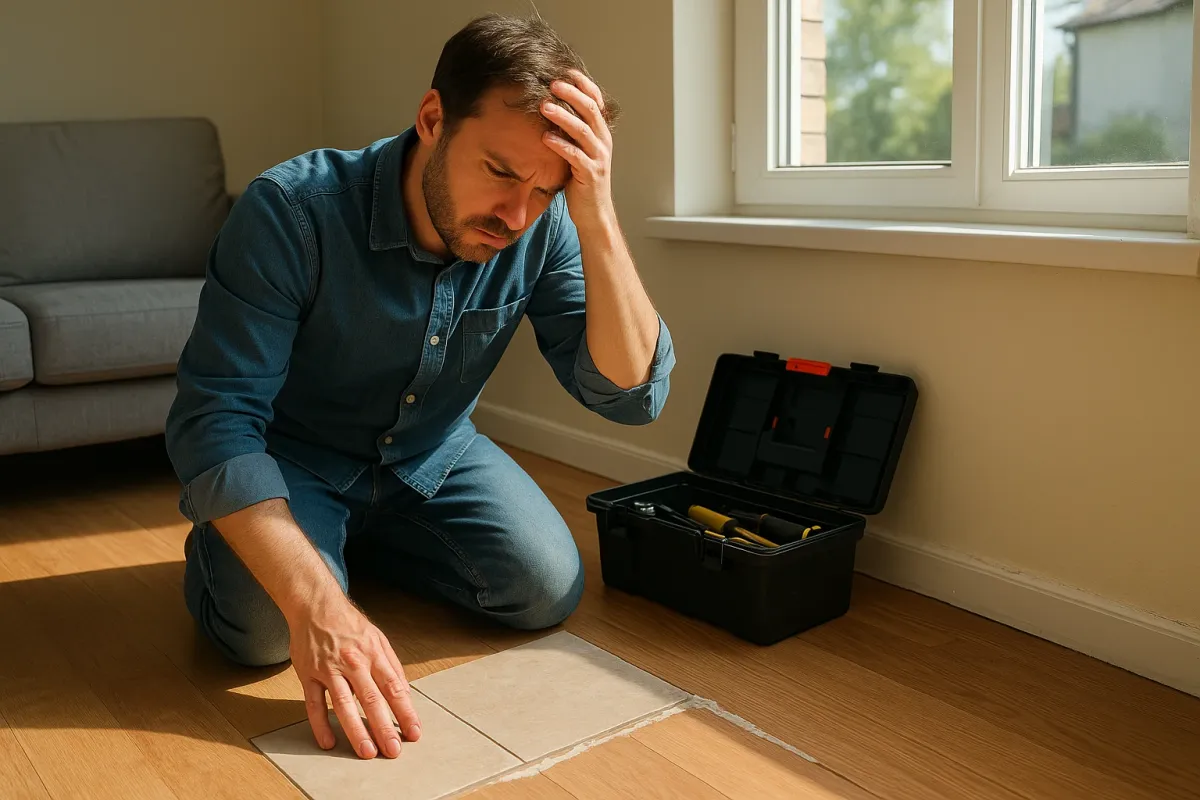
If you’ve seen those viral “Not My Job” photos—where someone paints around a leaf, installs a door over a vent, or stripes a road right over trash—you know exactly how frustrating lazy work can be. Today, that same vibe is trending again thanks to a new round of “Not My Job” moments making the rounds online, where half-finished and badly done tasks are getting roasted for being hilariously lazy. They’re funny on X and Instagram. They are not funny when they’re in your own living room.
In home repair, “not my job” thinking shows up as paint slapped over outlets, tiles cut crooked around toilets, or fixtures installed miles off-center. The good news: many of these eyesores are fixable with basic tools, patience, and a plan. Below, we’ll walk through practical, step-by-step ways to correct some of the most common “not my job” mistakes you might find in your home—whether they came with the house or from a rushed contractor.
1. Fixing Sloppy Wall Paint Lines (Without Repainting the Whole Room)
When viral “not my job” posts show paint bleeding onto ceilings or trim, it looks minor—but in your own place, it makes the whole room feel cheap. You don’t have to start from scratch. You just need control.
Step 1 – Assess the damage up close
Look at where the bad lines are: at the ceiling, along baseboards, around doors/windows, or next to a color change. Determine:
- Is it just a wavy edge?
- Is there visible paint on the wrong surface (like wall paint on the ceiling)?
- Is the underlying paint glossy or flat? (Gloss needs more prep.)
This tells you how much patching vs. simple repainting you need.
Step 2 – Lightly sand and clean the problem areas
Use a fine sanding sponge (220-grit) to:
- Knock down ridges where paint overlapped
- Smooth drips or thick edges
Wipe with a damp cloth to remove dust. Let dry. A smooth surface is what makes sharp lines possible.
Step 3 – Use “caulk taping” for razor-sharp edges
Pros use this trick constantly:
- Run painter’s tape exactly where you want the line.
- Press the tape edge down hard with a putty knife or a plastic card.
- Run a very thin bead of paintable caulk along the tape edge.
- Smooth with your finger so the caulk fills the tiny gaps at the tape line.
- Immediately paint over the tape line (don’t wait for the caulk to fully cure).
Peel the tape off at a 45° angle while the paint is still slightly wet. The caulk seals the edge and blocks bleed-through.
Step 4 – Touch up the ceiling or trim first
If both surfaces are messy (for example, wall paint on the ceiling):
- Fix the ceiling or trim color first and let it dry completely.
- Then re-tape along that new, clean edge and repaint the wall color.
This sequence prevents a “double wobble” line.
Step 5 – Feather and blend touch-ups
To avoid obvious patches:
- Don’t overload the brush or roller.
- Overlap the new paint into the old by a foot or two.
- Roll lightly at the edges to fade the line.
Let it cure for a day or two before judging. Once dry, even previously awful paint lines can look professionally done.
2. Straightening Crooked Outlets and Light Switches
Those “not my job” pictures of outlets installed at wild angles go viral because they’re ridiculous. But in real houses, slightly crooked outlets and switches are more common than you think—and they’re usually easy to fix.
Step 1 – Turn off power and verify
At the breaker panel, switch off the circuit serving that outlet/switch. Then:
- Use a non-contact voltage tester on the device screws.
- Test both hot and neutral sides.
No light/beep = safe to proceed.
Step 2 – Remove the cover plate and inspect the box
Unscrew the cover plate. Look at:
- Is the electrical box itself crooked in the wall?
- Or is the box straight and only the device is twisted?
- Are there “box extenders” or spacers already present?
If the box is square but the device is crooked, the fix is quick. If the box is crooked in the wall, you’re doing a slightly deeper repair.
Step 3 – Loosen the device and square it up
For a slightly crooked outlet/switch:
- Loosen the two mounting screws (top and bottom) a few turns.
- Gently twist the device until it looks square to the wall and level.
- Tighten the screws while holding it in position.
Use a small torpedo level if you want it exact—especially when outlets are side-by-side and misalignment is obvious.
Step 4 – Use spacers to fix “sunken” or wobbly outlets
If the device sits too far back or rocks when you plug something in:
- Add plastic outlet spacers or cut pieces of plastic shim behind the device ears.
- Stack as needed so the device sits flush with the wall surface.
- Tighten screws firmly but don’t overtighten and crack the box or strip threads.
This not only looks better—it reduces strain on wires and makes the outlet safer.
Step 5 – Replace cracked, yellowed, or paint-covered plates
“Not my job” workers often paint right over outlet covers. Instead of scraping forever:
- Replace with clean, new covers (they’re cheap).
- For tiled or uneven walls, use flexible “oversized” plates to hide small gaps.
Turn the breaker back on and test. A few minutes of work can erase years of visual annoyance.
3. Repairing “Painted Around” Hardware, Vents, and Fixtures
Those viral photos of doorknobs painted over or vents half-covered in wall color scream “I didn’t feel like removing it.” The right way doesn’t take much longer—and you can retro-fix the mess you inherited.
Step 1 – Decide: clean up or fully replace?
Look at the item:
- Cheap, rusty vent covers or doorknobs? Replacement is often faster and better.
- Solid hardware (like quality brass or steel) just slopped with paint? Worth saving.
Take a quick photo and measurements if you’re considering replacement, then check big-box stores or online for similar sizes and finishes.
Step 2 – Carefully score the paint edges
Before removing painted-over items:
- Use a sharp utility knife to score around the edges where the paint meets the wall or trim.
- This prevents tearing off chunks of drywall paper or plaster when you pull the item free.
Work slowly and keep blade pressure light but consistent.
Step 3 – Remove the hardware or vent
Unscrew carefully. If paint is acting like glue:
- Gently pry with a putty knife after scoring.
- For stubborn doorknobs or hinges with painted screw heads, clear paint out of the slots with a razor or awl before using a screwdriver.
Don’t force it; damaged screw heads turn a small job into a big one.
Step 4 – Strip or sand paint off the piece (if keeping)
For metal:
- Use a chemical paint stripper rated for metal, or
- Lightly sand with 120–220 grit and a sanding block, or
- Soak removable knobs/hinges in a slow cooker with water and a bit of dish soap (dedicate that cooker to projects only, not food).
- Skip harsh strippers (they can melt or weaken plastic).
- Sand lightly and repaint with a spray paint designed for plastic—or replace.
For plastic vents:
Let pieces dry completely before reinstalling.
Step 5 – Repaint the wall area properly, then reinstall
While the hardware is off:
- Patch any gouges with lightweight spackle.
- Sand smooth when dry.
- Prime bare spots.
- Repaint the wall or trim area right up to—but not onto—where the hardware will sit.
Once dry, reinstall your clean hardware. That “lazy” look disappears, and the whole room feels more intentional.
4. Fixing Bad Caulk Joints Around Tubs, Sinks, and Backsplashes
Few things look more “not my job” than thick, lumpy caulk with gaps and mold. Social media loves to mock it, but poorly done caulking can also let water in, causing real damage. The fix is mostly about prep and cleanup.
Step 1 – Remove old caulk completely
Use:
- A plastic caulk scraper or a dedicated caulk removal tool.
- A utility knife to cut along edges (careful not to cut into tubs, counters, or tile).
For silicone, a silicone caulk remover gel helps soften it. Scrape until only clean surfaces remain. Anything left behind will cause your new bead to fail.
Step 2 – Clean and dry the joint
Wipe with:
- A mild cleaner first to remove soap scum and grime.
- Then isopropyl alcohol to remove residue and help drying.
Let the area dry thoroughly. If there’s moisture trapped, your new caulk won’t adhere well and may mold faster.
Step 3 – Choose the right caulk
For wet areas:
- Use 100% silicone labeled for kitchen/bath, or
- A high-quality “kitchen & bath” acrylic latex with silicone (easier to work with, but not as durable as pure silicone).
Match the color: white, clear, or a grout-matching shade for tile transitions.
Step 4 – Mask the joint for a clean, narrow bead
To avoid big, smeared joints:
- Apply painter’s tape parallel to the joint, leaving only the gap you want filled exposed (usually 1/8" to 1/4").
- Cut the caulk tube tip small—smaller than you think you need.
- Apply steady, even pressure and move at a constant speed.
Try to lay one continuous bead, not a series of dots.
Step 5 – Tool the caulk and pull the tape
Immediately after applying:
- Wet your finger or a caulk tool with water (or soapy water).
- Gently smooth the bead once, pressing lightly to ensure contact with both sides.
- Peel the tape away at a 45° angle while the caulk is still wet.
Let it cure per the label (often 24 hours) before exposing to water. Done right, the joint is slim, straight, and watertight—no more “globbed on in a hurry” look.
5. Correcting “Painted Around” Floors and Baseboards Before Replacing Flooring
A classic “not my job” move: painting walls and baseboards without ever moving furniture or considering future flooring. When you later swap carpet for LVP, hardwood, or tile, you discover:
- Unpainted strips at the bottom of walls
- Messy paint on old floors
- Gaps where new flooring meets old trim
You can clean this up before or during your flooring upgrade.
Step 1 – Expose and mark all problem areas
Pull back carpet or old base shoe molding to see:
- Bare drywall near the floor
- Old colors peeking out
- Drips on subfloor or underlayment
Mark areas with painter’s tape or a pencil so you don’t miss any once everything’s torn out.
Step 2 – Decide whether to keep or replace baseboards
If your baseboards are:
- Damaged, very low, or extremely dated—consider replacing. It often looks better with new flooring.
- Solid and in good shape—keep them and just repaint.
Knowing this upfront changes how neatly you need to cut out old caulk and paint.
Step 3 – Repaint lower wall sections before new flooring goes in
With old flooring removed (or at least pulled back):
- Mask just above the baseboard top edge or where the new base will cover.
- Patch any gouges from demo.
- Prime bare drywall or patched areas.
- Repaint the wall color down to where new floor + baseboard will meet.
This prevents that “raw strip” look when the new floor is installed.
Step 4 – Clean or sand paint off areas that will meet new trim
If there’s thick paint build-up:
- Lightly sand high ridges so new baseboard sits flat.
- Scrape excess globs of caulk or paint.
Don’t worry about making it perfect—you just need a flat, even surface so caulk lines later look straight and tight.
Step 5 – After flooring, install (or re-install) baseboards properly
Once the new floor is in:
- Install baseboards snug to the floor, then add a thin bead of caulk at the top edge (wall-to-base), not typically at the floor-to-base line for hard flooring.
- Fill nail holes with wood filler or caulk.
- Paint the baseboards with a durable trim enamel for a crisp, clean finish.
This final step hides most of the old sins and gives the room a finished, built-in look instead of a “we just dropped new flooring in a hurry” vibe.
Conclusion
The same “Not My Job” attitude that makes for viral memes also explains a lot of the half-done, lazy repairs homeowners inherit: crooked outlets, wavy paint lines, globbed caulk, and hardware someone was too impatient to remove. The difference is that in your home, those shortcuts aren’t funny—they’re daily irritations that drag down how your space feels.
With some basic tools, a bit of patience, and the step-by-step approaches above, you can systematically erase those sloppy details and replace them with work you’re proud of. When the next round of “Not My Job” photos hits your feed, you’ll recognize the problems—and know exactly how to avoid them in your own home.
Key Takeaway
The most important thing to remember from this article is that following these steps can lead to great results.